
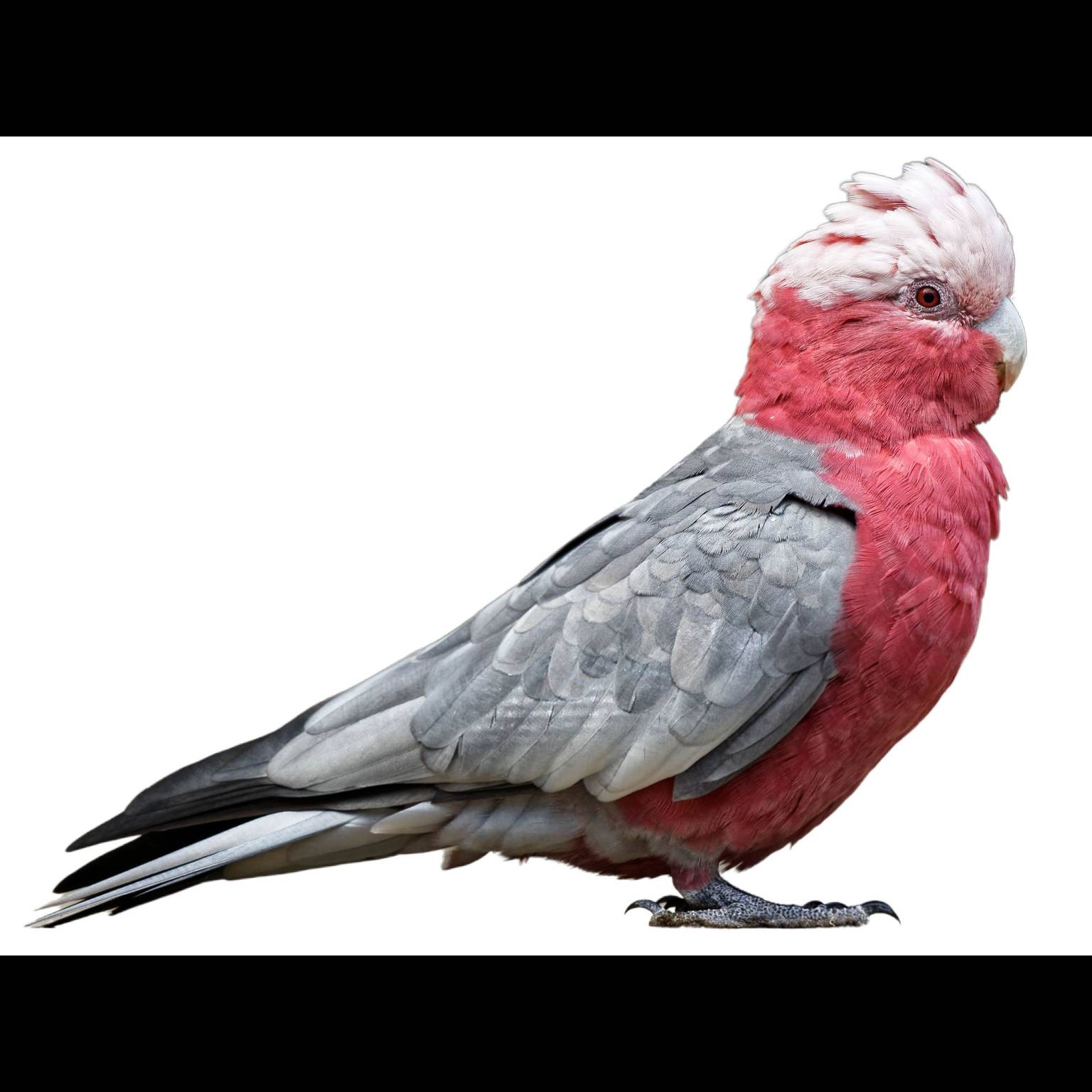
Where does the Galah live?
Eolophus roseicapilla
Spotted a bird? Identify it instantly with the Birdby app
Open the appThe Galah lives in specific habitats and regions. Knowing where, and when, to look improves your chances of a successful sighting.
Biomes
Open woodlands, grasslands, agricultural areas, urban parks, and suburban gardens. They thrive in modified landscapes.
Geographic range
Widespread across mainland Australia, including Tasmania, though less common in the driest deserts and dense forests. Introduced to some parts of New Zealand.
Preferred environments
Prefers open country with scattered trees for roosting and nesting, and abundant ground cover for foraging. Highly adaptable to human-modified environments.
Elevation range
Sea level up to approximately 1,200 meters.
Where to look
Urban Parks and Gardens
Galahs are highly adapted to human environments and are commonly found in parks, gardens, and golf courses across Australian cities and towns.
Agricultural Lands
Vast numbers can be seen in farmlands, particularly in grain-growing regions, where they feed on spilled seeds.
Open Woodlands and Grasslands
Their natural habitat, where scattered trees provide roosting and nesting sites, and open ground offers foraging opportunities.
Water Sources
They frequently visit dams, rivers, and other water bodies to drink, especially in drier areas.
Field tips
- Look for flocks. Galahs are rarely solitary. Scan the sky or open fields for large, noisy groups. Their pink and grey plumage is quite visible against green or brown landscapes.
- Listen for calls. Their loud, distinctive calls are often the first indication of their presence. Follow the sound to locate the flock.
- Observe feeding behavior. They are primarily ground feeders. Look for them foraging in open grassy areas, often alongside roadsides or in paddocks.
- Check roosting sites. At dawn and dusk, observe large trees, especially eucalypts, where Galahs gather in large numbers to roost.
- Visit waterholes. In arid regions, Galahs will congregate at water sources, particularly in the morning and late afternoon.
Migration
Generally sedentary or locally nomadic, moving in response to food and water availability. They do not undertake long-distance migrations.
Explore the Galah
Identify birds anywhere
Free on iOS, Android, and Web. Photo & sound identification, full species database, and your personal life list.