
How to identify the European Robin
Erithacus rubecula
Spotted a bird? Identify it instantly with the Birdby app
Open the appTo correctly identify the European Robin (Erithacus rubecula), check each of these features. Birds can be tricky: habit, habitat, and call often confirm a sighting that a single photo cannot.
Size at a glance
- Length
- 12.5-14 cm
- Wingspan
- 20-22 cm
- Weight
- 16-22 g
Physical features to check
- 1
Plumage
Overall feather coloration and pattern.
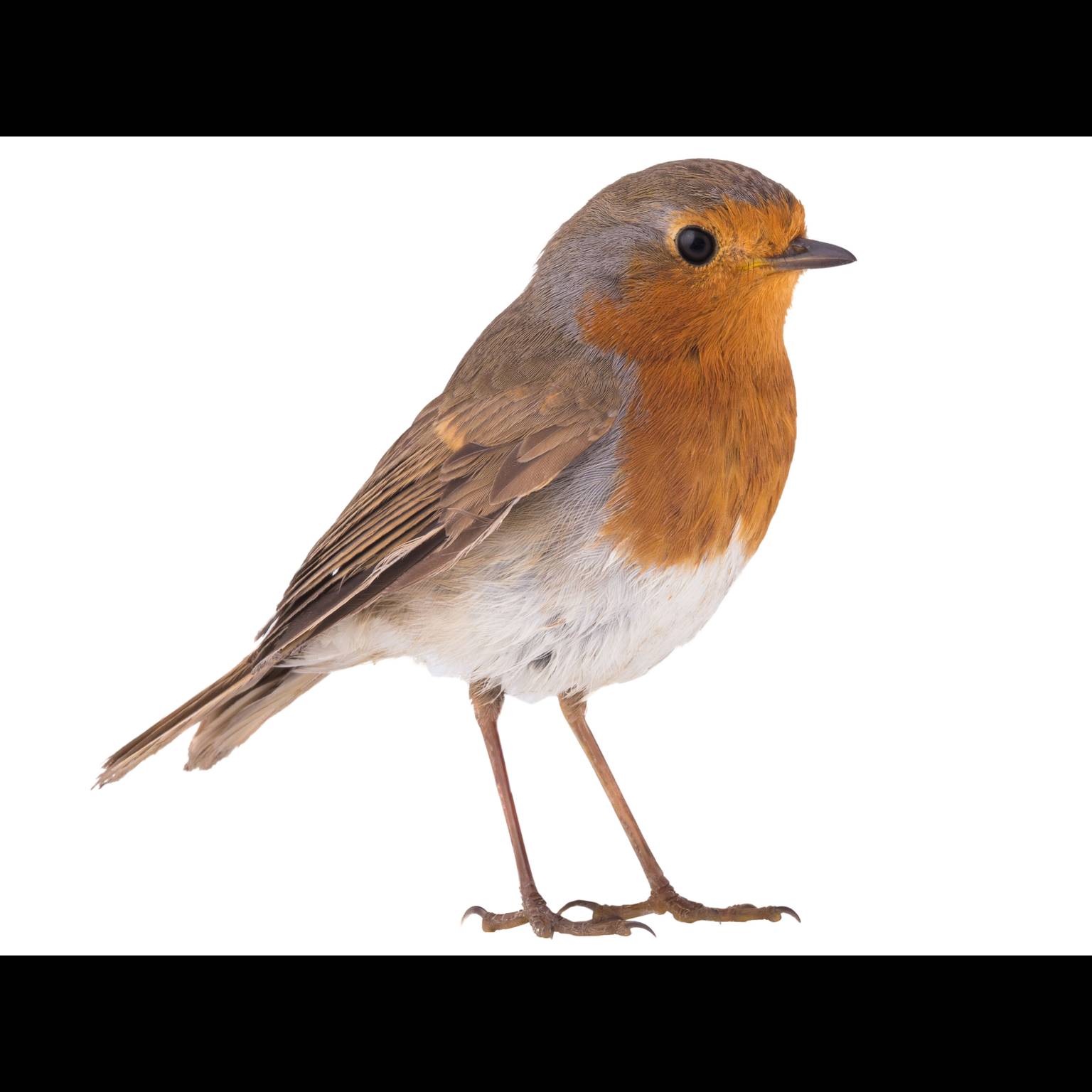
Adults have a bright orange-red breast and face, extending from the forehead down to the upper breast, bordered by a grey band on the sides of the neck and chest. The upperparts are olive-brown, and the belly is whitish. The wings and tail are dark brown. The rump is olive-brown.
- 2
Beak shape
Shape and color of the bill: a key field mark.
Small, slender, pointed, dark brown to black.
- 3
Eye color
Iris color and any distinctive eye markings.
Dark brown.
- 4
Leg color
Leg and foot color.
Pale brown to pinkish-brown.
- 5
Distinguishing features
Standout features that separate this species.
The most striking feature is the vivid orange-red breast and face. Its upright posture and frequent tail-cocking are also characteristic.
- 6
Juvenile appearance
How young birds differ from adults.
Juveniles are entirely mottled brown with dark spots and streaks, lacking the orange-red breast. They gradually acquire the adult plumage after their first post-juvenile moult, typically by late summer or early autumn.
- 7
Seasonal changes
Plumage variation between breeding and non-breeding seasons.
No significant seasonal plumage changes in adults. The orange-red breast remains year-round. Plumage may appear slightly duller when worn before moulting.
- 8
Sexual dimorphism
How males and females differ.
None; males and females are virtually identical in plumage. Males may be slightly larger on average, but this is not discernible in the field.
Key field marks
- Orange-red breast and face. This is the most unmistakable feature. Look for the bright orange-red extending from the forehead, around the eyes, and down to the upper breast, sharply delineated by grey on the sides.
- Upperparts color. Note the plain olive-brown back, wings, and tail, contrasting with the bright underparts.
- Posture and movement. Robins often sit upright, frequently cocking their tail. They move with quick hops on the ground, often pausing to listen for prey.
- Song and calls. Learn its distinctive melancholic, warbling song and its sharp 'tic-tic-tic' alarm call. These are often heard before the bird is seen.
- Juvenile plumage. Remember that juveniles are mottled brown and lack the red breast. If you see a small, brown, speckled bird with robin-like behavior, it might be a young robin.
Explore the European Robin
Identify birds anywhere
Free on iOS, Android, and Web. Photo & sound identification, full species database, and your personal life list.