
Spotted a bird? Identify it instantly with the Birdby app
Open the appAbout
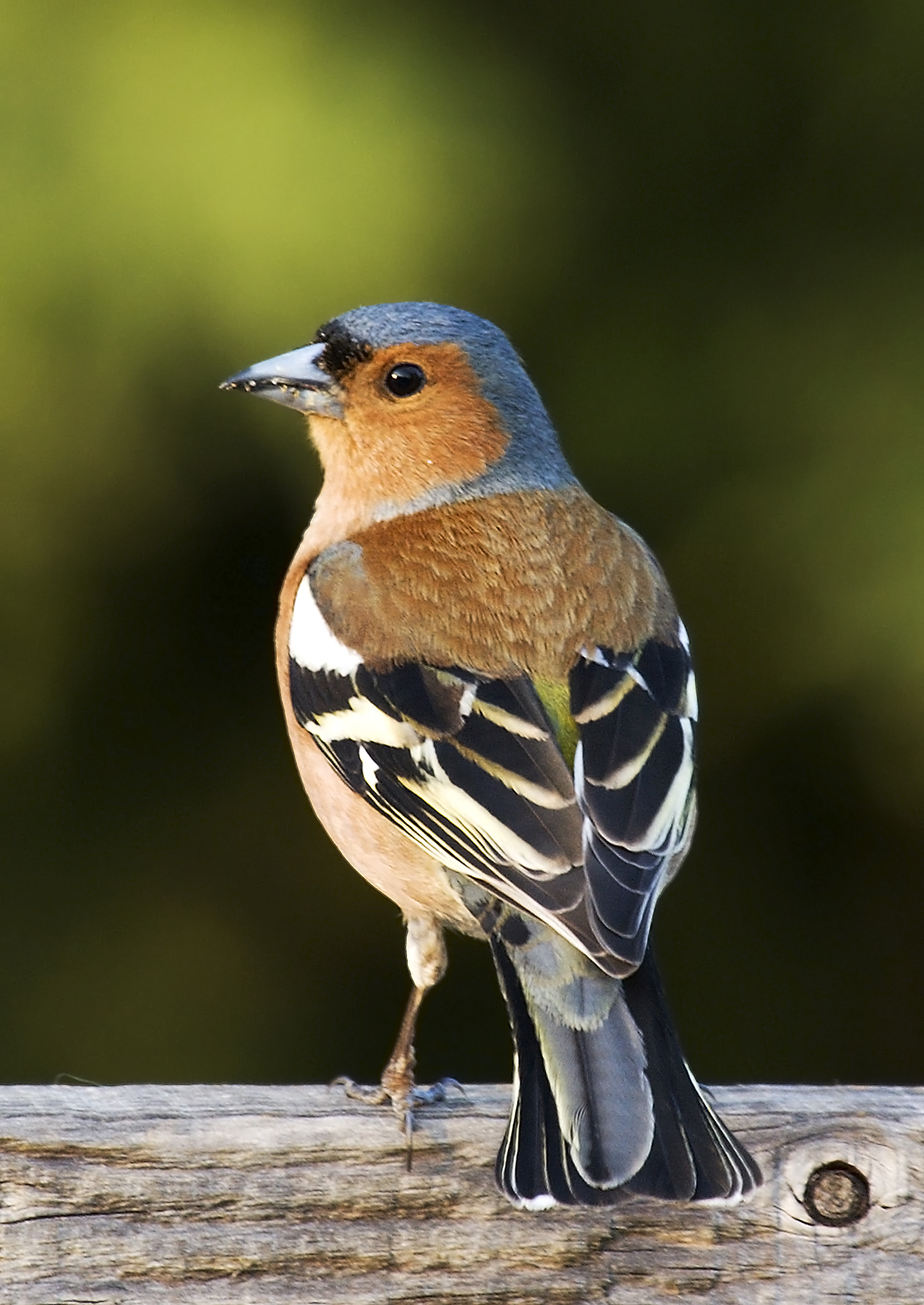
The Common Chaffinch is one of the most widespread and abundant finches in Europe, North Africa, and parts of Asia. It is a small passerine bird, well-known for its distinctive song and colorful plumage, particularly in males during the breeding season. It is a familiar sight in woodlands, gardens, and parks, often foraging on the ground.
Size & lifespan
- Length
- 14-16 cm
- Wingspan
- 24.5-28.5 cm
- Weight
- 18-29 g
- Lifespan
- 2-5 years (up to 14 years recorded)
- Diet
- Omnivore (primarily seeds, supplemented with insects, especially during breeding season)
Physical characteristics
- Plumage
- Males in breeding plumage have a blue-grey crown and nape, reddish-pink cheeks and breast, a chestnut-brown mantle, and a greenish-yellow rump. The wings are dark with two prominent white wing-bars and a white patch on the shoulder. The tail is dark with white outer tail feathers. Females and juveniles are duller, mostly olive-brown with a greyish-brown head and underparts, but still show the distinctive white wing-bars and white outer tail feathers.
- Beak shape
- Conical, stout, and pointed, adapted for cracking seeds. Greyish-blue in breeding males, horn-colored in females and non-breeding males.
- Eye color
- Dark brown
- Leg color
- Dark grey to brownish-black
- Distinguishing features
- Key features include the two white wing-bars, white outer tail feathers (especially noticeable in flight), and the male's striking blue-grey cap and reddish underparts. The female's overall duller plumage still retains the characteristic wing markings.
- Juvenile appearance
- Juveniles resemble adult females, but are generally duller and have a less defined pattern. Their plumage is softer and looser, and the bill may be paler.
- Seasonal changes
- Males undergo a pre-nuptial molt in late winter/early spring, enhancing their vibrant breeding plumage. Non-breeding males are slightly duller, with the blue-grey cap often obscured by brown feather tips, and the reddish areas less intense. Females show less seasonal variation, remaining largely olive-brown throughout the year.
- Sexual dimorphism
- Pronounced. Males are much more brightly colored, especially during breeding season, with blue-grey head, reddish-pink breast, and chestnut back. Females are duller, predominantly olive-brown and greyish, lacking the vibrant colors of the male.
How to identify
- 1
Male Plumage (Breeding)
Look for the striking blue-grey cap and nape, reddish-pink cheeks and breast, chestnut-brown back, and greenish-yellow rump. The two prominent white wing-bars and white outer tail feathers are key.
- 2
Female/Juvenile Plumage
Even in duller females and juveniles, the two white wing-bars and white outer tail feathers are consistently present and are excellent identification marks. They are generally olive-brown above and greyish-brown below.
- 3
Flight
Observe the undulating flight pattern and the flash of white on the outer tail feathers, which is very characteristic.
- 4
Song
Listen for the loud, rapid, and cheerful song ending with a distinctive 'tschink' or 'chick-choo-wee' flourish. It's one of the most recognizable bird songs in Europe.
- 5
Call
Listen for the sharp, metallic 'pink!' or 'chink!' call, often given in flight or as an alarm. The 'rain call' ('huit' or 'weeeet') is also distinctive.
- 6
Behavior
Watch for them foraging on the ground, hopping and scratching through leaf litter. They are often seen in gardens and parks, sometimes visiting feeders.
Habitat & range
- Biomes
- Temperate forests, woodlands, parks, gardens, hedgerows, orchards, agricultural land with scattered trees.
- Geographic range
- Widespread across Europe, North Africa (Morocco, Algeria, Tunisia), and parts of western Asia (Turkey, Caucasus, Iran). Introduced to New Zealand.
- Elevation range
- Sea level up to 2,000 meters, occasionally higher in mountainous regions.
- Preferred environments
- Deciduous and mixed woodlands, mature gardens, parks, and suburban areas with ample tree cover and open ground for foraging. They prefer areas with a good understory and leaf litter.
Behavior
- Activity time
- Diurnal, active from dawn to dusk.
- Feeding habits
- Primarily ground feeders, hopping and scratching through leaf litter for seeds, especially beech mast and other tree seeds. During the breeding season, they switch to a diet rich in insects (caterpillars, aphids, beetles) to feed their young. They also visit bird feeders.
- Social behavior
- Highly social outside the breeding season, forming large flocks, sometimes mixed with other finch species. During breeding, they are territorial, with males defending their nesting areas.
- Flight pattern
- Undulating flight pattern, typical of finches, with rapid wing beats followed by a short glide. Often flies in small, loose flocks.
- Migration pattern
- Northern and eastern populations are migratory, moving south and west for the winter. Southern and western European populations are largely resident or undertake short-distance movements. Males often winter further north than females and juveniles.
- Territoriality
- Males are territorial during the breeding season, defending their nesting site and foraging area through song and aggressive displays. Outside of breeding, they are gregarious.
Song & calls
- Song
- A loud, rapid, and cheerful song, typically starting with a series of 'chip-chip-chip' notes, accelerating into a trill, and ending with a distinctive, emphatic 'tschink' or 'chick-choo-wee' flourish. Often described as 'chip-chip-chip-cherr-wee-oo'. Regional variations in song exist.
- Call
- Common calls include a sharp, metallic 'pink!' or 'chink!' (often given in flight or alarm), a soft 'hweet' contact call, and a 'yupp' or 'chup' call. The 'rain call' is a distinctive, drawn-out 'huit' or 'weeeet', often heard before or during rain.
- When they vocalize
- Males sing frequently from early spring through summer to attract mates and defend territory. Calls are given year-round, especially the 'pink' call, which is a common contact note.
Breeding & reproduction
- Breeding season
- April to July, typically two broods per year.
- Nesting habits
- The female builds a neat, cup-shaped nest, usually in the fork of a tree or shrub, often camouflaged with lichen, moss, and spider silk. It is lined with feathers and hair. Nests are typically 2-7 meters above the ground.
- Clutch size
- 3-6 eggs, typically 4-5.
- Egg description
- 3-6 eggs, pale blue or greenish-blue, sparsely spotted or streaked with reddish-brown or purple, particularly at the broader end. Approximately 19 x 14 mm.
- Incubation period
- 11-13 days, primarily by the female.
- Fledging period
- 12-15 days after hatching. Young are fed by both parents.
- Parental care
- Both parents feed the nestlings, primarily with insects. The female continues to brood the young for a few days after hatching. After fledging, the young remain dependent on parents for several weeks.
Where to find
Woodlands and Forests
Deciduous and mixed woodlands are prime habitats, especially those with a good understory and open areas.
Parks and Gardens
Common in urban and suburban parks and gardens with mature trees and shrubs.
Hedgerows and Orchards
Agricultural areas with hedgerows, scattered trees, and orchards provide suitable habitat.
Bird Feeders
They frequently visit bird feeders, especially in winter, for seeds.
Field tips
- Listen for the song. The male's loud and distinctive song is often the first indication of a Chaffinch's presence, especially in spring and early summer.
- Look on the ground. Chaffinches are primarily ground feeders, so scan the leaf litter under trees and shrubs. They often hop rather than walk.
- Check for white wing-bars. Even in flight or when perched, the two prominent white wing-bars are a reliable field mark for both sexes and juveniles.
- Visit bird feeders. In winter, Chaffinches are frequent visitors to garden bird feeders, offering excellent viewing opportunities.
- Observe flocks. Outside the breeding season, look for flocks of finches, as Chaffinches often associate with other finch species.
Similar species
Brambling
Fringilla montifringilla
The Brambling (also a Fringilla finch) has an orange breast and shoulders, a white rump (Chaffinch has greenish-yellow), and a black head in breeding males (Chaffinch has blue-grey). Females and juveniles are harder to distinguish but Bramblings typically show more orange on the breast and flanks, and a more prominent white rump.
Greenfinch
Chloris chloris
Greenfinches are larger and stockier, with a much thicker, conical bill. They are predominantly olive-green with bright yellow flashes in the wings and tail, lacking the Chaffinch's distinct white wing-bars and reddish plumage.
Hawfinch
Coccothraustes coccothraustes
Hawfinches are significantly larger and much more robust, with an enormous, powerful bill. Their plumage is predominantly orange-brown and grey, with a distinctive blue-black primary patch and white wing-bar, but they lack the Chaffinch's specific head and breast coloration.
Quick facts
- Diet:
- Seeds (especially beech mast), insects (breeding season)
- Habitat:
- Woodlands, parks, gardens, hedgerows
- Migration:
- Partial migrant (northern populations), resident (southern populations)
- Conservation Status:
- Least Concern
- Distinguishing Mark:
- Two white wing-bars, white outer tail feathers
Fun facts
- The Common Chaffinch's scientific name 'coelebs' means 'bachelor' in Latin, referring to the observation by Carl Linnaeus that in Sweden, females often migrate south for winter while males remain.
- Chaffinches are known for their 'rain call,' a distinctive 'huit' or 'weeeet' sound often heard just before or during rainfall.
- Male Chaffinches can learn their songs from other males, and regional 'dialects' of their song have been observed across different populations.
- They are one of the most numerous bird species in Europe, with an estimated population of over 100 million breeding pairs.
- The nest of a Chaffinch is a marvel of construction, often decorated with lichen and moss to camouflage it perfectly against the tree bark.
Scientific classification
- Kingdom
- Animalia
- Phylum
- Chordata
- Class
- Aves
- Order
- Passeriformes
- Family
- Fringillidae
- Genus
- Fringilla
- Species
- Fringilla coelebs
Explore the Common Chaffinch
Identify birds anywhere
Free on iOS, Android, and Web. Photo & sound identification, full species database, and your personal life list.