
How to identify the Common Chaffinch
Fringilla coelebs
Spotted a bird? Identify it instantly with the Birdby app
Open the appTo correctly identify the Common Chaffinch (Fringilla coelebs), check each of these features. Birds can be tricky: habit, habitat, and call often confirm a sighting that a single photo cannot.
Size at a glance
- Length
- 14-16 cm
- Wingspan
- 24.5-28.5 cm
- Weight
- 18-29 g
Physical features to check
- 1
Plumage
Overall feather coloration and pattern.
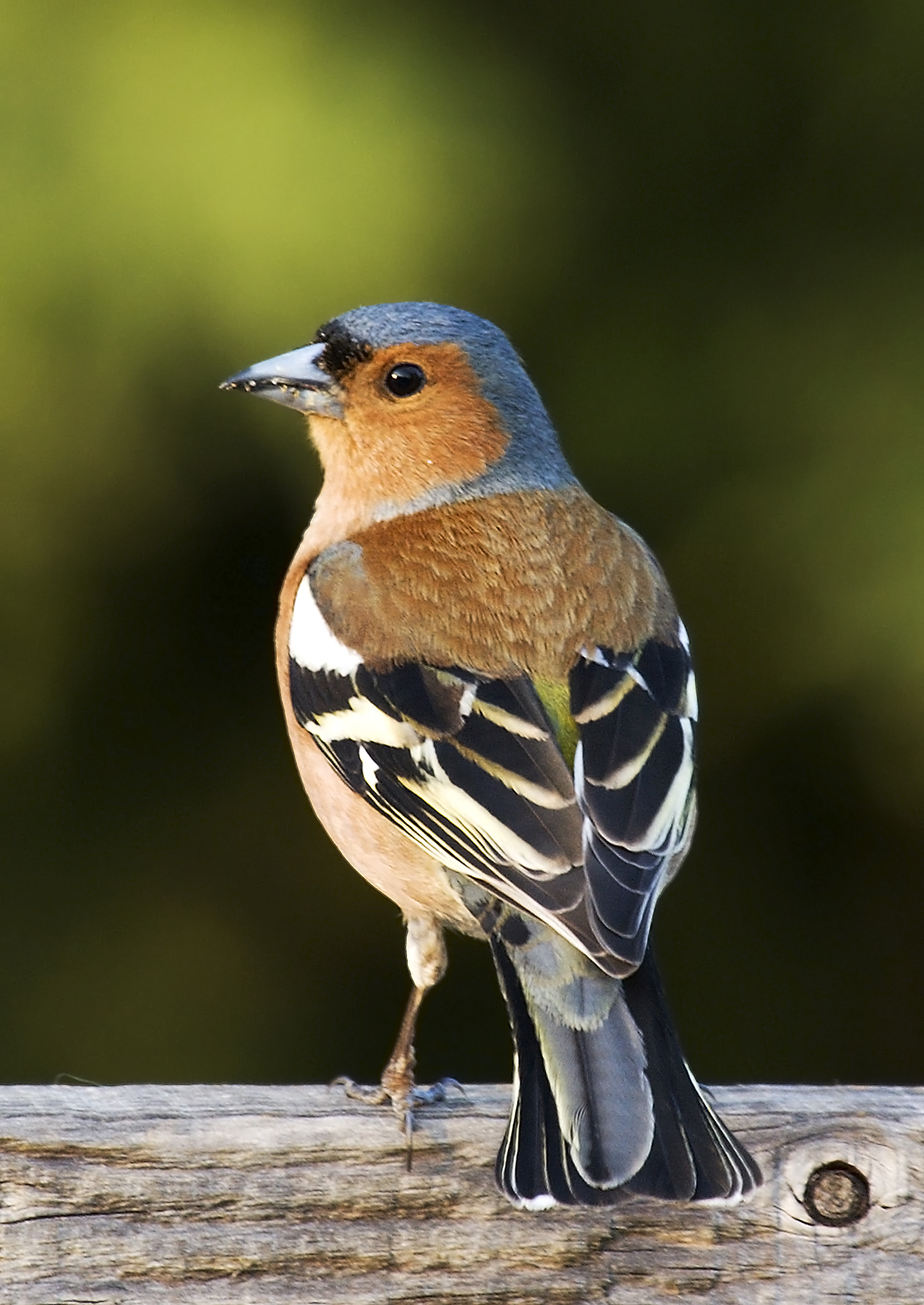
Males in breeding plumage have a blue-grey crown and nape, reddish-pink cheeks and breast, a chestnut-brown mantle, and a greenish-yellow rump. The wings are dark with two prominent white wing-bars and a white patch on the shoulder. The tail is dark with white outer tail feathers. Females and juveniles are duller, mostly olive-brown with a greyish-brown head and underparts, but still show the distinctive white wing-bars and white outer tail feathers.
- 2
Beak shape
Shape and color of the bill: a key field mark.
Conical, stout, and pointed, adapted for cracking seeds. Greyish-blue in breeding males, horn-colored in females and non-breeding males.
- 3
Eye color
Iris color and any distinctive eye markings.
Dark brown
- 4
Leg color
Leg and foot color.
Dark grey to brownish-black
- 5
Distinguishing features
Standout features that separate this species.
Key features include the two white wing-bars, white outer tail feathers (especially noticeable in flight), and the male's striking blue-grey cap and reddish underparts. The female's overall duller plumage still retains the characteristic wing markings.
- 6
Juvenile appearance
How young birds differ from adults.
Juveniles resemble adult females, but are generally duller and have a less defined pattern. Their plumage is softer and looser, and the bill may be paler.
- 7
Seasonal changes
Plumage variation between breeding and non-breeding seasons.
Males undergo a pre-nuptial molt in late winter/early spring, enhancing their vibrant breeding plumage. Non-breeding males are slightly duller, with the blue-grey cap often obscured by brown feather tips, and the reddish areas less intense. Females show less seasonal variation, remaining largely olive-brown throughout the year.
- 8
Sexual dimorphism
How males and females differ.
Pronounced. Males are much more brightly colored, especially during breeding season, with blue-grey head, reddish-pink breast, and chestnut back. Females are duller, predominantly olive-brown and greyish, lacking the vibrant colors of the male.
Key field marks
- Male Plumage (Breeding). Look for the striking blue-grey cap and nape, reddish-pink cheeks and breast, chestnut-brown back, and greenish-yellow rump. The two prominent white wing-bars and white outer tail feathers are key.
- Female/Juvenile Plumage. Even in duller females and juveniles, the two white wing-bars and white outer tail feathers are consistently present and are excellent identification marks. They are generally olive-brown above and greyish-brown below.
- Flight. Observe the undulating flight pattern and the flash of white on the outer tail feathers, which is very characteristic.
- Song. Listen for the loud, rapid, and cheerful song ending with a distinctive 'tschink' or 'chick-choo-wee' flourish. It's one of the most recognizable bird songs in Europe.
- Call. Listen for the sharp, metallic 'pink!' or 'chink!' call, often given in flight or as an alarm. The 'rain call' ('huit' or 'weeeet') is also distinctive.
- Behavior. Watch for them foraging on the ground, hopping and scratching through leaf litter. They are often seen in gardens and parks, sometimes visiting feeders.
Explore the Common Chaffinch
Identify birds anywhere
Free on iOS, Android, and Web. Photo & sound identification, full species database, and your personal life list.