
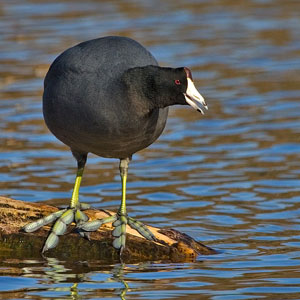
Where does the American Coot live?
Fulica americana
Spotted a bird? Identify it instantly with the Birdby app
Open the appThe American Coot lives in specific habitats and regions. Knowing where, and when, to look improves your chances of a successful sighting.
Biomes
Freshwater wetlands, marshes, ponds, lakes, slow-moving rivers, and occasionally brackish water.
Geographic range
Widespread across North America, from southern Canada through the United States and Mexico, extending into Central America and parts of the Caribbean. Some populations are resident, while northern populations are migratory.
Preferred environments
Shallow, open water with abundant emergent and submerged aquatic vegetation for food and cover. They prefer areas with dense cattails, reeds, or rushes for nesting and refuge.
Elevation range
Sea level up to approximately 3,000 meters (10,000 feet) in mountainous regions.
Where to look
Freshwater Ponds and Lakes
Commonly found on open water bodies, especially those with emergent vegetation along the edges.
Marshes and Wetlands
Look in areas with dense cattails, reeds, and other aquatic plants, which provide cover and nesting sites.
Slow-moving Rivers and Canals
Can be found in calmer sections of rivers and canals, particularly where vegetation is abundant.
Urban Parks and Golf Courses
Often habituate to human presence and can be seen on ponds and water features in urban and suburban settings.
Field tips
- Scan Open Water. Coots often forage in open water, so scan the surface of ponds and lakes. Look for their distinctive head-pumping motion.
- Check Vegetated Edges. They frequently hide and nest in dense emergent vegetation, so check the edges of marshes and wetlands carefully.
- Listen for Calls. Their sharp calls can often alert you to their presence, especially if they are hidden in vegetation or disturbed.
- Observe Behavior. Watch for their unique diving and dabbling feeding behaviors, and their tendency to graze on land near the water.
- Look for Flocks. Outside of breeding season, they often gather in large flocks, making them easier to spot on larger bodies of water.
Migration
Northern populations are migratory, moving south for the winter to the southern United States, Mexico, and Central America. Southern populations are largely resident. Migration occurs primarily at night.
Explore the American Coot
Identify birds anywhere
Free on iOS, Android, and Web. Photo & sound identification, full species database, and your personal life list.