
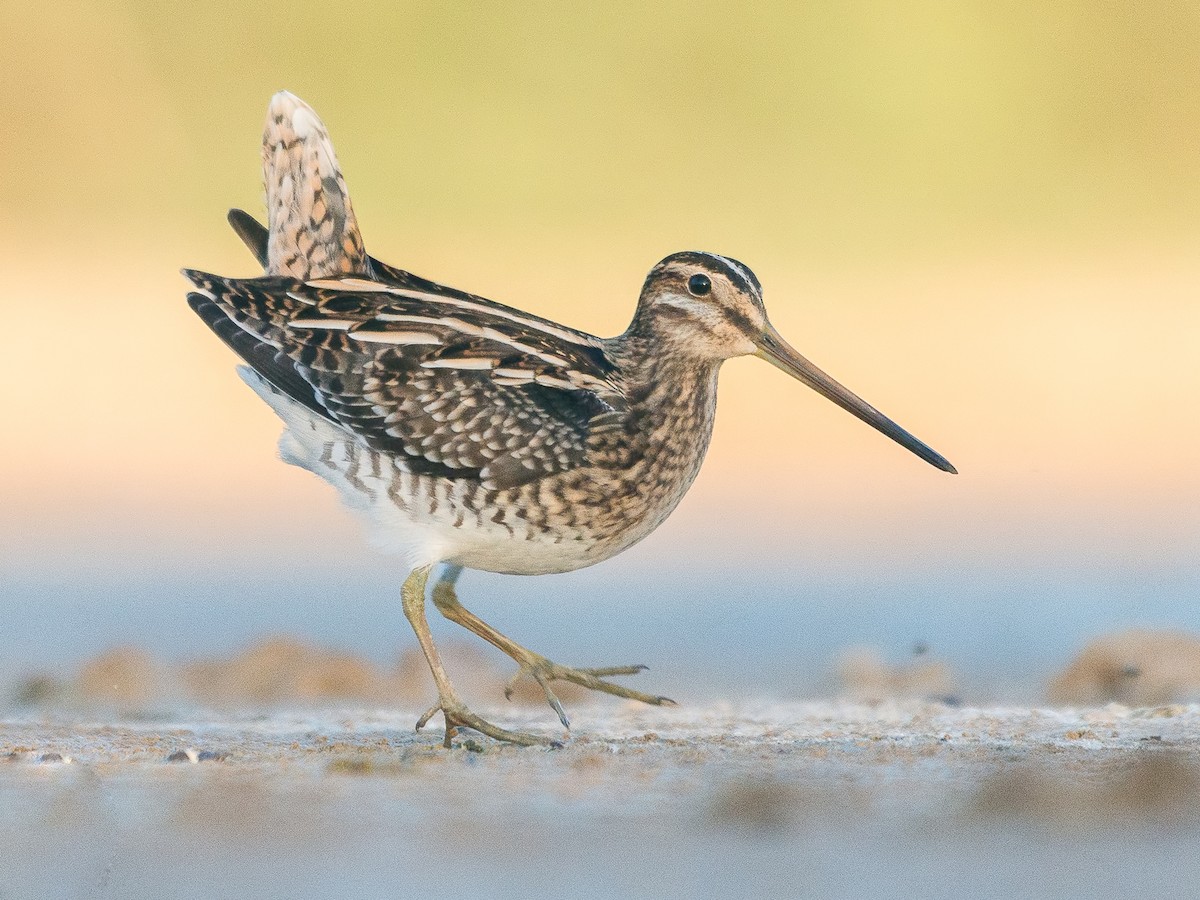
Where does the Eurasian Snipe live?
Gallinago gallinago
Spotted a bird? Identify it instantly with the Birdby app
Open the appThe Eurasian Snipe lives in specific habitats and regions. Knowing where, and when, to look improves your chances of a successful sighting.
Biomes
Wetlands, bogs, marshes, wet grasslands, fens, tundra, and damp meadows.
Geographic range
Breeds across northern and temperate Eurasia, from Iceland and the UK eastward through Scandinavia, Russia, and Siberia to the Pacific. Winters in southern Europe, Africa, the Middle East, and South Asia.
Preferred environments
Areas with dense, low vegetation for cover, soft muddy ground for probing, and shallow water. Requires a mosaic of open and vegetated areas.
Elevation range
Typically found from sea level up to 2,000 meters, occasionally higher in some mountainous regions.
Where to look
Wetlands and Marshes
Look in areas with shallow water, dense sedges, rushes, and tall grasses. These provide both cover and rich feeding grounds.
Bogs and Fens
Peaty, waterlogged areas are prime habitat, especially during the breeding season.
Wet Grasslands and Meadows
Damp fields and meadows, particularly those with tussocks or uneven ground, are often frequented.
Sewage Farms and Water Treatment Works
These managed wetlands can attract snipe, especially during migration or in winter.
Field tips
- Walk slowly and quietly. Snipe are incredibly camouflaged and will often remain motionless until you are very close. Walking slowly increases your chances of flushing one.
- Listen for the 'scaap' call. The explosive 'scaap' call is often the first indication of a snipe's presence as it takes flight.
- Look for movement. Scan areas of suitable habitat for subtle movements, such as a head bobbing or a bill probing the mud.
- Visit at dawn or dusk. Snipe are often more active and visible during crepuscular hours, especially when feeding.
- Use binoculars. Even after flushing, a snipe may land some distance away. Binoculars are essential for observing its cryptic plumage and identifying features.
- Observe display flights. During the breeding season, watch the sky above suitable habitats for the male's distinctive drumming display flight.
Migration
Mostly migratory, with northern populations moving south for the winter. Some western European populations may be resident or undertake shorter movements. Migrates at night, often in small groups.
Explore the Eurasian Snipe
Identify birds anywhere
Free on iOS, Android, and Web. Photo & sound identification, full species database, and your personal life list.