
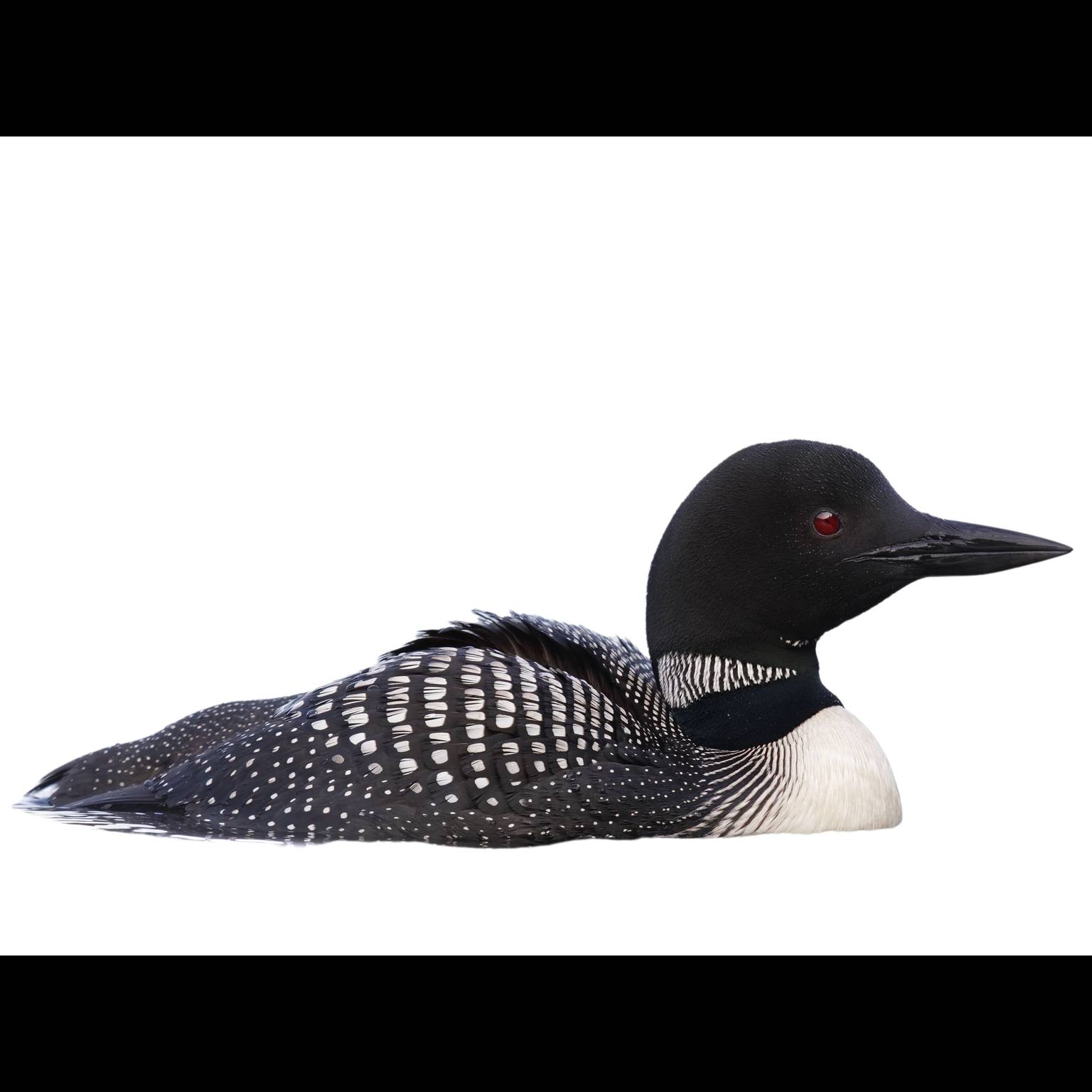
Where does the Common Loon live?
Gavia immer
Spotted a bird? Identify it instantly with the Birdby app
Open the appThe Common Loon lives in specific habitats and regions. Knowing where, and when, to look improves your chances of a successful sighting.
Biomes
Freshwater lakes, large rivers, and coastal marine environments.
Geographic range
Breeds across Canada, Alaska, Greenland, Iceland, and parts of the northern United States (primarily New England, Great Lakes region, and Pacific Northwest). Winters along the Atlantic and Pacific coasts of North America, and the Gulf of Mexico.
Preferred environments
During breeding, prefers large, clear, deep freshwater lakes with abundant fish, emergent vegetation for nesting, and secluded coves. During winter, found in coastal marine waters, estuaries, and large, ice-free freshwater bodies.
Elevation range
Primarily low to moderate elevations, associated with large bodies of water.
Where to look
Breeding Lakes
Large, clear, deep freshwater lakes in northern forests of North America. Look for lakes with islands or secluded coves for nesting.
Coastal Waters (Winter)
Along the Atlantic and Pacific coasts of North America, and the Gulf of Mexico. Look in bays, estuaries, and nearshore ocean waters.
Large Rivers
Occasionally found on large, slow-moving rivers, especially during migration or in winter if ice-free.
Field tips
- Listen for Calls. Common Loons are often heard before they are seen. Learn their distinctive wails, yodels, and tremolos, especially during the breeding season.
- Scan Open Water. Use binoculars or a spotting scope to scan large expanses of water. Loons often appear as dark, low-riding shapes on the surface.
- Look for Diving Behavior. Observe their characteristic diving behavior. If a loon dives, keep watching the area, as they can resurface quite a distance from where they went down.
- Visit Breeding Grounds in Spring/Summer. The best time to see loons in their striking breeding plumage and hear their full repertoire of calls is during the breeding season on northern lakes.
- Check Coastal Areas in Winter. During winter, look for them in coastal marine environments, often in non-breeding plumage, where they may be mixed with other diving ducks or seabirds.
- Maintain Distance. Loons are sensitive to disturbance, especially during nesting. Observe from a respectful distance to avoid stressing the birds.
Migration
Long-distance migrant. Breeds in northern freshwater lakes and migrates to coastal marine waters or large, ice-free freshwater bodies for the winter. Migration occurs primarily at night, often in small groups or individually.
Explore the Common Loon
Identify birds anywhere
Free on iOS, Android, and Web. Photo & sound identification, full species database, and your personal life list.