
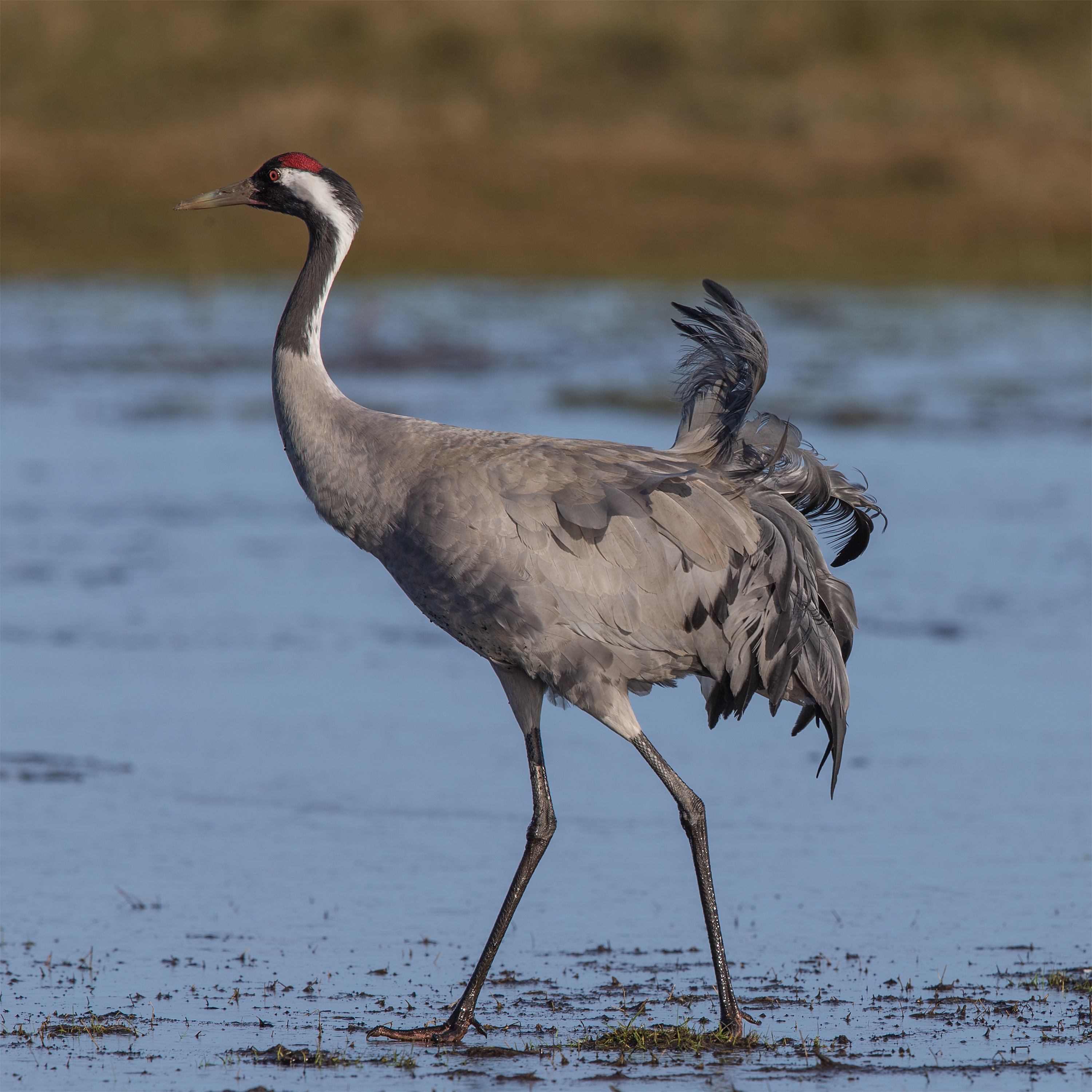
Where does the Common Crane live?
Grus grus
Spotted a bird? Identify it instantly with the Birdby app
Open the appThe Common Crane lives in specific habitats and regions. Knowing where, and when, to look improves your chances of a successful sighting.
Biomes
Temperate forests, boreal forests, grasslands, steppes, marshes, fens, bogs, and agricultural plains.
Geographic range
Breeds across Northern Europe and Asia, from Scandinavia and Eastern Europe eastward through Russia and Siberia to northeastern China and Mongolia. Winters in Southern Europe, North Africa (e.g., Sudan, Ethiopia), the Middle East, India, and parts of East Asia (e.g., China, Korea, Japan).
Preferred environments
Extensive wetlands, peatlands, bogs, and fens for breeding. During migration and winter, they utilize agricultural fields (especially stubble fields after harvest), damp grasslands, and shallow flooded areas for feeding and roosting.
Elevation range
Primarily lowlands and wetlands, though can be found at higher elevations during migration over mountain ranges.
Where to look
Breeding Grounds
Extensive wetlands, bogs, fens, and shallow marshy areas with dense vegetation across Northern Europe and Asia. Look near lakes, slow-moving rivers, and flooded woodlands.
Migration Stopovers
Large open agricultural fields (especially stubble fields after harvest), wet grasslands, and shallow wetlands along established migratory routes. Key sites include reservoirs and managed nature reserves.
Wintering Grounds
Large, open agricultural plains, irrigated fields, and shallow wetlands in Southern Europe (e.g., Spain, France), North Africa, the Middle East, and parts of Asia (e.g., India, China).
Field tips
- Listen for Calls. Their loud, bugling calls are often heard before the birds are seen, especially during migration when flocks are high overhead. These sounds can guide you to their presence.
- Scan Open Landscapes. Cranes prefer open areas for foraging and roosting. Use binoculars or a scope to scan large fields, floodplains, and wetlands from a distance to avoid disturbing them.
- Visit Known Migration Hotspots. Research specific crane migration routes and major stopover sites (e.g., Lac du Der in France, Hornborga Lake in Sweden, Hula Valley in Israel, Keoladeo National Park in India) during peak migration periods for spectacular viewing opportunities.
- Early Morning/Late Evening. Cranes are often most active and visible during dawn and dusk as they move between roosting sites and feeding grounds.
- Look for Distant Flocks. During migration, large flocks can be seen high in the sky, often forming V-patterns. Even if they are tiny specks, their characteristic flight formation can reveal them.
Migration
Long-distance migrant, undertaking annual journeys between breeding grounds in the north and wintering grounds in the south. Spring migration occurs from late February to May, and autumn migration from August to November. Migratory routes are well-established.
Explore the Common Crane
Identify birds anywhere
Free on iOS, Android, and Web. Photo & sound identification, full species database, and your personal life list.