
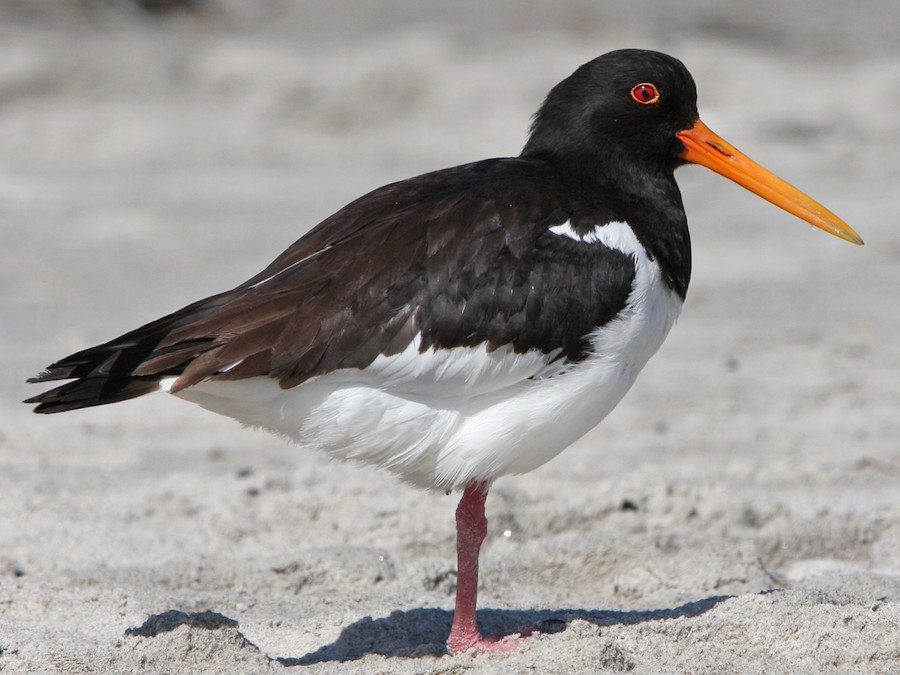
Where does the Eurasian Oystercatcher live?
Haematopus ostralegus
Spotted a bird? Identify it instantly with the Birdby app
Open the appThe Eurasian Oystercatcher lives in specific habitats and regions. Knowing where, and when, to look improves your chances of a successful sighting.
Biomes
Coastal marine, estuarine, freshwater wetlands, agricultural land.
Geographic range
Widespread across temperate Eurasia, from Iceland and Western Europe east to Siberia and China. Winters mainly in Western Europe, the Mediterranean, and parts of Africa and Asia.
Preferred environments
Rocky and sandy coasts, mudflats, estuaries, saltmarshes, shingle beaches, and increasingly, inland grasslands, arable fields, and riverbanks, especially during breeding season.
Elevation range
Primarily found at sea level, occasionally up to a few hundred meters inland.
Where to look
Coastal Mudflats and Estuaries
Excellent places to find large flocks, especially during migration and winter, as they feed on exposed invertebrates.
Shingle and Sandy Beaches
Often found foraging along the tideline or nesting on less disturbed sections of beaches.
Saltmarshes
Used for feeding and roosting, particularly during high tide.
Inland Agricultural Fields
Increasingly common breeding sites in some regions, particularly near coasts or large rivers.
Field tips
- Look for movement. Their distinctive feeding behavior, probing or hammering shells, makes them stand out on mudflats.
- Listen for calls. Their loud, piping calls are often heard before the bird is seen, especially when disturbed or during territorial displays.
- Check tide times. They are most active on mudflats and estuaries when the tide is out, exposing their food sources.
- Scan open areas. They prefer open, unobstructed areas for feeding and nesting, making them relatively easy to spot.
Migration
Most populations are migratory, moving south and west for the winter. Birds from northern and eastern Europe migrate to the coasts of Western Europe and the Mediterranean. Some western European populations are resident or undertake short-distance movements. They migrate in large flocks.
Explore the Eurasian Oystercatcher
Identify birds anywhere
Free on iOS, Android, and Web. Photo & sound identification, full species database, and your personal life list.