
Where does the House Finch live?
Haemorhous mexicanus
Spotted a bird? Identify it instantly with the Birdby app
Open the appThe House Finch lives in specific habitats and regions. Knowing where, and when, to look improves your chances of a successful sighting.
Biomes
Temperate forests, grasslands, urban/suburban areas, deserts, chaparral, agricultural lands.
Geographic range
Native to western North America from southern Canada to Mexico. Introduced populations are widespread across eastern North America (from southern Canada to Florida) and Hawaii.
Preferred environments
Highly adaptable, preferring semi-open areas with scattered trees, shrubs, and human structures. Common in residential areas, parks, farms, orchards, and urban centers. Less common in dense forests or open grasslands without cover.
Elevation range
Sea level up to 2,500 meters (8,200 feet), occasionally higher in some parts of its native range.
Where to look
Suburban and Urban Areas
Backyards, parks, gardens, city streets, and any area with human habitation and scattered vegetation.
Agricultural Lands
Orchards, farms, and cultivated areas where food sources are abundant.
Desert Edges and Chaparral
In their native western range, they can be found in arid and semi-arid scrublands near water sources.
Bird Feeders
One of the most common visitors to feeders, especially those offering sunflower or nyjer seeds.
Field tips
- Listen for the Song. Their distinctive, rambling song is often the first indication of their presence, especially from a high perch.
- Check Bird Feeders. House Finches are highly attracted to feeders, particularly those with black oil sunflower seeds. They often dominate feeders.
- Look in Shrubs and Trees. They forage and nest in a variety of vegetation, from small shrubs to tall trees. Check dense foliage for movement.
- Observe Social Behavior. Outside of breeding, they are often in flocks. Look for groups of small, streaky brown birds.
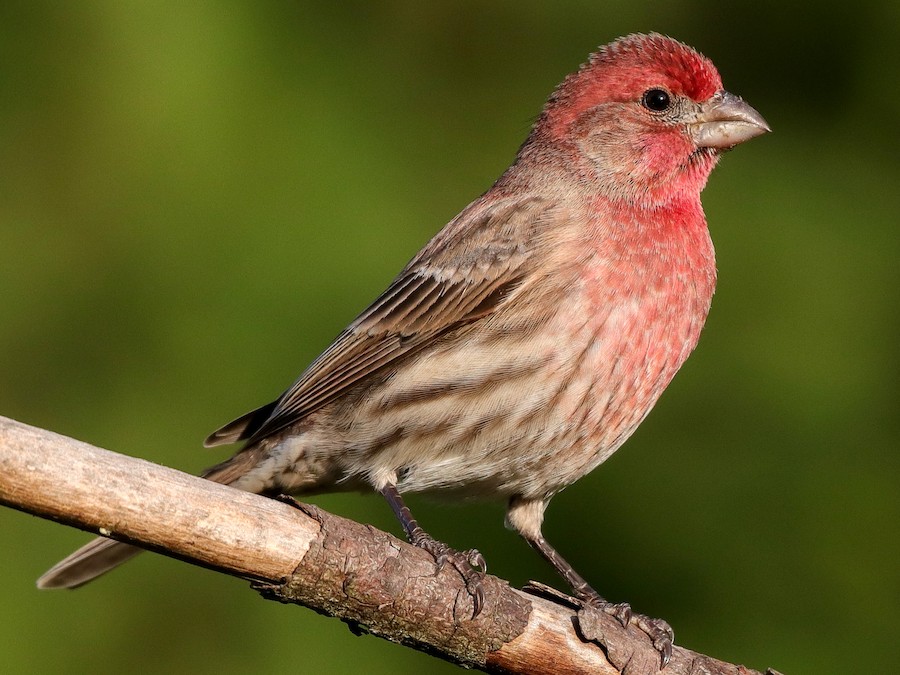
- Note Male Coloration. The male's red plumage is quite variable. Don't be surprised to see individuals with orange or yellowish tints, which is still characteristic of the species.
Migration
Generally resident throughout most of their range. Northern populations may undertake short-distance, irruptive movements in winter, especially in response to food availability. Eastern populations are largely sedentary.
Explore the House Finch
Identify birds anywhere
Free on iOS, Android, and Web. Photo & sound identification, full species database, and your personal life list.