
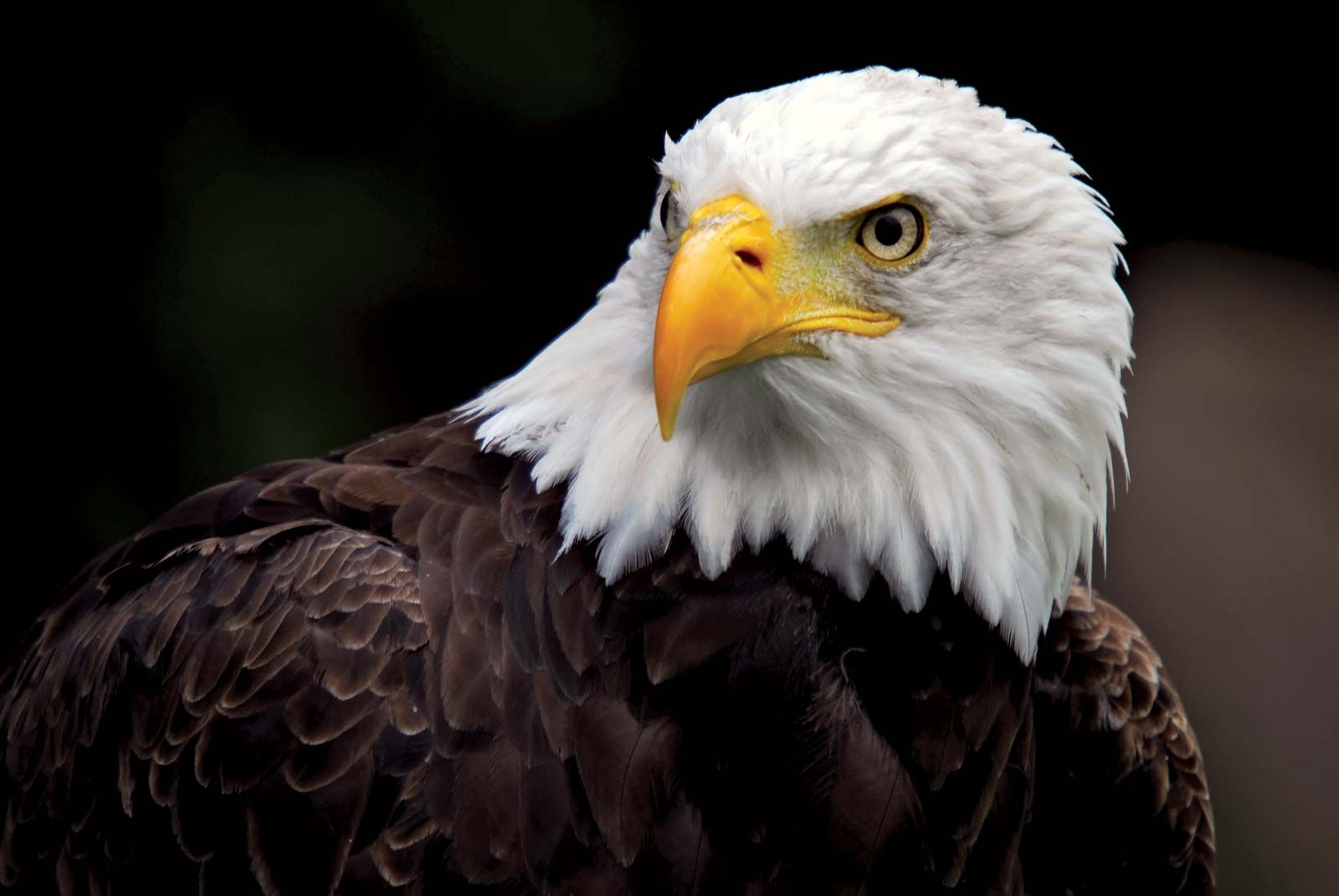
Where does the Bald Eagle live?
Haliaeetus leucocephalus
Spotted a bird? Identify it instantly with the Birdby app
Open the appThe Bald Eagle lives in specific habitats and regions. Knowing where, and when, to look improves your chances of a successful sighting.
Biomes
Forests, wetlands, coastal areas, mountains, grasslands, tundra
Geographic range
North America, from Alaska and Canada south through the contiguous United States and into northern Mexico.
Preferred environments
Large, mature trees (conifers or deciduous) for nesting and perching, located near expansive bodies of water such as rivers, lakes, reservoirs, and coastlines that provide abundant fish and open foraging areas. Requires undisturbed areas for breeding.
Elevation range
Sea level up to 3,000 meters (10,000 feet), typically near large bodies of water.
Where to look
Rivers and Lakes
Look along major river systems, large lakes, and reservoirs, especially where there are abundant fish populations and tall trees for perching and nesting.
Coastal Areas
Estuaries, bays, and coastlines provide excellent foraging opportunities, particularly during salmon runs or when fish are plentiful.
Winter Roosts
In northern areas, Bald Eagles often congregate at communal winter roosts near open water, especially below dams or in areas with reliable food sources.
National Parks and Wildlife Refuges
Many protected areas with suitable habitat are excellent places to observe Bald Eagles, often with designated viewing areas.
Field tips
- Scan Tall Trees. Bald Eagles often perch conspicuously at the very top of the tallest trees, providing excellent vantage points for hunting and surveying their territory.
- Look for Soaring Birds. Keep an eye on the sky for large raptors soaring on thermals, especially over water. Their broad wings and stable flight are characteristic.
- Observe Fishing Behavior. Watch for them swooping down to snatch fish from the water's surface. This is a classic and exciting behavior to witness.
- Visit During Winter. In many regions, winter offers the best viewing opportunities as migratory eagles move south and concentrate in areas with open water and food.
- Use Binoculars/Spotting Scope. Their large size makes them visible from a distance, but good optics are essential for detailed observation and distinguishing age classes.
Migration
Northern populations are migratory, moving south for the winter to areas with open water and food. Southern populations are largely resident. Migration routes often follow major river systems or coastlines.
Explore the Bald Eagle
Identify birds anywhere
Free on iOS, Android, and Web. Photo & sound identification, full species database, and your personal life list.