
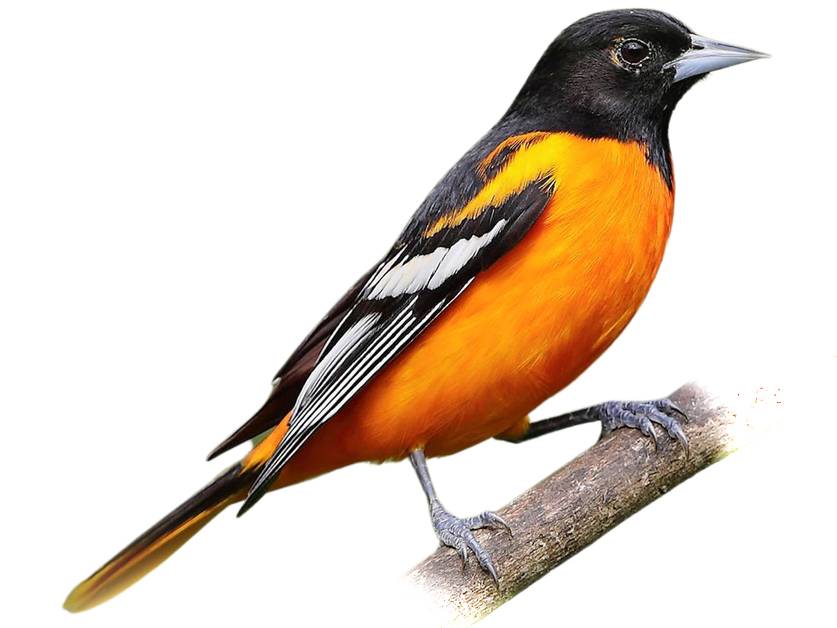
Where does the Baltimore Oriole live?
Icterus galbula
Spotted a bird? Identify it instantly with the Birdby app
Open the appThe Baltimore Oriole lives in specific habitats and regions. Knowing where, and when, to look improves your chances of a successful sighting.
Biomes
Temperate deciduous forests, open woodlands, riparian zones, suburban parks, orchards.
Geographic range
Breeds across eastern North America, from southern Canada south to the Gulf Coast states. Winters from southern Mexico through Central America and northern South America.
Preferred environments
Prefers open deciduous woodlands, forest edges, shade trees in residential areas, and parks. Often associated with tall trees like elms, maples, and poplars, especially near water.
Elevation range
Typically found from sea level up to 1,500 meters (5,000 feet), though primarily in lower elevations during breeding.
Where to look
Deciduous Woodlands
Look in open deciduous forests, especially those with tall trees like elms, maples, and poplars.
Forest Edges and Riparian Zones
They often prefer the edges of forests and areas along rivers or streams where trees are abundant.
Suburban Parks and Gardens
Many Baltimore Orioles adapt well to human-modified landscapes, frequenting parks, large gardens, and orchards with mature trees.
Feeders
During migration and breeding season, they are attracted to feeders offering orange halves, grape jelly, or sugar water.
Field tips
- Listen for their song. Their distinctive, fluty song is often heard before the bird is seen, especially in spring. Learn to recognize it.
- Look high in trees. Baltimore Orioles spend much of their time in the canopy of tall deciduous trees, so scan the upper branches carefully.
- Offer food. Putting out orange halves or grape jelly in spring can attract them to your yard, providing excellent viewing opportunities.
- Check for movement. They are active foragers, constantly moving through foliage. Look for flashes of orange or yellow among the leaves.
Migration
Long-distance Neotropical migrant. Arrives on breeding grounds in late April to early May and departs for wintering grounds in late July to September. Migrates primarily at night.
Explore the Baltimore Oriole
Identify birds anywhere
Free on iOS, Android, and Web. Photo & sound identification, full species database, and your personal life list.