
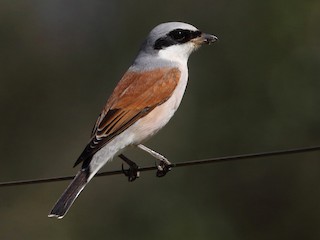
Where does the Red-backed Shrike live?
Lanius collurio
Spotted a bird? Identify it instantly with the Birdby app
Open the appThe Red-backed Shrike lives in specific habitats and regions. Knowing where, and when, to look improves your chances of a successful sighting.
Biomes
Temperate grasslands, shrublands, open woodlands, agricultural areas, and forest edges.
Geographic range
Breeds across most of temperate Europe (eastward from France and Denmark) and Asia, extending to western Siberia. Winters primarily in eastern and southern Africa, from Kenya south to South Africa.
Preferred environments
Open landscapes with scattered thorny bushes (e.g., hawthorn, blackthorn), hedgerows, tall grasses, clearings in sparse woodlands, shrubby pastures, young plantations, and orchards. Requires suitable perches for hunting and dense thorny vegetation for nesting and impaling prey.
Elevation range
Typically from sea level up to 1,500-2,000 meters in breeding areas, locally higher in mountainous regions (up to 3,000m in central Asia).
Where to look
Breeding Grounds
Across temperate Eurasia. Best sought in areas with mosaic habitats of open grassland, scrub, and scattered trees/hedgerows. Look in meadows with hawthorn or blackthorn bushes, clearings in young plantations, and abandoned agricultural land.
Migration Stopovers
Can be seen in a wider range of habitats during migration, including gardens, parks, and coastal scrub, especially around strategic land-bridges and coastlines as they cross continents.
Wintering Grounds
Eastern and Southern Africa. Found in dry acacia savanna, bushveld, and other open woodland/shrubland habitats. Similar open, scrubby areas as their breeding grounds.
Field tips
- Locate Perches. Red-backed Shrikes prefer to hunt from prominent, exposed perches. Scan the tops of bushes, fence posts, power lines, and tall vegetation.
- Search Thorny Shrubs. Their preferred nesting and 'larder' sites are thorny shrubs. Carefully check hawthorn, blackthorn, and similar bushes for nests or impaled prey, especially during the breeding season.
- Listen for Song/Calls. Their distinctive, often mimetic, warbling song can lead you to a hidden bird. Alarm calls 'tschak-tschrr' are also good indicators of their presence.
- Patience and Observation. Shrikes can be wary. Observe from a distance with binoculars. Their hunting dives from a perch are a clear behavioral cue.
- Time of Year. Focus on late spring and summer (May-July) in breeding areas. They arrive relatively late in spring and depart early for migration.
Migration
Long-distance migratory. Entire population moves from Eurasian breeding grounds to sub-Saharan Africa for the non-breeding season. Migrates via specific routes, often encountering natural barriers like the Sahara Desert and Mediterranean Sea. Post-breeding migration starts in late July/August, and spring migration for breeding returns takes place in April/May.
Explore the Red-backed Shrike
Identify birds anywhere
Free on iOS, Android, and Web. Photo & sound identification, full species database, and your personal life list.