
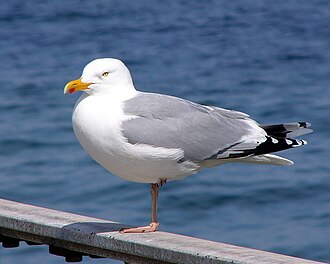
Where does the European Herring Gull live?
Larus argentatus
Spotted a bird? Identify it instantly with the Birdby app
Open the appThe European Herring Gull lives in specific habitats and regions. Knowing where, and when, to look improves your chances of a successful sighting.
Biomes
Coastal areas, estuaries, urban environments, agricultural land, landfills, inland lakes, and rivers.
Geographic range
Breeds across Northern Europe, Scandinavia, and parts of Russia. Winters across Western and Southern Europe, North Africa, and the Middle East. Also found in North America (though often considered a separate species, American Herring Gull, Larus smithsonianus, by some authorities).
Preferred environments
Rocky coasts, sandy beaches, cliffs, islands, harbors, fishing ports, city centers, parks, reservoirs, and cultivated fields.
Elevation range
Primarily sea level to low elevations, but can be found inland at various altitudes, especially near human settlements or large bodies of water.
Where to look
Coastal Areas
Look along beaches, cliffs, estuaries, harbors, and fishing ports. They are abundant in these environments.
Urban Environments
Common in cities, especially those near the coast, where they scavenge for food in parks, streets, and landfills.
Agricultural Land
Often follow plows or gather in fields to feed on invertebrates and discarded crops.
Inland Water Bodies
Can be found around large lakes, reservoirs, and rivers, particularly during migration or winter.
Field tips
- Observe Feeding Behavior. Watch for their opportunistic feeding habits – scavenging, following fishing boats, or even snatching food from unwary picnickers.
- Listen for Calls. Their loud and distinctive calls are often the first indication of their presence, especially in coastal or urban settings.
- Study Age Plumages. Pay attention to the different plumages of juveniles and subadults, as they can look quite different from adults and from each other.
- Check Leg Color. Leg color is a crucial distinguishing feature from similar species like the Yellow-legged Gull or Lesser Black-backed Gull.
Migration
Northern populations are migratory, moving south and west for the winter. Southern populations are largely resident or undertake short-distance dispersal. Juveniles often disperse further than adults.
Explore the European Herring Gull
Identify birds anywhere
Free on iOS, Android, and Web. Photo & sound identification, full species database, and your personal life list.