
Where does the Western Gull live?
Larus occidentalis
Spotted a bird? Identify it instantly with the Birdby app
Open the appThe Western Gull lives in specific habitats and regions. Knowing where, and when, to look improves your chances of a successful sighting.
Biomes
Coastal marine, rocky shores, sandy beaches, estuaries, harbors, offshore islands.
Geographic range
Pacific coast of North America, from British Columbia, Canada, south to Baja California, Mexico. Breeding colonies are primarily on offshore islands and isolated coastal cliffs.
Preferred environments
Rocky islets, offshore islands, and remote coastal cliffs for breeding; foraging occurs along beaches, tide pools, harbors, fishing docks, and open ocean near the coast.
Elevation range
Sea level to low coastal elevations.
Where to look
Coastal Areas
Look along sandy beaches, rocky shores, and tide pools throughout its Pacific coast range.
Harbors and Docks
Often found congregating around fishing boats, docks, and marinas, scavenging for fish scraps.
Offshore Islands and Cliffs
Breeding colonies are typically found on remote, predator-free offshore islands and steep coastal cliffs.
Urban Coastal Environments
Common in coastal cities and towns, often seen in parking lots, landfills, and parks near the ocean.
Field tips
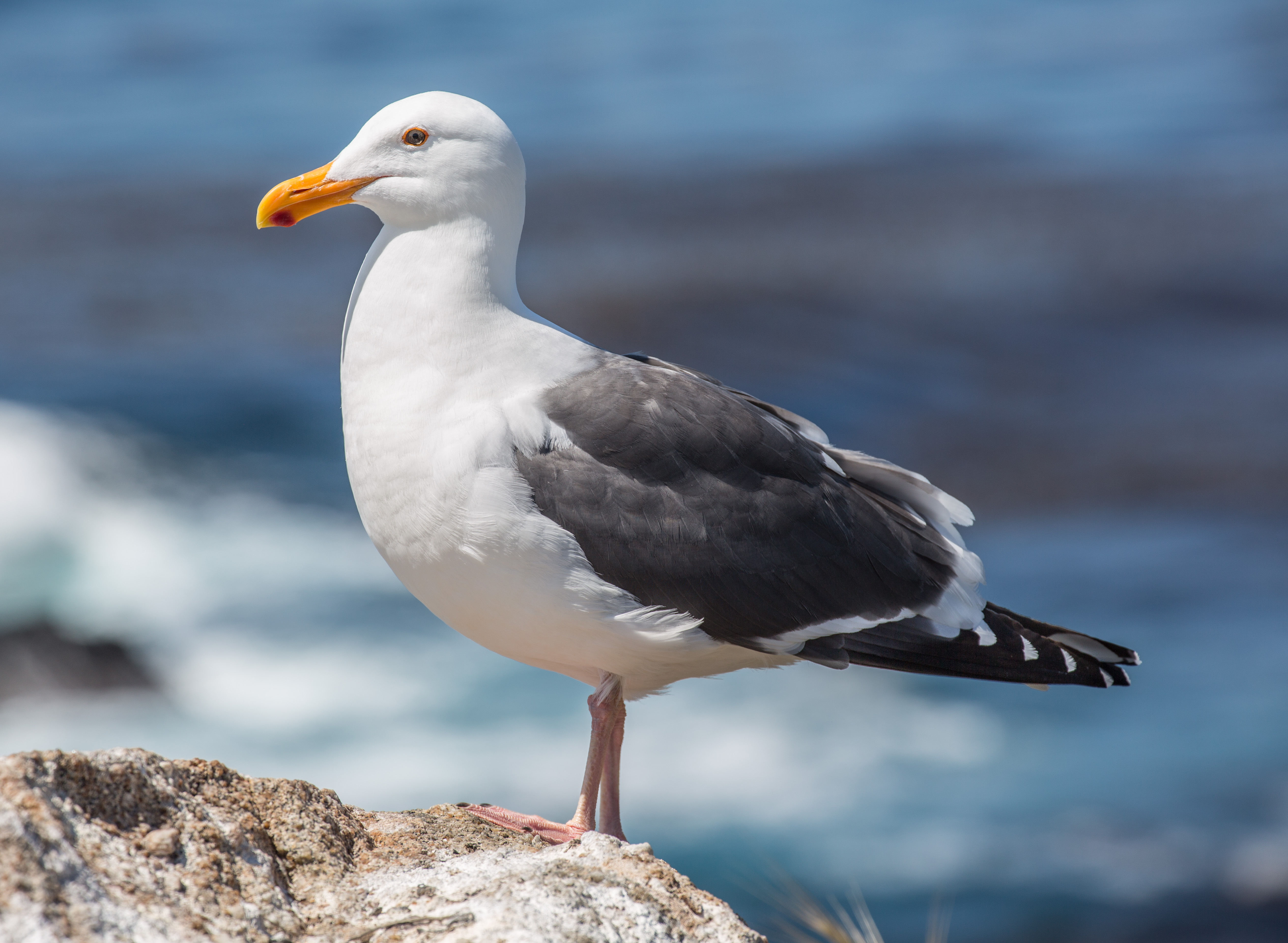
- Scan for large gulls. Western Gulls are among the largest gulls on the Pacific coast, so look for their imposing size.
- Observe mantle color. Pay close attention to the dark slate-gray back and upper wings, which is a primary identification feature.
- Check leg and bill color. Confirm pink legs and the heavy yellow bill with a red spot. These are consistent adult features.
- Listen for calls. Their loud, deep 'kyow' calls are distinctive and can help locate them, especially in noisy coastal environments.
- Look for foraging behavior. Watch for them scavenging along the waterline, diving for fish, or dropping shellfish to break them open.
Migration
Generally resident throughout much of its range, particularly in the southern parts. Northern populations (e.g., British Columbia) may undertake short-distance southward movements in winter. Juveniles disperse more widely than adults.
Explore the Western Gull
Identify birds anywhere
Free on iOS, Android, and Web. Photo & sound identification, full species database, and your personal life list.