
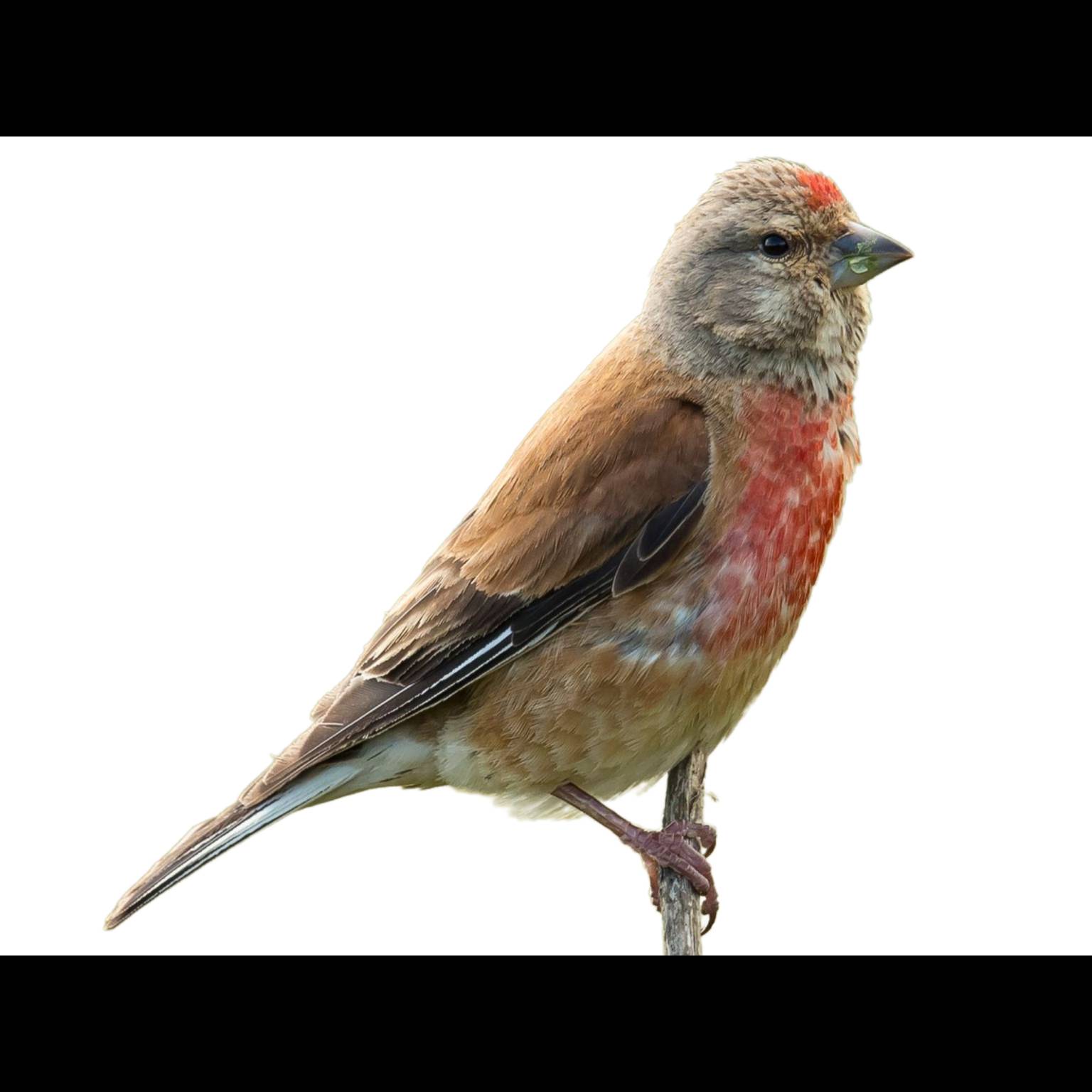
Where does the Common Linnet live?
Linaria cannabina
Spotted a bird? Identify it instantly with the Birdby app
Open the appThe Common Linnet lives in specific habitats and regions. Knowing where, and when, to look improves your chances of a successful sighting.
Biomes
Temperate grasslands, shrublands, agricultural lands, coastal areas, heathlands, open woodlands.
Geographic range
Widespread across Europe, North Africa (including the Canary Islands), and parts of western and central Asia. Its range extends from the Atlantic coast eastwards to western Siberia and south to the Middle East.
Preferred environments
Prefers open country with scattered bushes, hedges, gorse, and thorny scrub, often near cultivated land or coastal dunes. Avoids dense forests and urban centers, though can be found in large gardens or parks with suitable scrub.
Elevation range
Sea level up to 2,000 meters, occasionally higher in mountainous regions.
Where to look
Heathlands and Moorlands
Excellent places to find Linnets, especially where gorse and heather provide cover and food.
Coastal Dunes and Shingle Beaches
Often found foraging among marram grass and other coastal vegetation.
Agricultural Margins and Fallow Fields
Areas with abundant weed seeds are prime feeding grounds.
Hedgerows and Scrubland
Dense bushes and thorny scrub provide ideal nesting and roosting sites.
Field tips
- Look for Flocks. Outside the breeding season, Linnets are highly gregarious. Look for groups foraging on the ground or perched in bushes.
- Listen for Calls. Their distinctive 'churr' call is often the first indication of their presence, especially when they fly up from cover.
- Check for White Wing/Tail Flashes. In flight, the white edges on the wings and outer tail feathers are very noticeable and a key identification feature.
- Observe Feeding Behavior. Watch for them feeding on the ground, often clinging to seed heads of thistles or other weeds.
- Breeding Season Males. During spring and summer, look for males singing from prominent perches or performing display flights, showcasing their red plumage.
Migration
Partially migratory. Northern and eastern populations are largely migratory, moving south and west for the winter. Southern and western populations are often resident or undertake short-distance movements. Migrates in flocks.
Explore the Common Linnet
Identify birds anywhere
Free on iOS, Android, and Web. Photo & sound identification, full species database, and your personal life list.