
How to identify the Common Linnet
Linaria cannabina
Spotted a bird? Identify it instantly with the Birdby app
Open the appTo correctly identify the Common Linnet (Linaria cannabina), check each of these features. Birds can be tricky: habit, habitat, and call often confirm a sighting that a single photo cannot.
Size at a glance
- Length
- 12.5-14 cm
- Wingspan
- 21-25 cm
- Weight
- 15-22 g
Physical features to check
- 1
Plumage
Overall feather coloration and pattern.
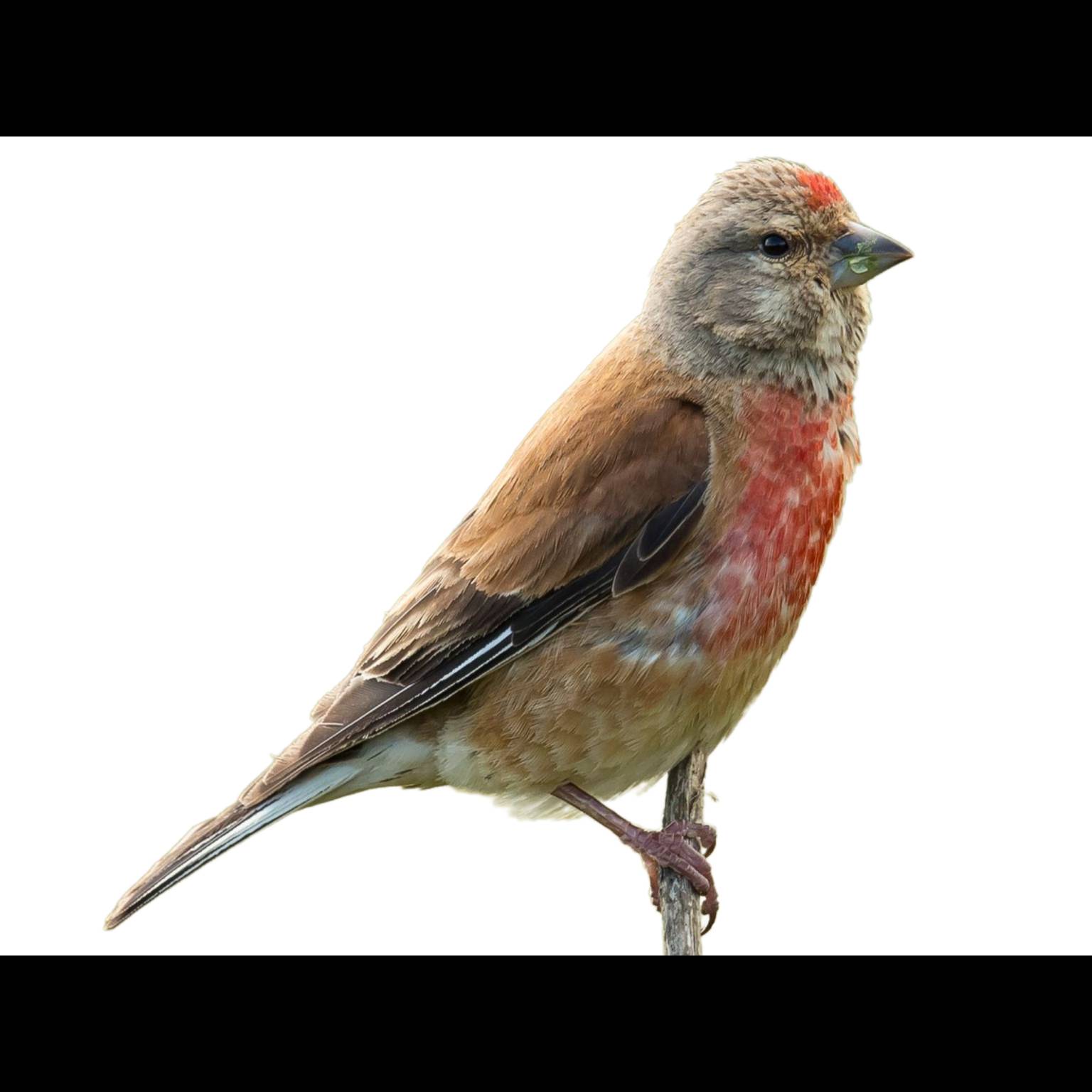
Adult males in breeding plumage have a grey nape and hindneck, a bright crimson forehead patch, and a rosy-red breast. The back is chestnut-brown, and the underparts are buffy-white with streaked flanks. The wings and tail are dark with prominent white edges, especially visible in flight. Non-breeding males and females lack the crimson and rosy-red coloration; they are generally duller, with streaked brown upperparts and buffy-white, heavily streaked underparts. The rump is typically unstreaked brown.
- 2
Beak shape
Shape and color of the bill: a key field mark.
Conical, relatively short and stout, adapted for seed-eating. Greyish-horn colored, darker on the culmen.
- 3
Eye color
Iris color and any distinctive eye markings.
Dark brown
- 4
Leg color
Leg and foot color.
Dark brown to blackish-brown
- 5
Distinguishing features
Standout features that separate this species.
White wing-bars (especially prominent on primaries), white outer tail feathers, and the male's breeding plumage with red forehead and breast. The unstreaked brown rump is a good field mark for both sexes.
- 6
Juvenile appearance
How young birds differ from adults.
Juveniles are similar to females but are more heavily streaked on the head, back, and underparts, giving them a scruffier appearance. They lack any red coloration.
- 7
Seasonal changes
Plumage variation between breeding and non-breeding seasons.
Males transition from a duller, streaked plumage in winter to the vibrant breeding plumage with red forehead and breast through a partial pre-breeding molt and feather wear revealing underlying pigments.
- 8
Sexual dimorphism
How males and females differ.
Pronounced in breeding season: males develop crimson forehead and rosy-red breast. Females and non-breeding males are duller, lacking these red pigments, and are more heavily streaked overall.
Key field marks
- Size and Shape. Small, slender finch with a relatively long tail and a conical bill.
- Male Breeding Plumage. Look for the distinctive crimson forehead and rosy-red breast, grey nape, and chestnut-brown back. White edges on dark wings and tail are key.
- Female/Non-breeding Male Plumage. Overall streaky brown appearance, buffy-white underparts with streaking, and a plain brown (unstreaked) rump. White wing-bars and outer tail feathers are still present.
- Flight. Undulating flight pattern, often in flocks, with flashes of white on the wings and outer tail feathers.
- Call. Listen for the characteristic dry 'chitt-itt-itt-itt' or 'churr-churr-churr' call, often given in flight.
- Habitat. Check open, scrubby areas, heathlands, gorse bushes, and hedgerows, especially near agricultural fields or coasts.
Explore the Common Linnet
Identify birds anywhere
Free on iOS, Android, and Web. Photo & sound identification, full species database, and your personal life list.