
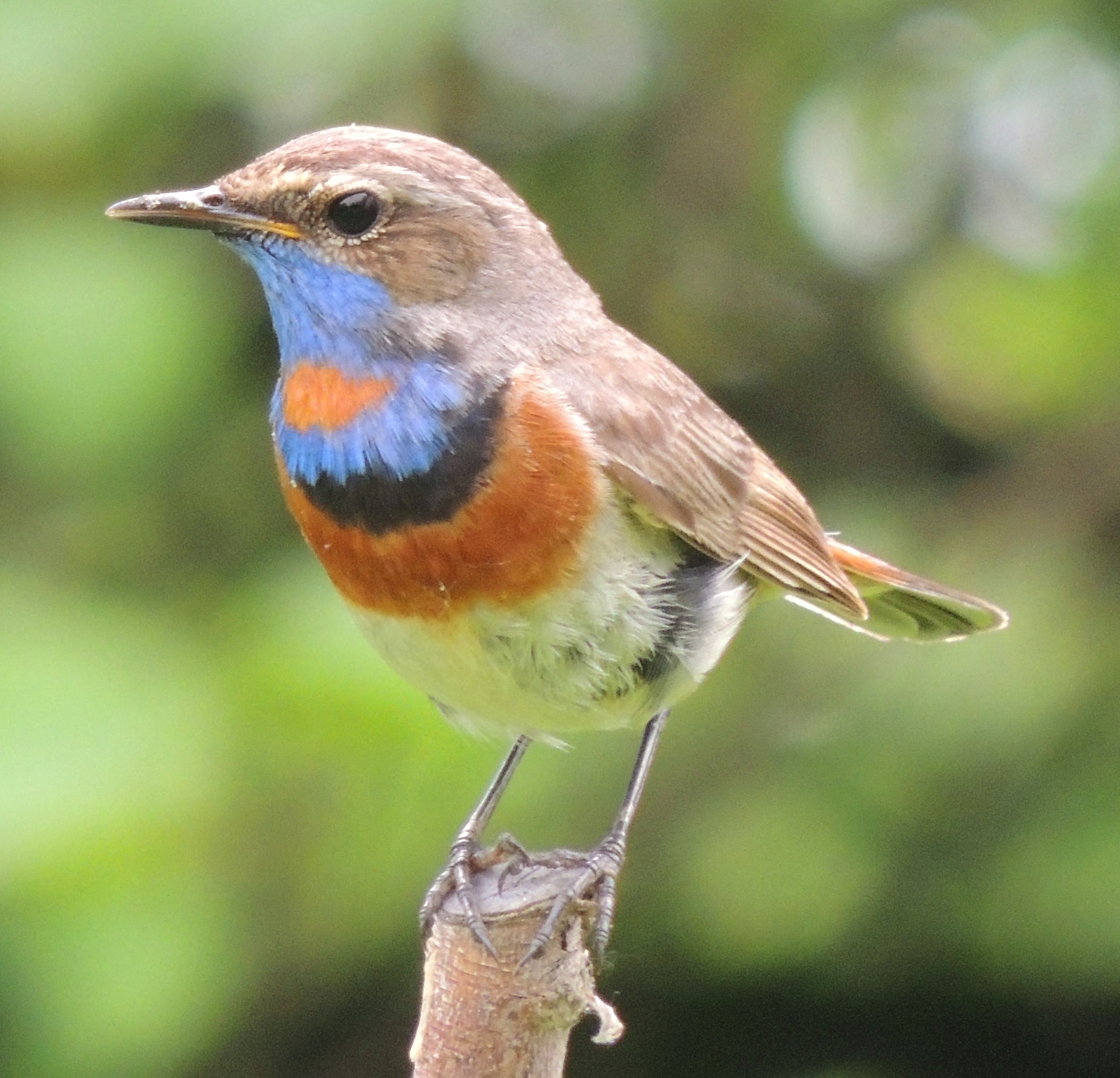
Where does the Bluethroat live?
Luscinia svecica
Spotted a bird? Identify it instantly with the Birdby app
Open the appThe Bluethroat lives in specific habitats and regions. Knowing where, and when, to look improves your chances of a successful sighting.
Biomes
Tundra, taiga, boreal forests, temperate grasslands, wetlands, scrublands.
Geographic range
Breeds across a wide range of Eurasia, from Scandinavia and Eastern Europe eastward through Siberia to Alaska. Winters in southern Europe, North Africa, the Middle East, and South Asia.
Preferred environments
Prefers damp, bushy habitats with dense low vegetation, often near water. This includes willow and birch scrub along rivers and lakes, marshy areas, wet meadows with scattered bushes, clearings in boreal forests, and subalpine scrub. Requires dense cover for nesting and foraging.
Elevation range
Typically breeds from sea level up to 2,000 meters, occasionally higher in mountainous regions.
Where to look
Wetlands and Marshes
Look in areas with dense reedbeds, sedges, and willow scrub along the edges of lakes, rivers, and ponds.
Boreal Forests and Tundra
In northern breeding grounds, they inhabit scrubby clearings, dwarf birch and willow thickets, and boggy areas.
Subalpine Scrub
In mountainous regions, they can be found in dense low-growing vegetation above the treeline.
Migration Stopovers
During migration, they may be found in a wider variety of bushy habitats, including gardens and parks, especially if dense cover and water are present.
Field tips
- Be Patient and Quiet. Bluethroats are shy and often stay hidden in dense cover. Sit quietly near suitable habitat and wait for them to emerge or sing.
- Listen for the Song. Their distinctive and varied song is often the first indication of their presence. Learn to recognize it, as they can be hard to spot visually.
- Look for Movement in Dense Cover. Scan the lower parts of bushes and reeds for subtle movements, as they forage close to the ground.
- Early Morning and Late Evening. These are the best times to hear males singing and to observe them when they are most active.
- Check Tail Flashes. When a bird flies into cover, try to catch a glimpse of the rufous tail patches, which are diagnostic.
Migration
A long-distance migratory species. Northern populations migrate south to wintering grounds in North Africa, the Middle East, and South Asia. Migration occurs primarily at night. Spring migration is from March to May, and autumn migration from August to October.
Explore the Bluethroat
Identify birds anywhere
Free on iOS, Android, and Web. Photo & sound identification, full species database, and your personal life list.