
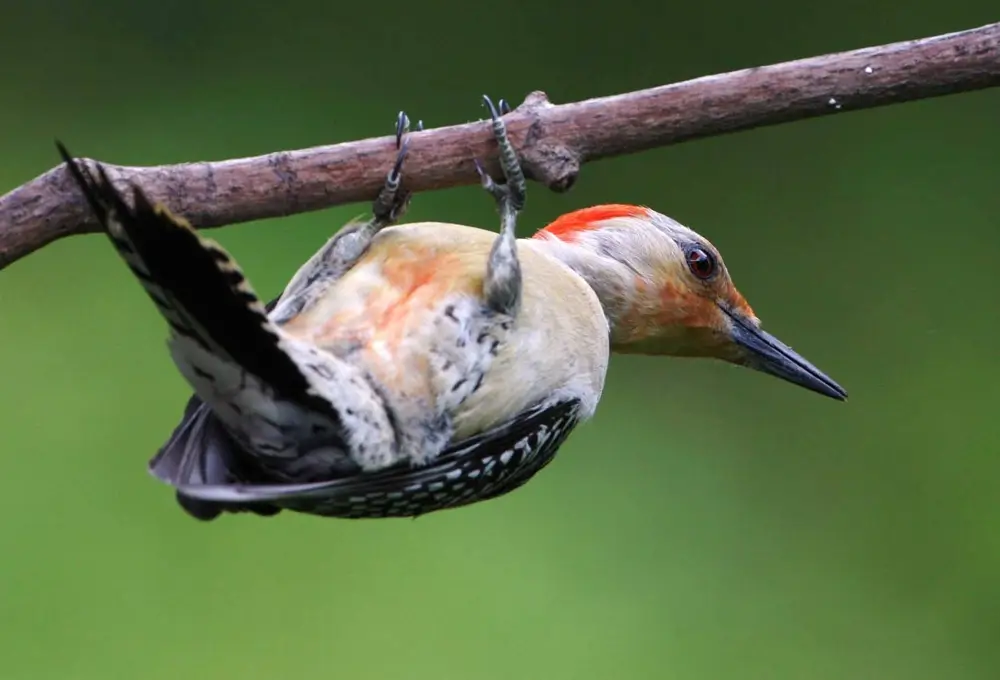
Where does the Red-bellied Woodpecker live?
Melanerpes carolinus
Spotted a bird? Identify it instantly with the Birdby app
Open the appThe Red-bellied Woodpecker lives in specific habitats and regions. Knowing where, and when, to look improves your chances of a successful sighting.
Biomes
Deciduous forests, mixed forests, suburban areas, parks, orchards, and riparian woodlands.
Geographic range
Eastern United States, from southern Canada south to Florida and the Gulf Coast, and west to the Great Plains. Its range has been expanding northward in recent decades.
Preferred environments
Mature woodlands with large, dead or decaying trees for nesting and foraging. They adapt well to human-modified landscapes with sufficient tree cover.
Elevation range
Typically found from sea level up to approximately 600 meters (2,000 feet).
Where to look
Deciduous and Mixed Forests
Look in mature woodlands with a good mix of deciduous trees, especially those with dead snags or decaying wood.
Suburban Parks and Yards
They are increasingly common in suburban and urban areas with mature trees, often visiting bird feeders.
Orchards and Riparian Areas
Can be found in fruit orchards and along riverbanks where suitable trees are present.
Field tips
- Listen for Calls. Their loud, rolling calls are often the first indication of their presence. Learn to recognize the 'churr-churr-churr' or 'kwirr-kwirr-kwirr' and sharp 'kip' calls.
- Watch Bird Feeders. They are frequent visitors to suet feeders, especially in winter. Placing suet out can attract them to your yard.
- Scan Tree Trunks. Look for them climbing up tree trunks, probing bark crevices, or excavating holes. They often work their way up a tree before flying to the base of another.
- Look for Drumming. In spring, listen for their drumming, which is a rapid, accelerating series of taps on resonant branches or utility poles.
Migration
Primarily a year-round resident throughout most of its range. Northern populations may exhibit some short-distance, irruptive movements in response to food availability, but generally not considered migratory.
Explore the Red-bellied Woodpecker
Identify birds anywhere
Free on iOS, Android, and Web. Photo & sound identification, full species database, and your personal life list.