
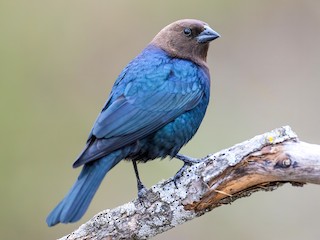
Where does the Brown-headed Cowbird live?
Molothrus ater
Spotted a bird? Identify it instantly with the Birdby app
Open the appThe Brown-headed Cowbird lives in specific habitats and regions. Knowing where, and when, to look improves your chances of a successful sighting.
Biomes
Grasslands, open woodlands, forest edges, agricultural fields, suburban areas, parks, and riparian zones.
Geographic range
Breeds across most of North America, from southern Canada through the United States and into northern Mexico. Winters in the southern parts of its breeding range and further south into Mexico and the southeastern U.S.
Preferred environments
Prefers open or semi-open habitats with scattered trees, often associated with livestock or human disturbance. Avoids dense, unbroken forests.
Elevation range
Sea level up to approximately 2,500 meters (8,200 feet), primarily in lower elevations.
Where to look
Open Woodlands and Edges
Look in areas where forests meet open fields, clearings, or suburban developments. They thrive in fragmented landscapes.
Agricultural Areas
Common in pastures, farmlands, and areas with livestock, where they feed on insects stirred up by grazing animals.
Suburban Parks and Gardens
Often found in urban and suburban environments, especially where bird feeders are present or open grassy areas are abundant.
Bird Feeders
They are frequent visitors to feeders, particularly those offering sunflower seeds or mixed grain.
Field tips
- Listen for Calls. Their distinctive 'chink' call is often heard before the bird is seen, especially in flocks.
- Observe Mixed Flocks. Outside the breeding season, look for them foraging in large mixed-species flocks with other blackbirds, grackles, and starlings.
- Check Host Nests. During the breeding season, if you observe small songbirds acting agitated around their nest, it might be a cowbird attempting to parasitize it. Finding a cowbird egg or chick in a host nest is definitive identification of their presence.
- Look Near Livestock. In rural areas, check fields with cattle or horses, as cowbirds often follow them to feed on disturbed insects.
Migration
Northern populations are migratory, moving south for the winter. Southern populations are resident. Migration occurs in flocks, typically at night.
Explore the Brown-headed Cowbird
Identify birds anywhere
Free on iOS, Android, and Web. Photo & sound identification, full species database, and your personal life list.