
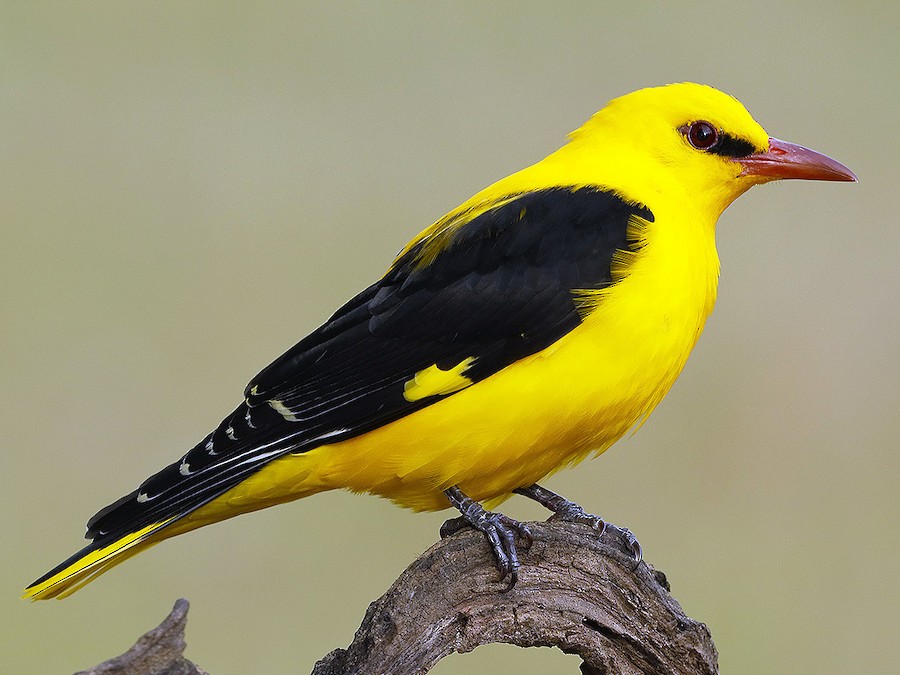
Where does the Eurasian Golden Oriole live?
Oriolus oriolus
Spotted a bird? Identify it instantly with the Birdby app
Open the appThe Eurasian Golden Oriole lives in specific habitats and regions. Knowing where, and when, to look improves your chances of a successful sighting.
Biomes
Temperate forests, broadleaf forests, riparian woodlands, parks, orchards.
Geographic range
Breeds across most of Europe (excluding the far north) and temperate Asia, extending east to western China. Winters in tropical Africa and parts of India.
Preferred environments
Prefers open deciduous or mixed woodlands with tall trees, especially poplars, oaks, and elms, often near water. Also found in large parks, avenues, and orchards, provided there is sufficient tree cover and undergrowth.
Elevation range
Typically found from sea level up to 1,000 meters, occasionally higher in some parts of its range.
Where to look
Deciduous Woodlands
Large, mature deciduous forests, especially those with a mix of tree species and an open understory.
Riparian Zones
Woodlands along rivers and streams, where tall trees provide suitable nesting and foraging sites.
Parks and Gardens
Large, mature parks, arboretums, and extensive gardens with tall trees, particularly during migration.
Orchards
Traditional orchards with older, taller fruit trees can attract them, especially when fruits are ripening.
Field tips
- Listen for the song. The Golden Oriole's song is its most distinctive feature. Learn to recognize it, as you are far more likely to hear it than see the bird.
- Scan the canopy. They spend most of their time high in the tree canopy. Use binoculars to scan the upper branches, especially where you hear the song.
- Visit at dawn or dusk. They are most active and vocal during the early morning and late afternoon, increasing your chances of detection.
- Look for movement. Despite their bright color, they can be surprisingly difficult to spot. Look for subtle movements in the foliage, especially if you hear their calls.
- Be patient and quiet. Their shy nature requires patience. Remain still and quiet to avoid disturbing them.
Migration
Long-distance migratory. European populations migrate south to sub-Saharan Africa, while Asian populations winter in India and Southeast Asia. They typically arrive in breeding grounds in late April/early May and depart in August/September.
Explore the Eurasian Golden Oriole
Identify birds anywhere
Free on iOS, Android, and Web. Photo & sound identification, full species database, and your personal life list.