
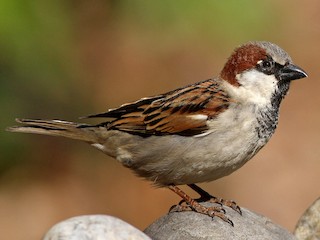
Where does the House Sparrow live?
Passer domesticus
Spotted a bird? Identify it instantly with the Birdby app
Open the appThe House Sparrow lives in specific habitats and regions. Knowing where, and when, to look improves your chances of a successful sighting.
Biomes
Urban, suburban, agricultural, and rural areas. Highly commensal with humans.
Geographic range
Native to Europe, Asia, and North Africa. Introduced and established in North and South America, Australia, New Zealand, and parts of Africa. Effectively cosmopolitan.
Preferred environments
Human settlements, including cities, towns, villages, farms, and industrial areas. Rarely found in dense forests, grasslands far from human activity, or deserts without irrigation.
Elevation range
Sea level up to 4,500 meters (14,800 ft) in some parts of its range, particularly in the Himalayas, but most common at lower elevations.
Where to look
Urban and Suburban Areas
Parks, gardens, city streets, building eaves, shopping centers, and residential neighborhoods are prime locations.
Agricultural Areas
Barns, farmyards, grain storage facilities, and fields with crops are common habitats.
Transportation Hubs
Train stations, bus terminals, and airports often host House Sparrow populations due to available food and shelter.
Field tips
- Look near human activity. House Sparrows are highly commensal; they are almost always found where humans are present. Check around buildings, outdoor cafes, and bird feeders.
- Listen for their calls. Their loud, chattering 'chirrup' calls are often the first indication of their presence, even before you see them.
- Observe feeding behavior. They are ground feeders and will readily visit bird feeders. Watch for small, brown birds pecking at crumbs or seeds.
- Check for nesting sites. Look for nests in cavities or sheltered spots on buildings, under eaves, or in dense climbing plants.
Migration
Generally a resident species throughout its range, though some northern populations may undertake short-distance, irruptive movements in harsh winters. Not considered a true migratory bird.
Explore the House Sparrow
Identify birds anywhere
Free on iOS, Android, and Web. Photo & sound identification, full species database, and your personal life list.