
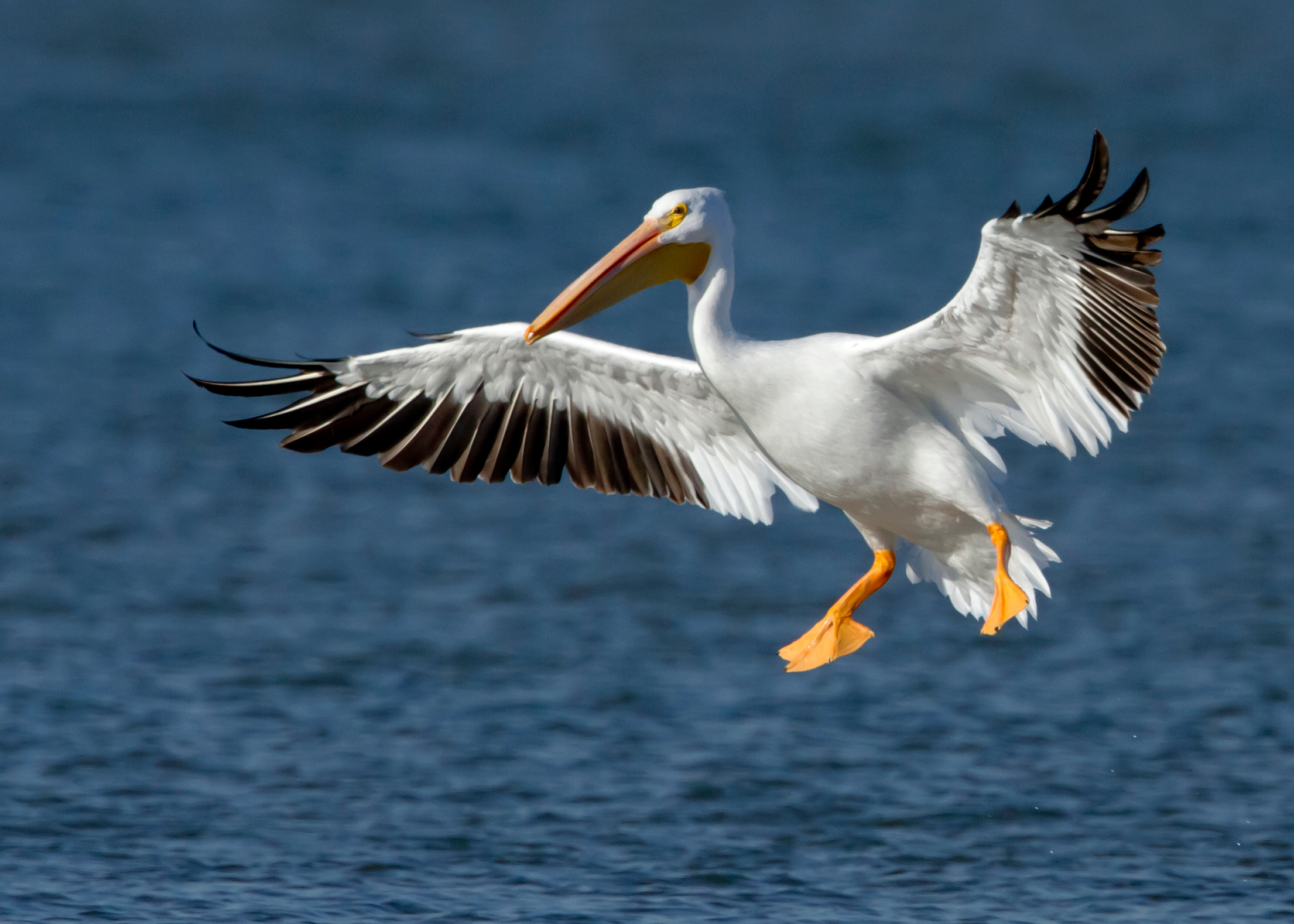
Where does the American White Pelican live?
Pelecanus erythrorhynchos
Spotted a bird? Identify it instantly with the Birdby app
Open the appThe American White Pelican lives in specific habitats and regions. Knowing where, and when, to look improves your chances of a successful sighting.
Biomes
Freshwater and brackish wetlands, including large shallow lakes, marshes, rivers, and coastal lagoons.
Geographic range
Breeds in interior North America, from British Columbia and Alberta south to California, Colorado, and Minnesota. Winters along the Pacific, Gulf, and Atlantic coasts of the United States, and south into Mexico and Central America.
Preferred environments
Large, shallow, productive freshwater lakes and marshes for breeding, often with islands free from mammalian predators. Wintering grounds include estuaries, coastal lagoons, and large inland lakes with abundant fish.
Elevation range
Typically found at low elevations, from sea level up to approximately 2,000 meters (6,500 feet) in some western breeding areas.
Where to look
Large Freshwater Lakes
Especially those with islands for nesting, such as those in the prairie pothole region of the central U.S. and Canada.
Coastal Estuaries and Lagoons
During winter months, along the Gulf Coast, Pacific Coast, and parts of the Atlantic Coast of the U.S. and Mexico.
Major Rivers
Large, slow-moving rivers can also host pelicans, particularly during migration or in winter.
Wildlife Refuges and Sanctuaries
Many protected wetland areas are crucial for their breeding and wintering populations.
Field tips
- Look for large white birds on the water. Their size and bright white plumage make them stand out, even from a distance. Scan large open water bodies.
- Observe their feeding behavior. If you see a group of large white birds swimming in a coordinated line, dipping their bills simultaneously, you've likely found American White Pelicans feeding.
- Watch the skies for soaring birds. They often soar high on thermals, sometimes in large groups. Look for their distinctive black flight feathers against the white body.
- Visit breeding colonies (from a distance). During breeding season, they gather in large, conspicuous colonies on islands. Always observe from a respectful distance to avoid disturbing them.
Migration
Long-distance migrant. Most populations breed in the interior of North America and migrate to warmer coastal and southern inland waters for the winter. Migration occurs in large flocks, often at high altitudes.
Explore the American White Pelican
Identify birds anywhere
Free on iOS, Android, and Web. Photo & sound identification, full species database, and your personal life list.