
How to identify the American White Pelican
Pelecanus erythrorhynchos
Spotted a bird? Identify it instantly with the Birdby app
Open the appTo correctly identify the American White Pelican (Pelecanus erythrorhynchos), check each of these features. Birds can be tricky: habit, habitat, and call often confirm a sighting that a single photo cannot.
Size at a glance
- Length
- 127-178 cm (50-70 in)
- Wingspan
- 244-290 cm (96-114 in)
- Weight
- 3.5-13.6 kg (7.7-30 lbs)
Physical features to check
- 1
Plumage
Overall feather coloration and pattern.
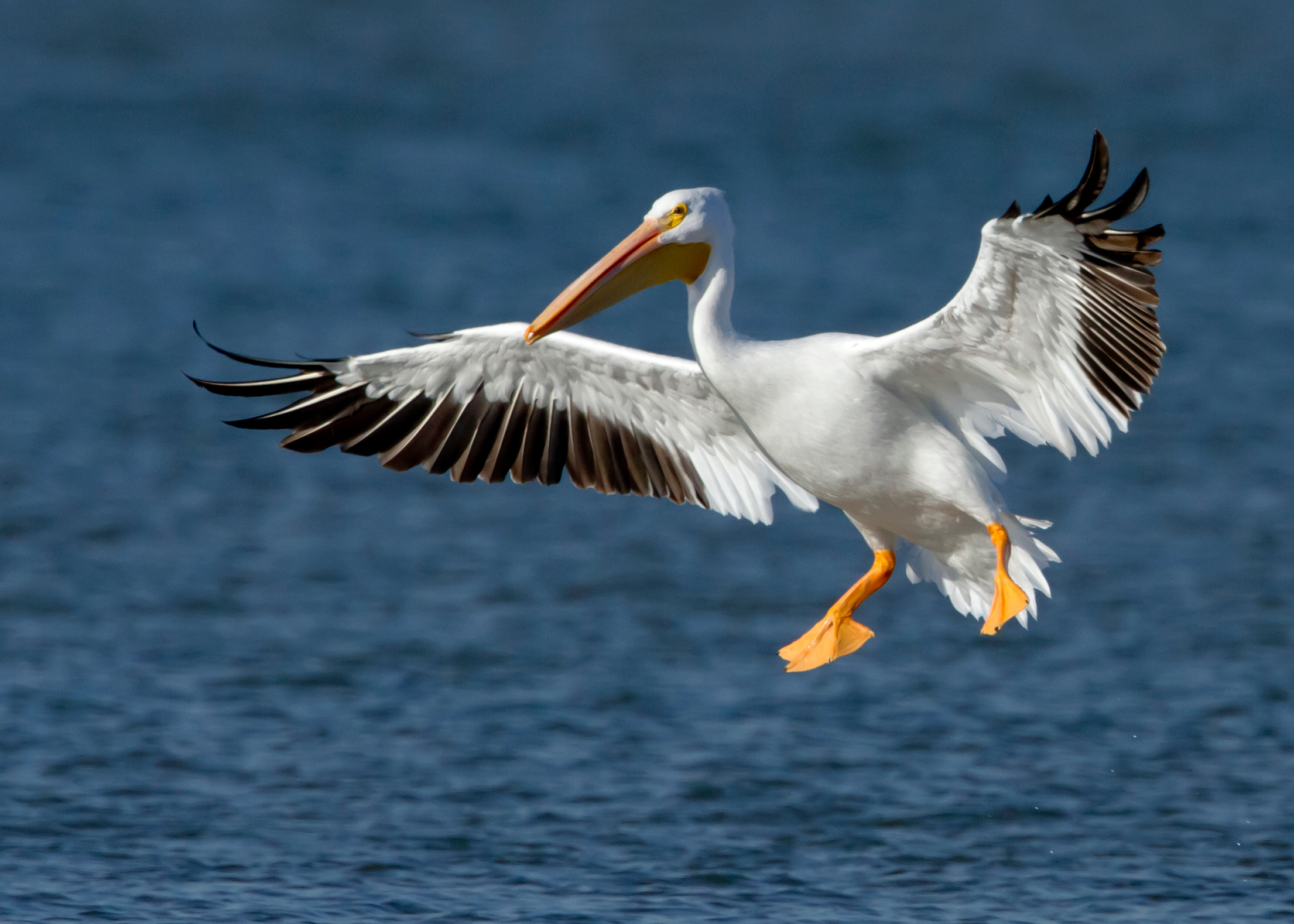
Adults are entirely white except for black primary and outer secondary flight feathers, which are visible only in flight. The underwing coverts are white. Juveniles have a dusky gray wash on the head and neck, and some dusky markings on the back, which fade with age.
- 2
Beak shape
Shape and color of the bill: a key field mark.
Very large, flattened, and orange-yellow to pinkish-orange. During the breeding season, adults develop a prominent, fibrous 'horn' on the upper mandible, which is shed after egg-laying.
- 3
Eye color
Iris color and any distinctive eye markings.
Dark brown with a pale orbital ring
- 4
Leg color
Leg and foot color.
Bright orange to pinkish-orange
- 5
Distinguishing features
Standout features that separate this species.
Immense size, all-white body with black flight feathers (visible in flight), large orange bill with a gular pouch, and the unique breeding horn on the bill.
- 6
Juvenile appearance
How young birds differ from adults.
Juveniles have a grayish wash on the head, neck, and sometimes the back, and their bill and legs are duller, more yellowish-pink. The black flight feathers are present but may appear browner.
- 7
Seasonal changes
Plumage variation between breeding and non-breeding seasons.
The most notable seasonal change is the development of the fibrous 'horn' on the upper mandible of both sexes during the breeding season. The bill and leg coloration also become more vibrant orange during breeding.
- 8
Sexual dimorphism
How males and females differ.
Males are generally larger than females, with a slightly larger bill and a more prominent breeding horn. Otherwise, plumage is identical.
Key field marks
- Size and Color. Look for a very large, all-white bird. If seen on the water or ground, its immense size and bright white body are unmistakable. In flight, the black primary and outer secondary feathers contrast sharply with the white body and inner wings.
- Bill and Pouch. Observe the enormous, orange-yellow bill with a large gular pouch underneath. During breeding season, look for the distinctive fibrous 'horn' on the upper mandible.
- Flight Pattern. Watch for their characteristic soaring flight, often in V-formations or long lines, with slow, powerful wingbeats interspersed with long glides. They fly with their neck retracted, unlike cranes or storks.
- Feeding Behavior. Note their cooperative feeding strategy, where groups of pelicans herd fish. They do not plunge-dive like Brown Pelicans.
- Habitat. They are typically found on large, open bodies of freshwater or brackish water, often in groups.
Explore the American White Pelican
Identify birds anywhere
Free on iOS, Android, and Web. Photo & sound identification, full species database, and your personal life list.