
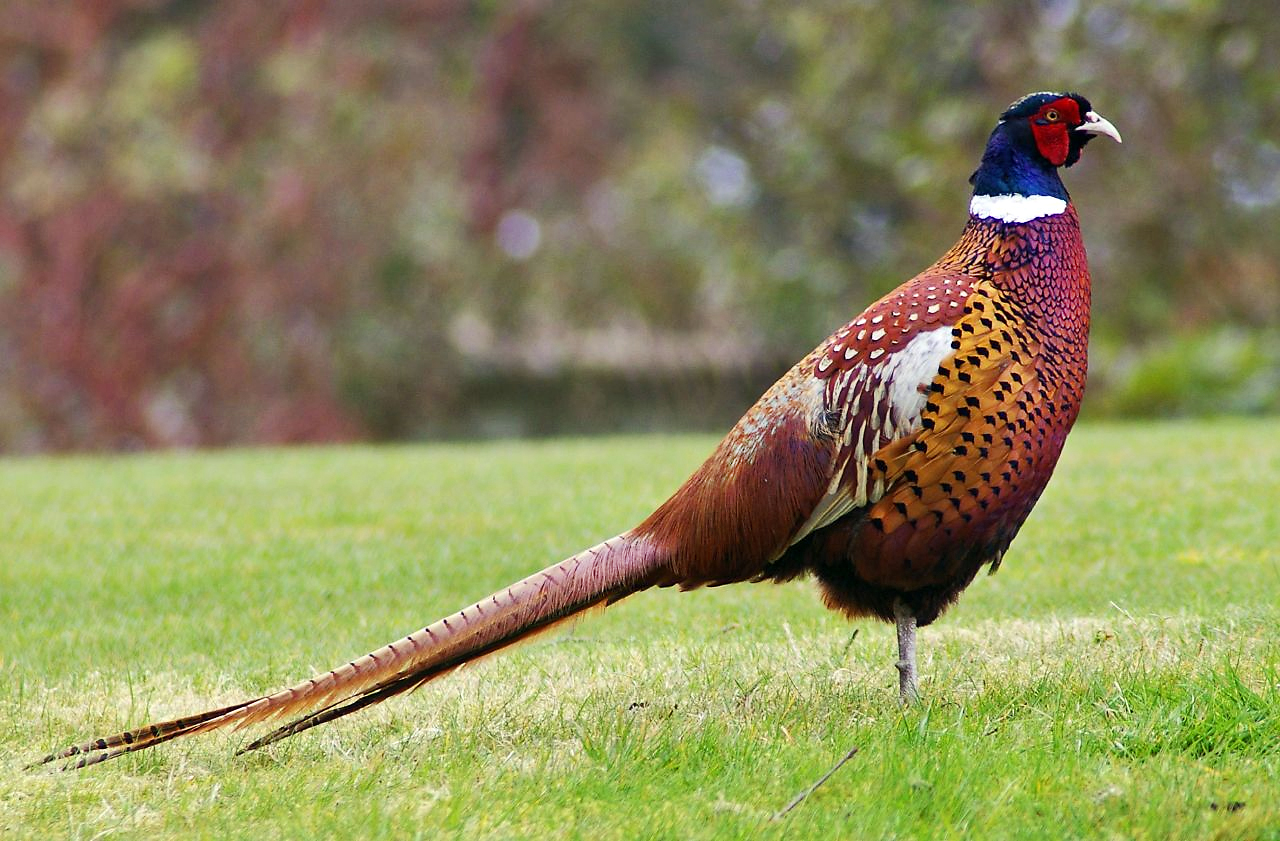
Where does the Common Pheasant live?
Phasianus colchicus
Spotted a bird? Identify it instantly with the Birdby app
Open the appThe Common Pheasant lives in specific habitats and regions. Knowing where, and when, to look improves your chances of a successful sighting.
Biomes
Grasslands, agricultural fields, open woodlands, scrubland, hedgerows, marshes, and forest edges.
Geographic range
Native to Asia (from the Caucasus and Black Sea to China, Korea, and Japan) and parts of Europe. Widely introduced and naturalized across Europe, North America, Australia, and New Zealand.
Preferred environments
Prefers mosaic landscapes with a mix of dense cover (for roosting and nesting), open areas (for foraging), and water sources. Often found near agricultural land, hedgerows, and woodland fringes.
Elevation range
Typically found from sea level up to 3,000 meters, depending on the region and availability of suitable habitat.
Where to look
Agricultural Areas
Often found in fields of corn, wheat, and other crops, especially near field edges and hedgerows that provide cover.
Open Woodlands and Forest Edges
They utilize the transition zones between forests and open areas, where they can find both cover and foraging opportunities.
Scrubland and Hedgerows
Dense shrubbery and hedgerows offer crucial protection from predators and harsh weather, as well as roosting sites.
Marshes and Wetlands
Some populations inhabit marshy areas with tall reeds and grasses, particularly in regions where such habitats are abundant.
Field tips
- Listen for Calls. The male's loud crowing call is often the first indication of a pheasant's presence, especially at dawn and dusk during the breeding season.
- Look for Movement in Cover. Pheasants are masters of camouflage. Scan dense vegetation, tall grass, and hedgerows for subtle movements or the distinctive shape of a pheasant's head or tail.
- Check Field Edges. They frequently forage along the edges of agricultural fields, where they can quickly retreat into cover if disturbed.
- Early Morning/Late Afternoon. These are their most active foraging times, increasing your chances of spotting them out in the open.
- Roadsides. In some areas, pheasants can be seen foraging along roadsides, particularly in rural settings.
Migration
Resident; non-migratory throughout its range. Local movements may occur in response to food availability or hunting pressure.
Explore the Common Pheasant
Identify birds anywhere
Free on iOS, Android, and Web. Photo & sound identification, full species database, and your personal life list.