
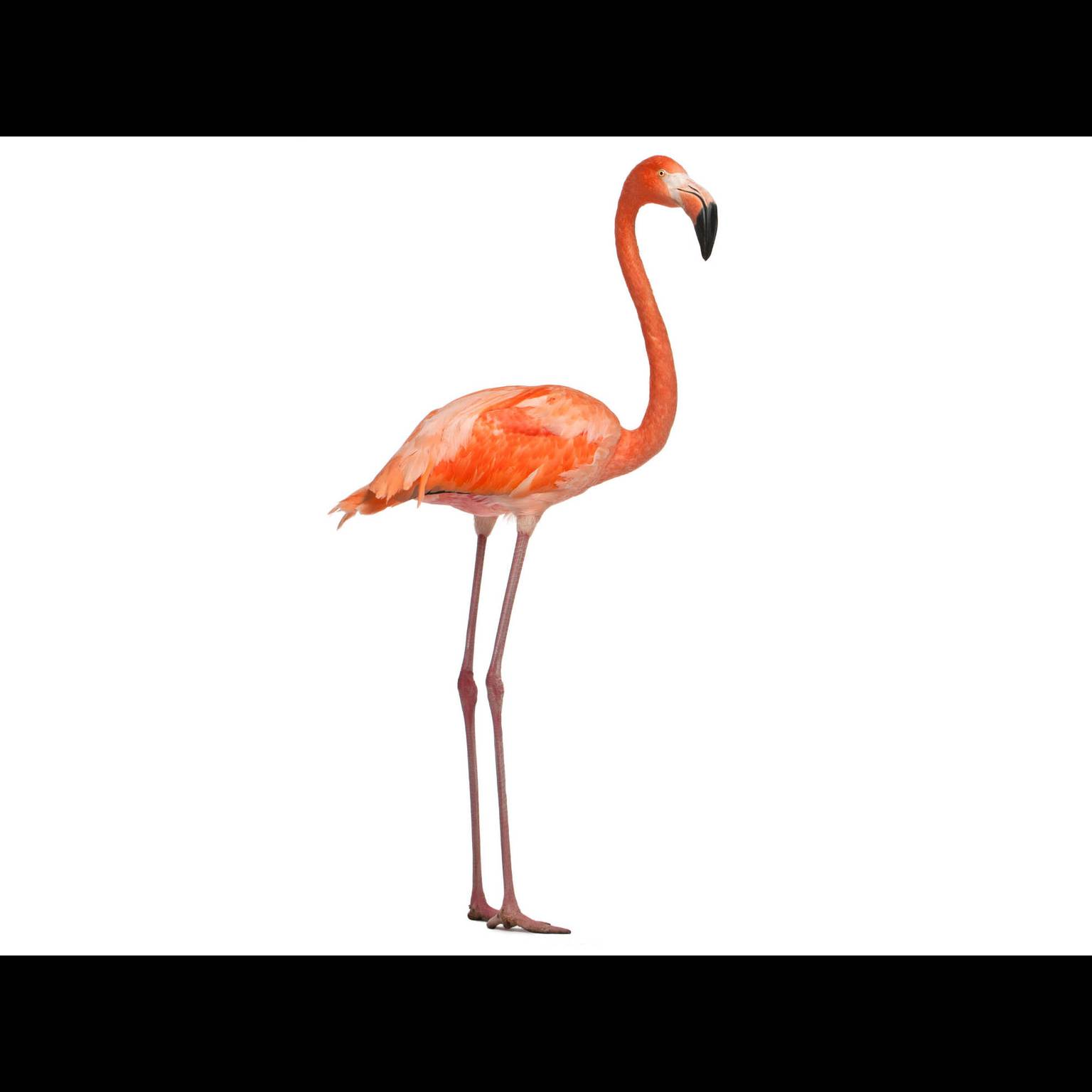
How to identify the American Flamingo
Phoenicopterus ruber
Spotted a bird? Identify it instantly with the Birdby app
Open the appTo correctly identify the American Flamingo (Phoenicopterus ruber), check each of these features. Birds can be tricky: habit, habitat, and call often confirm a sighting that a single photo cannot.
Size at a glance
- Length
- 120-145 cm (47-57 in)
- Wingspan
- 140-165 cm (55-65 in)
- Weight
- 2.2-2.8 kg (4.9-6.2 lbs)
Physical features to check
- 1
Plumage
Overall feather coloration and pattern.
Adult plumage ranges from pale pink to brilliant reddish-orange, with primary and secondary flight feathers being black, visible during flight. The intensity of color is due to carotenoid pigments in their diet.
- 2
Beak shape
Shape and color of the bill: a key field mark.
Large, heavy, and distinctively bent downwards in the middle, pinkish-white at the base, becoming black towards the tip. The unique shape is adapted for filter-feeding.
- 3
Eye color
Iris color and any distinctive eye markings.
Small, yellow eyes with a dark pupil.
- 4
Leg color
Leg and foot color.
Long, thin, stilt-like legs are entirely pink.
- 5
Distinguishing features
Standout features that separate this species.
Its vibrant coloration, large size, exceptionally long pink legs and neck, and the uniquely angled bill are all highly distinctive. Black flight feathers are prominent against the pink body in flight.
- 6
Juvenile appearance
How young birds differ from adults.
Juveniles are dull grey or whitish with some brown streaking, especially on the back and wings. Their legs are greyish-pink, and their bill is dark grey. They gradually acquire adult plumage over 2-3 years.
- 7
Seasonal changes
Plumage variation between breeding and non-breeding seasons.
Plumage color can vary slightly based on diet and breeding condition, becoming more intense during breeding season due to higher carotenoid intake and hormonal influences, but no distinct breeding/non-breeding plumage exists.
- 8
Sexual dimorphism
How males and females differ.
Males are generally slightly larger and heavier than females, but plumage coloration is identical. Sex determination based solely on visual observation is often difficult.
Key field marks
- Plumage Color. Look for the intense, uniform reddish-pink to orange-red body plumage, which is a key characteristic separating it from other flamingo species in its range (where they might rarely overlap, like vagrant Greater Flamingos).
- Bill Structure and Color. Observe the distinctive downward-curved bill: it's pinkish-white at the base, becoming broadly black towards the tip. This pattern helps distinguish it from other flamingos.
- Leg Color. Note the entirely pink legs. This differs from other species like the Chilean Flamingo, which has grey legs with pink joints.
- Flight Pattern. In flight, the vibrant pink body contrasting sharply with the extensive black primary and secondary flight feathers is unmistakable. They fly with outstretched neck and legs.
- Vocalizations. Listen for their characteristic goose-like honks and grunts, especially in colonial settings. These calls are quite distinct and can be heard from a distance.
Explore the American Flamingo
Identify birds anywhere
Free on iOS, Android, and Web. Photo & sound identification, full species database, and your personal life list.