
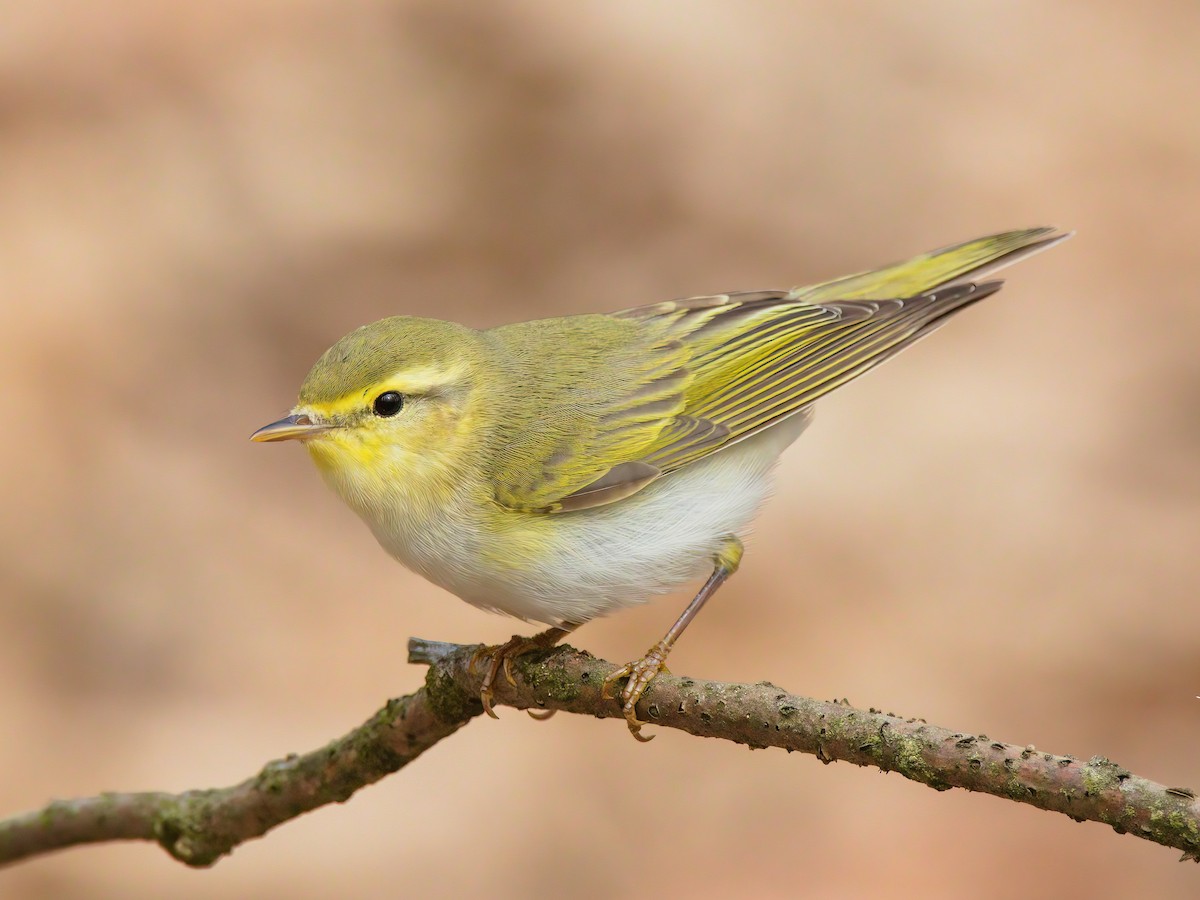
Where does the Wood Warbler live?
Phylloscopus sibilatrix
Spotted a bird? Identify it instantly with the Birdby app
Open the appThe Wood Warbler lives in specific habitats and regions. Knowing where, and when, to look improves your chances of a successful sighting.
Biomes
Temperate broadleaf and mixed forests, boreal forests, woodlands.
Geographic range
Breeds across most of temperate Europe, from Great Britain and France eastward through Scandinavia, Central and Eastern Europe, and into western Siberia. Winters in sub-Saharan Africa, primarily in the tropical rainforest belt from West Africa to East Africa.
Preferred environments
Prefers mature deciduous or mixed woodlands with an open understory, often with a good canopy cover and sparse ground vegetation. Beech and oak woodlands are particularly favored. Also found in conifer plantations, especially those with a broadleaf component. Requires open ground for foraging and singing perches.
Elevation range
Typically breeds from sea level up to 1,500 meters, occasionally higher in some mountainous regions.
Where to look
Mature Deciduous Woodlands
Especially beech and oak forests with an open understory. These provide the ideal combination of canopy cover for foraging and open ground for nesting.
Mixed Woodlands
Forests containing a mix of broadleaf and coniferous trees, particularly those with mature broadleaf components.
Forest Edges and Clearings
While preferring dense canopy, they can be found at the edges of woodlands or in clearings where suitable nesting and foraging conditions exist.
Field tips
- Listen for the Song. The Wood Warbler's song is highly distinctive and carries well. Learning to recognize it is the most effective way to locate this species, as it often sings from high in the canopy and can be difficult to spot visually.
- Visit Early in the Breeding Season. Males are most vocal upon arrival in spring (late April to May) as they establish territories and attract mates. This is the best time to hear and potentially see them.
- Scan the Canopy. Wood Warblers typically forage and sing high in the tree canopy. Use binoculars to scan the upper branches of mature trees, especially where you hear singing.
- Look for Movement. They are active foragers. Look for small, quick movements among the leaves as they glean insects or make short aerial sallies.
- Be Patient and Quiet. Like many warblers, they can be elusive. Patience and quiet observation will increase your chances of a good sighting.
Migration
A long-distance migratory species. Breeds in Europe and migrates south to winter in sub-Saharan Africa. Autumn migration typically occurs from late July to October, and spring migration from March to May. It is one of the earliest warblers to arrive on its breeding grounds in spring.
Explore the Wood Warbler
Identify birds anywhere
Free on iOS, Android, and Web. Photo & sound identification, full species database, and your personal life list.