
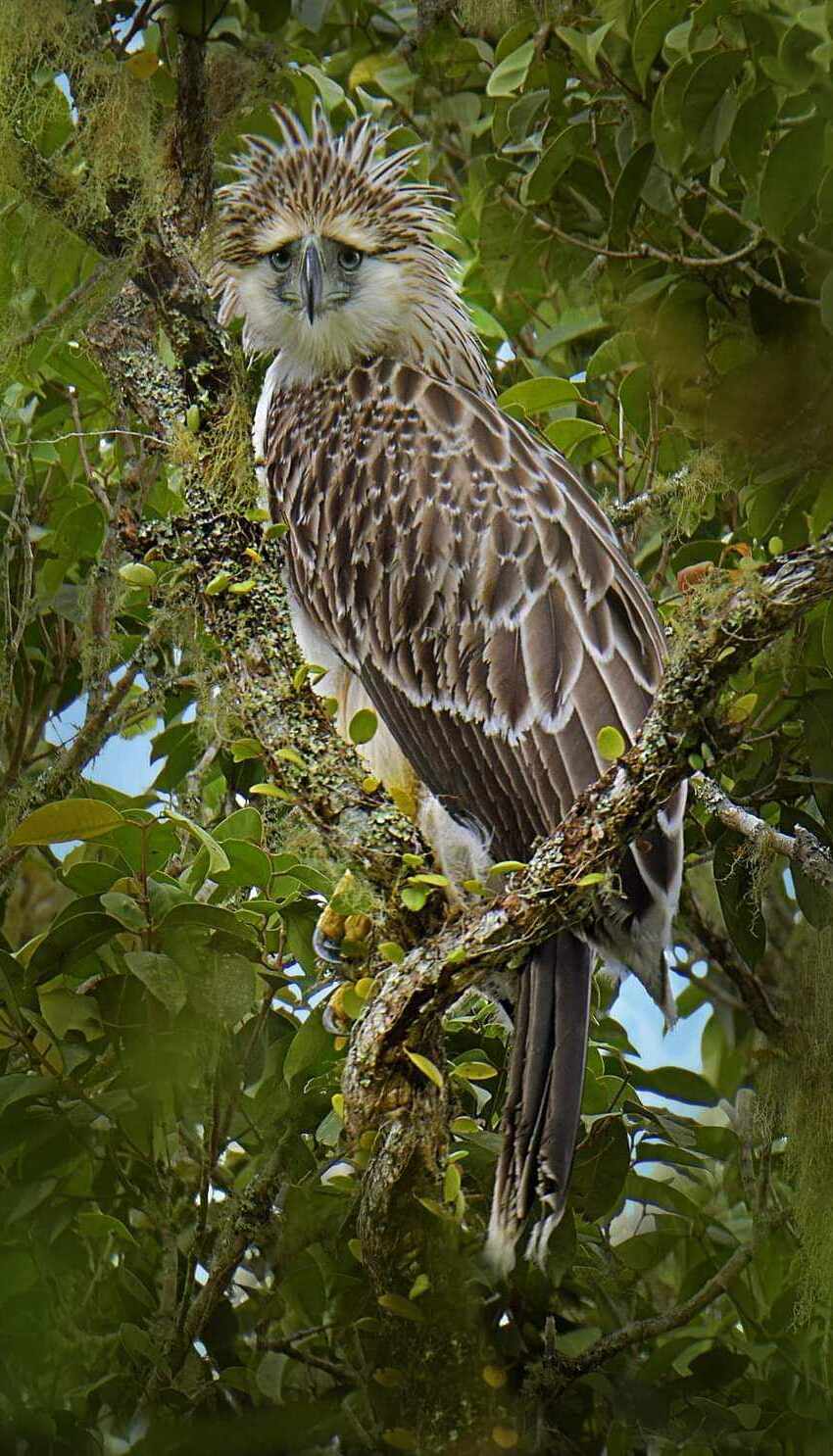
Where does the Philippine Eagle live?
Pithecophaga jefferyi
Spotted a bird? Identify it instantly with the Birdby app
Open the appThe Philippine Eagle lives in specific habitats and regions. Knowing where, and when, to look improves your chances of a successful sighting.
Biomes
Tropical and subtropical moist broadleaf forests.
Geographic range
Endemic to the Philippines, primarily found on four major islands: Luzon, Samar, Leyte, and Mindanao. The largest remaining populations are on Mindanao and Luzon.
Preferred environments
Dense, old-growth rainforests with tall emergent trees for nesting and perching. Requires extensive forest cover and a continuous canopy for hunting.
Elevation range
Typically found from lowlands up to 1,800 meters (5,900 feet) in undisturbed primary and old-growth forests.
Where to look
National Parks and Reserves
Key locations include Mount Apo Natural Park, Mount Kitanglad Range Natural Park, and the Southern Sierra Madre mountains in Luzon. These areas offer protected habitats.
Philippine Eagle Center
While not a wild setting, the Philippine Eagle Center in Davao City, Mindanao, offers guaranteed viewing of several eagles, including breeding pairs, and is crucial for conservation efforts. It provides an opportunity to observe their morphology and behavior up close before attempting to see them in the wild.
Remote Forests
Requires venturing into very remote, well-preserved primary and old-growth dipterocarp forests on the four main islands where they are found. This often involves multi-day treks with experienced local guides.
Field tips
- Hire Local Guides. Engage experienced local bird guides who are familiar with the eagle's territory and habits. Their knowledge is invaluable for locating these elusive birds.
- Patience and Persistence. Spotting a Philippine Eagle in the wild requires significant patience. Be prepared for long periods of waiting and multiple attempts. Success is not guaranteed due to their rarity and preferred dense habitat.
- Look for Soaring Birds. Scan the skies above suitable forest habitats, especially during mid-morning to early afternoon, when they may be soaring on thermals.
- Listen for Calls. Be attentive to their distinctive calls, which can sometimes lead you to their general vicinity, particularly during morning or late afternoon.
- Look for Perches. They often perch on prominent, tall emergent trees that rise above the forest canopy. Focus your search on such potential perching sites.
- Support Conservation. Consider visiting and supporting the Philippine Eagle Center and other conservation initiatives, as their work is vital for the species' survival.
Migration
Sedentary; non-migratory.
Explore the Philippine Eagle
Identify birds anywhere
Free on iOS, Android, and Web. Photo & sound identification, full species database, and your personal life list.