
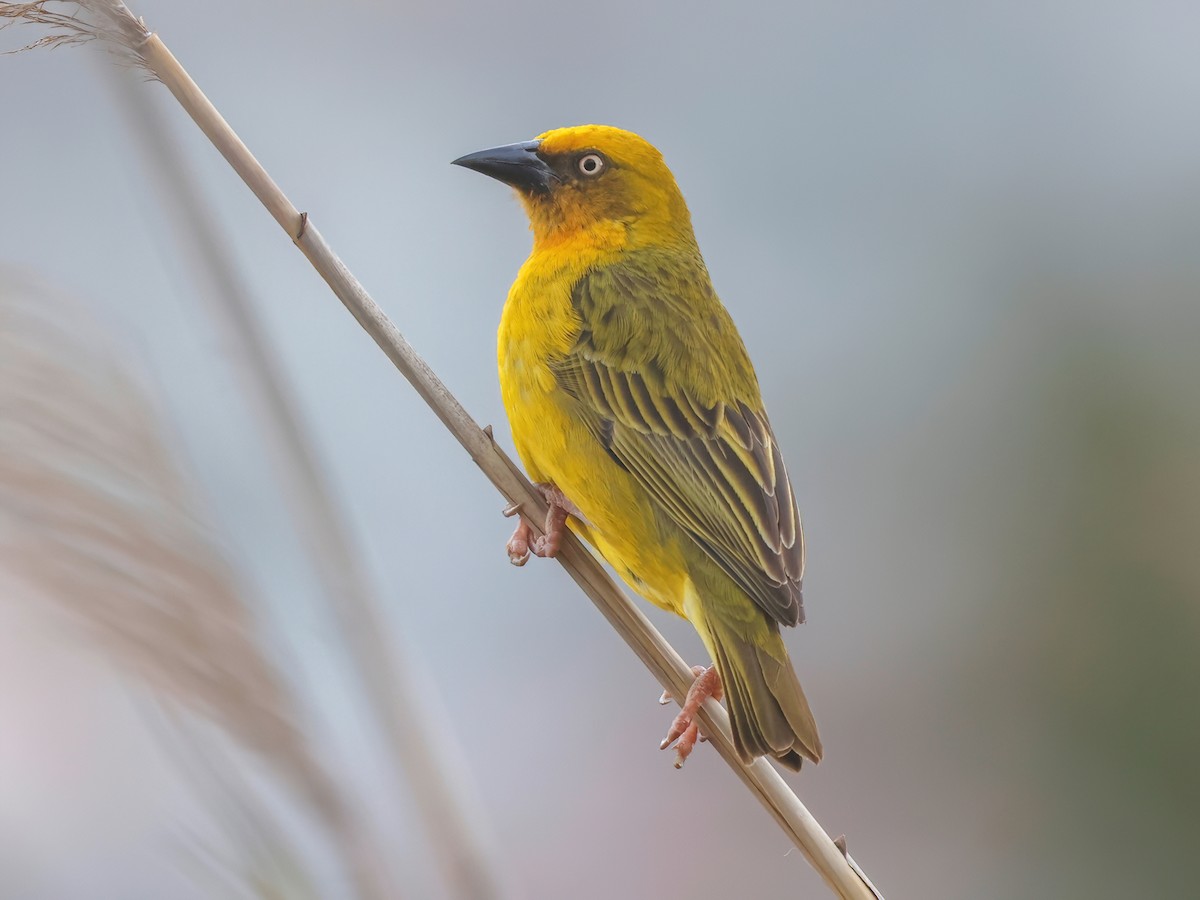
Where does the Cape Weaver live?
Ploceus capensis
Spotted a bird? Identify it instantly with the Birdby app
Open the appThe Cape Weaver lives in specific habitats and regions. Knowing where, and when, to look improves your chances of a successful sighting.
Biomes
Grasslands, fynbos, shrublands, cultivated lands, urban and suburban gardens, parks, and riparian zones.
Geographic range
Endemic to southern Africa, primarily found in South Africa, extending west into Namibia and east into parts of Lesotho and Eswatini. Its distribution closely follows the Cape Floristic Region and adjoining areas.
Preferred environments
Prefers areas with scattered trees or reeds near water, as well as human-modified landscapes with suitable nesting sites and foraging opportunities.
Elevation range
Sea level up to approximately 2000 meters (6500 feet).
Where to look
Wetlands and Riparian Areas
Look in reeds, rushes, and trees bordering rivers, dams, and vleis (seasonal wetlands), which are preferred nesting sites.
Gardens and Parks
Common in suburban and urban areas, especially if there are large trees or water features, as they readily adapt to human-modified landscapes.
Agricultural Lands
Can be found foraging in cultivated fields, especially grain crops, and often nesting in trees bordering these areas.
Bushveld and Fynbos
Present in various open and semi-open habitats throughout their range, particularly where suitable nesting trees or tall vegetation are present.
Field tips
- Visit during breeding season. The best time to observe males in their vibrant breeding plumage and witness their remarkable nest-building activities is from August to February.
- Look near water bodies. Cape Weavers often choose nesting sites over water or very close to it, so focus your search around dams, rivers, and wet areas.
- Listen for their song. The male's characteristic chattering song is a strong indicator of their presence, especially during breeding displays.
- Observe flocks. Outside the breeding season, look for large, noisy flocks foraging in grasslands or agricultural areas.
Migration
Generally sedentary, with local movements driven by food availability. No large-scale migration.
Explore the Cape Weaver
Identify birds anywhere
Free on iOS, Android, and Web. Photo & sound identification, full species database, and your personal life list.