
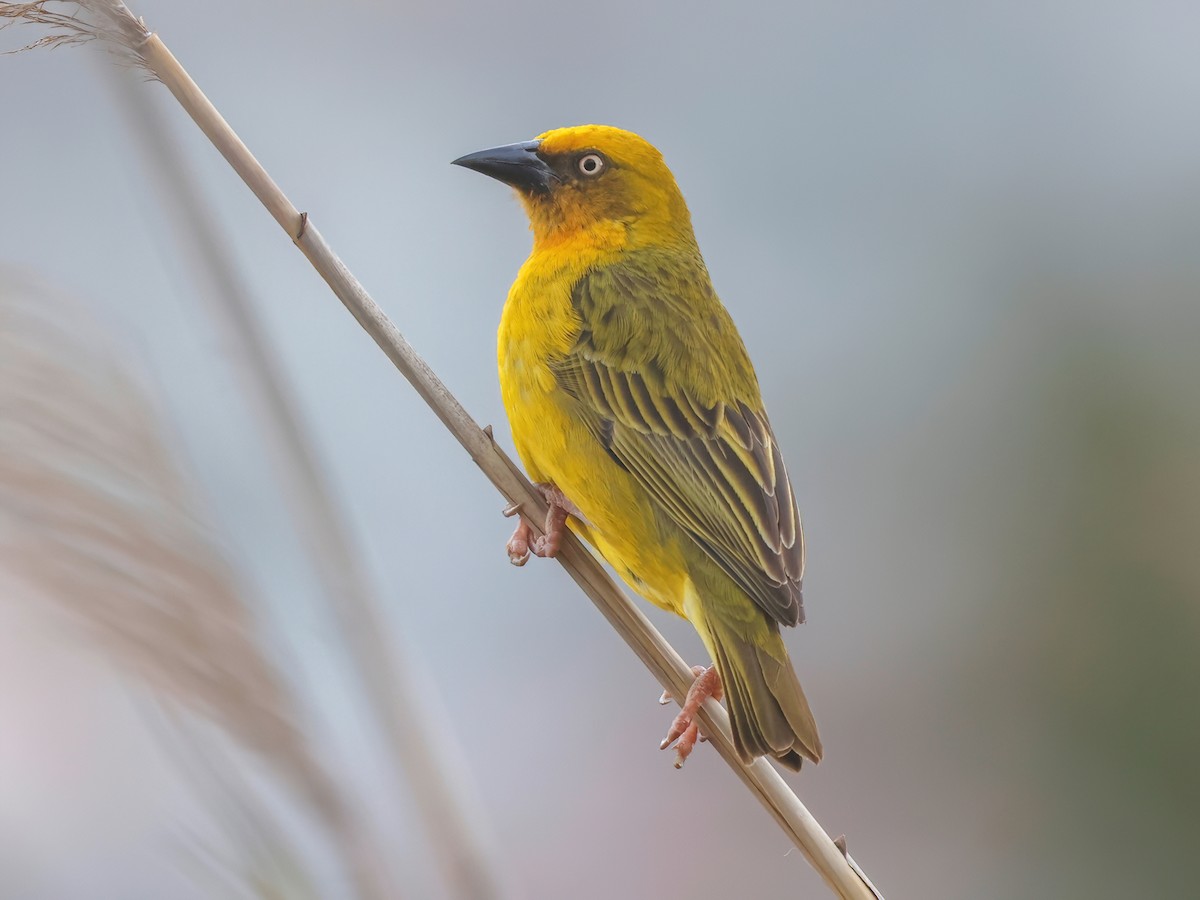
How to identify the Cape Weaver
Ploceus capensis
Spotted a bird? Identify it instantly with the Birdby app
Open the appTo correctly identify the Cape Weaver (Ploceus capensis), check each of these features. Birds can be tricky: habit, habitat, and call often confirm a sighting that a single photo cannot.
Size at a glance
- Length
- 17-18 cm (6.7-7.1 inches)
- Wingspan
- 25-28 cm (9.8-11 inches)
- Weight
- 36-50 g (1.3-1.8 oz)
Physical features to check
- 1
Plumage
Overall feather coloration and pattern.
Adult breeding males are brilliant golden-yellow with a chestnut wash on the face, throat, and breast, and a strong chestnut tinge on the nape and hindneck. The upperparts are olive-yellow, streaked finely with dusky lines. Non-breeding males are duller, resembling females but retaining some yellow. Females and non-breeding males are olive-brown above, with diffuse darker streaking, and pale yellowish-white underparts, often with a faint yellow wash on the flanks and undertail coverts. They show a yellow wash over the supercilium.
- 2
Beak shape
Shape and color of the bill: a key field mark.
Conical, stout, and strong, adapted for cracking seeds, and pointed for weaving.
- 3
Eye color
Iris color and any distinctive eye markings.
Reddish-brown.
- 4
Leg color
Leg and foot color.
Pale brownish-pink to flesh-colored.
- 5
Distinguishing features
Standout features that separate this species.
Breeding male's strong golden-yellow plumage with chestnut face mask. Both sexes have a heavy, conical bill. Unique woven nests are a strong identification feature when nesting.
- 6
Juvenile appearance
How young birds differ from adults.
Juveniles resemble females but are duller, often with more streaking on the breast and fainter yellow tones.
- 7
Seasonal changes
Plumage variation between breeding and non-breeding seasons.
Males undergo a distinct molt into their bright breeding plumage from late winter to early spring, losing their chestnut and vibrant yellow tones in the non-breeding season to resemble females. Females show less significant seasonal plumage variation.
- 8
Sexual dimorphism
How males and females differ.
Pronounced sexual dimorphism. Breeding males are strikingly yellow with a chestnut face and throat; females are olive-brown and duller yellow on the underparts. Non-breeding males are intermediate.
Key field marks
- Plumage (Breeding Male). Look for the intense golden-yellow body plumage combined with a characteristic chestnut wash on the face, throat, and breast, and a relatively duller olive-yellow back.
- Nesting Behavior. Observe for their colonial nesting in reeds or trees near water, and the male's vigorous nest-building and display. The distinct woven, spherical nests with a side entrance are unmistakable.
- Size and Shape. Note their medium-large size for a weaver (17-18 cm) and robust, conical bill, which is thicker than many other weaver species.
- Calls and Song. Listen for the male's energetic, chattering, and sibilant song during the breeding season. Alarm calls are typically harsh 'chuck' notes.
Explore the Cape Weaver
Identify birds anywhere
Free on iOS, Android, and Web. Photo & sound identification, full species database, and your personal life list.