
How to identify the Rose-ringed Parakeet
Psittacula krameri
Spotted a bird? Identify it instantly with the Birdby app
Open the appTo correctly identify the Rose-ringed Parakeet (Psittacula krameri), check each of these features. Birds can be tricky: habit, habitat, and call often confirm a sighting that a single photo cannot.
Size at a glance
- Length
- 38-42 cm (including tail)
- Wingspan
- 42-48 cm
- Weight
- 115-140 g
Physical features to check
- 1
Plumage
Overall feather coloration and pattern.
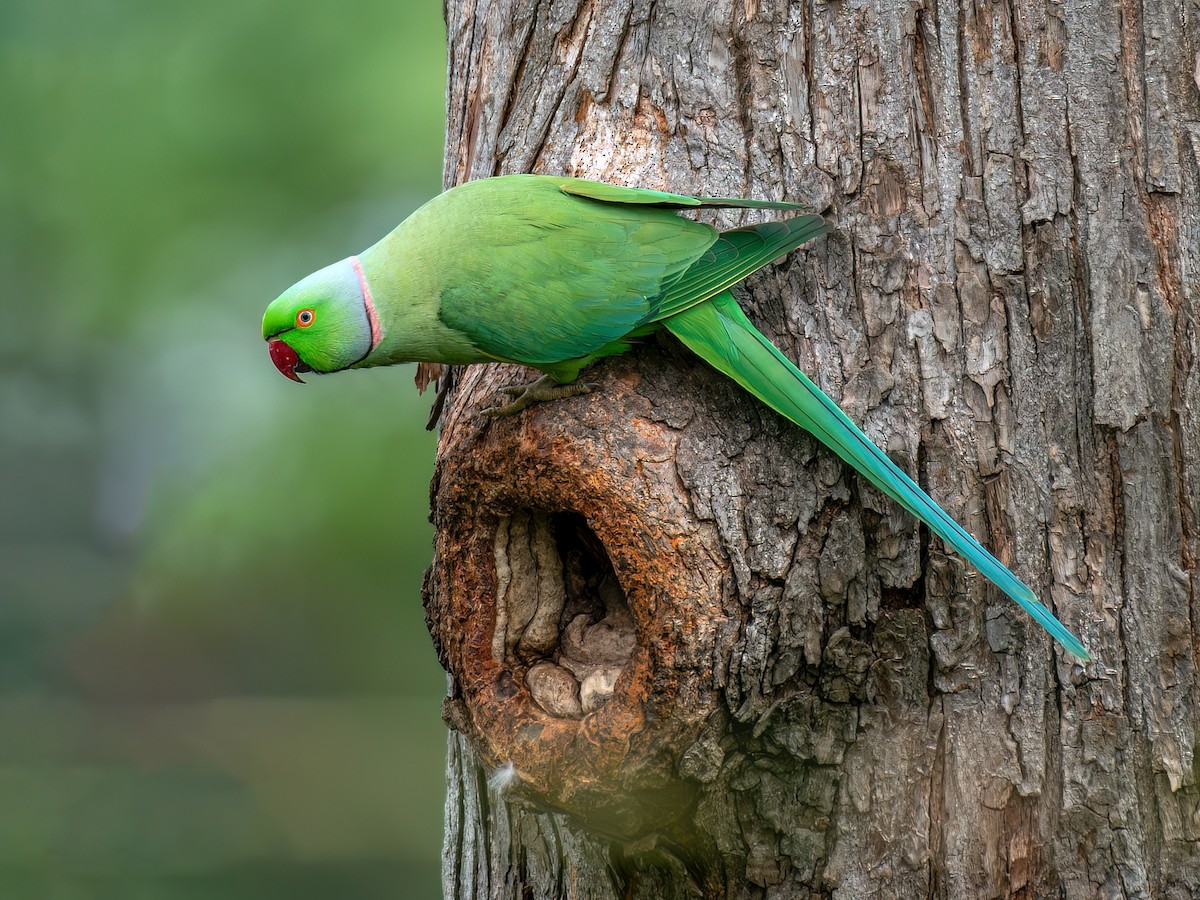
Predominantly bright grass-green plumage. The underside is slightly paler, and the undertail coverts are yellowish-green. The flight feathers are darker green with bluish tips. The tail is long and tapered, with central feathers being blue-green and outer feathers green.
- 2
Beak shape
Shape and color of the bill: a key field mark.
Strong, hooked, and reddish-pink to dark red, with a black tip on the upper mandible. The lower mandible is typically darker.
- 3
Eye color
Iris color and any distinctive eye markings.
Pale yellow to whitish iris with a prominent orange-red orbital ring.
- 4
Leg color
Leg and foot color.
Greyish-pink to grey
- 5
Distinguishing features
Standout features that separate this species.
Adult males possess a distinctive rose-pink collar around the nape and sides of the neck, bordered by a black stripe extending from the lower mandible to the sides of the neck. This 'rose-ring' is the most prominent field mark for males.
- 6
Juvenile appearance
How young birds differ from adults.
Juveniles are similar to adult females, lacking the distinct neck ring. Their plumage is generally duller green, and their beak is paler, often brownish-orange, gradually developing the adult red coloration. The iris is darker, becoming paler with age.
- 7
Seasonal changes
Plumage variation between breeding and non-breeding seasons.
No significant seasonal plumage changes. The plumage remains consistent throughout the year.
- 8
Sexual dimorphism
How males and females differ.
Males have a prominent rose-pink and black neck ring. Females lack this ring, having a paler, often greyish-green or dusky green shadow of a ring, or no ring at all. Juveniles resemble females.
Key field marks
- Size and Shape. Look for a medium-sized, slender parrot with a very long, pointed tail, which makes up about half of its total length.
- Plumage Color. Observe the overall bright grass-green plumage. Note the slightly paler underside.
- Beak Color. Identify the prominent reddish-pink to dark red, hooked beak with a black tip on the upper mandible.
- Neck Ring (Males). For adult males, look for the distinctive rose-pink collar on the nape and sides of the neck, bordered by a black stripe from the lower mandible. This is the most reliable male identification feature.
- Absence of Neck Ring (Females/Juveniles). Females and juveniles lack the prominent rose-pink and black neck ring, often showing a dusky green or greyish shadow of a ring, or no ring at all. Juveniles also have a paler, brownish-orange bill.
- Vocalization. Listen for their loud, shrill, and piercing 'kree-kree-kree' or 'kyaak-kyaak' calls, often given in flight or when in flocks.
- Flight Pattern. Observe their strong, direct, and swift flight with rapid wingbeats, often in noisy flocks.
Explore the Rose-ringed Parakeet
Identify birds anywhere
Free on iOS, Android, and Web. Photo & sound identification, full species database, and your personal life list.