
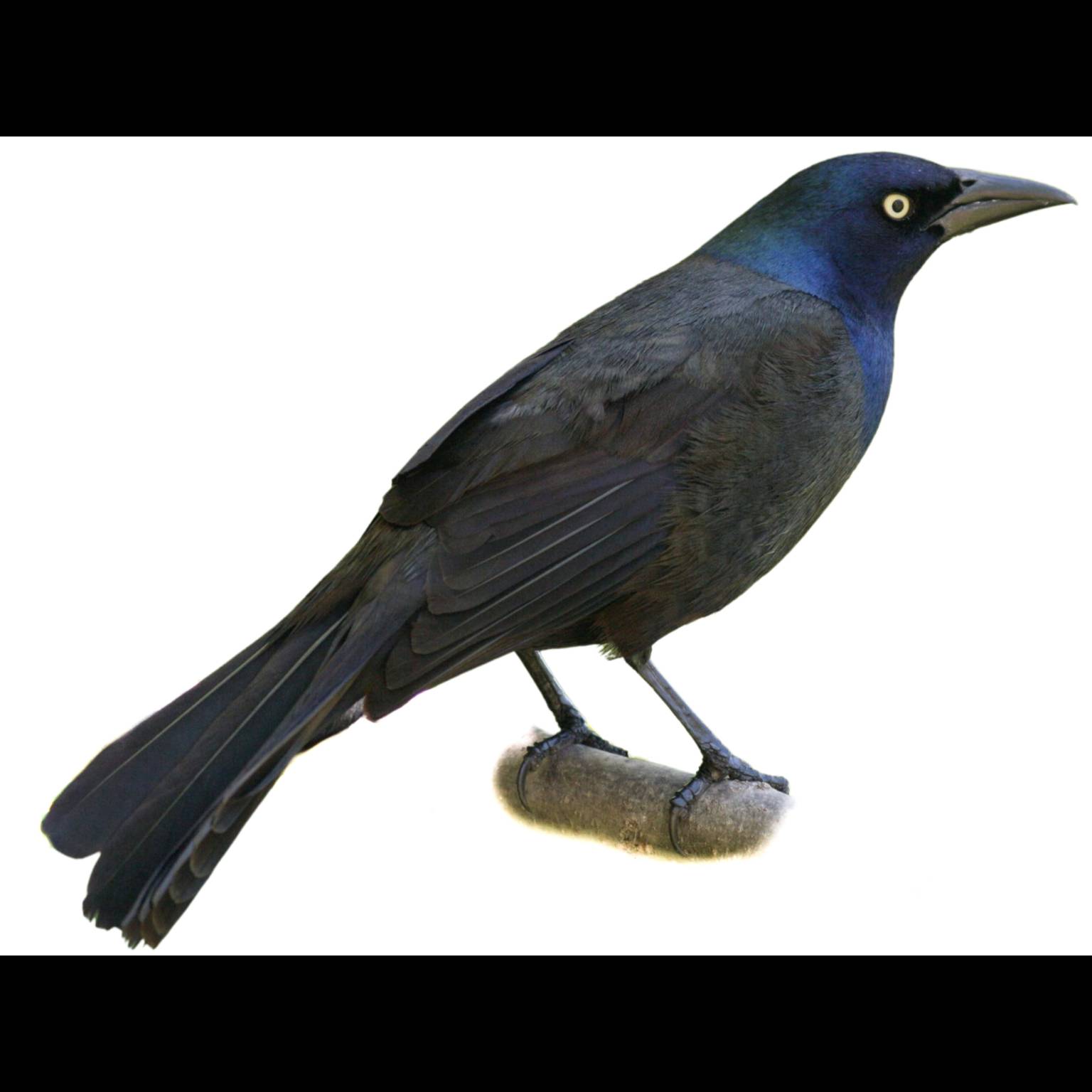
Where does the Common Grackle live?
Quiscalus quiscula
Spotted a bird? Identify it instantly with the Birdby app
Open the appThe Common Grackle lives in specific habitats and regions. Knowing where, and when, to look improves your chances of a successful sighting.
Biomes
Forest edges, open woodlands, grasslands, agricultural fields, suburban parks, urban areas, marshes, and riparian zones.
Geographic range
Breeds across most of North America east of the Rocky Mountains, from central Canada south to the Gulf Coast of the United States. Winters primarily in the southern and eastern United States.
Preferred environments
Highly adaptable, preferring open areas with scattered trees, often near water. Commonly found in human-modified landscapes such as parks, golf courses, and agricultural fields.
Elevation range
Typically found from sea level up to approximately 1,500 meters (5,000 feet).
Where to look
Parks and Suburban Areas
Common in urban and suburban parks, backyards, and golf courses, especially where there are open lawns and scattered trees.
Agricultural Fields
Frequently found in cornfields and other agricultural landscapes, where they feed on grains and insects.
Open Woodlands and Forest Edges
Look for them at the edges of forests, in open woodlands, and along riparian corridors.
Wetlands and Marshes
Can be found foraging and nesting near water bodies, including marshes and pond edges.
Communal Roosts
During fall and winter, look for massive flocks gathering at dusk in large trees or dense vegetation for communal roosting, often with other blackbird species.
Field tips
- Look for Iridescence. The iridescent plumage is best seen in direct sunlight. Observe them from different angles to appreciate the shifting colors.
- Listen for Calls. Their distinctive 'rusty gate' song and sharp 'check' calls are often heard before the bird is seen, especially in spring.
- Observe Flocking Behavior. Outside of the breeding season, look for large, noisy flocks, often mixed with other blackbirds, foraging in fields or gathering at roosts.
- Check for Yellow Eyes. The bright yellow eye is a crucial identification feature for adult Common Grackles, distinguishing them from some similar species.
- Watch for 'Dunking' Behavior. If near water, you might observe them dipping food items into the water before consuming them.
Migration
Partial migrant. Northern populations are migratory, moving south for the winter. Southern populations are largely resident. Migratory movements occur in large flocks, often in late fall and early spring.
Explore the Common Grackle
Identify birds anywhere
Free on iOS, Android, and Web. Photo & sound identification, full species database, and your personal life list.