
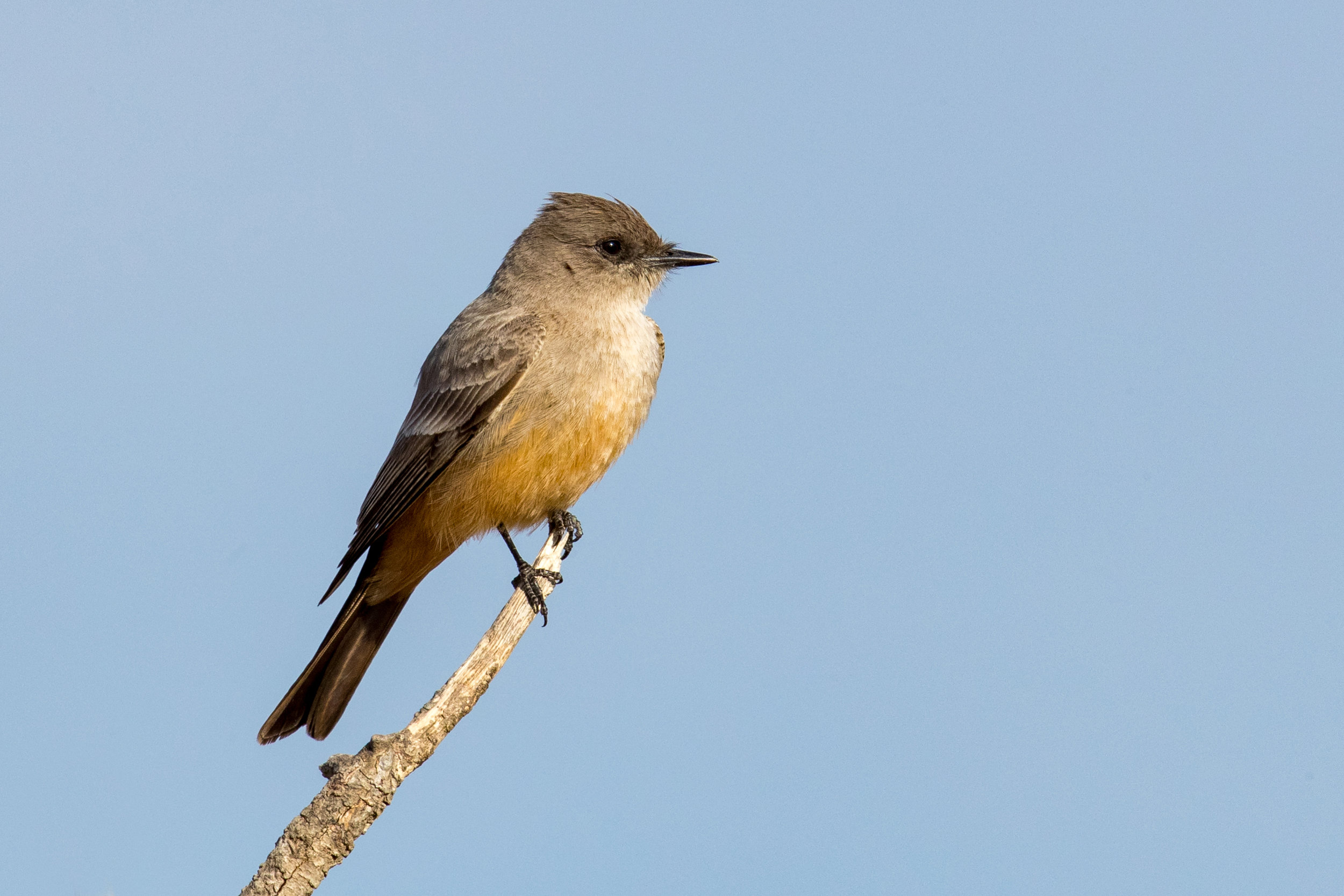
Where does the Eastern Phoebe live?
Sayornis phoebe
Spotted a bird? Identify it instantly with the Birdby app
Open the appThe Eastern Phoebe lives in specific habitats and regions. Knowing where, and when, to look improves your chances of a successful sighting.
Biomes
Forest edges, open woodlands, suburban and rural areas, farms, parks, and riparian zones.
Geographic range
Breeds across eastern North America, from southeastern Canada south to the southeastern United States. Winters primarily in the southeastern United States, Mexico, and Central America.
Preferred environments
Prefers areas with open understories, access to water, and vertical structures (cliffs, bridges, buildings) for nesting. Often found near streams, ponds, and clearings.
Elevation range
Typically found from sea level up to approximately 1,500 meters (5,000 feet), though occasionally higher in mountainous regions.
Where to look
Forest Edges and Open Woodlands
Look along the borders of deciduous or mixed forests, especially near clearings or water.
Near Water Bodies
Often found near streams, rivers, ponds, and lakes, as these areas provide abundant insect prey.
Human Structures
Check under bridges, culverts, eaves of barns, sheds, and houses, where they frequently build nests.
Parks and Suburban Gardens
They adapt well to human-modified landscapes, especially those with mature trees and open spaces.
Field tips
- Listen for the Song. The 'fee-bee' song is very distinctive and often given repeatedly, making it easy to locate the bird even before seeing it.
- Watch for Tail Wagging. Once you spot a drab, small bird on an exposed perch, look for the characteristic tail-pumping motion. This is a definitive identifier.
- Observe Flycatching Behavior. Look for birds making short, quick flights from a perch to catch insects in the air, then returning to the same or a nearby perch.
- Check Nesting Sites. During spring and summer, actively look for their mud nests on sheltered ledges of human structures or natural rock formations.
- Be Patient. While often conspicuous, their drab plumage can make them blend in. Patience and careful observation of behavior will aid identification.
Migration
A medium-distance migrant. They are among the earliest spring migrants, arriving in breeding grounds in March and April, and among the last to depart in fall, often staying until October or November. They migrate individually or in loose groups.
Explore the Eastern Phoebe
Identify birds anywhere
Free on iOS, Android, and Web. Photo & sound identification, full species database, and your personal life list.