
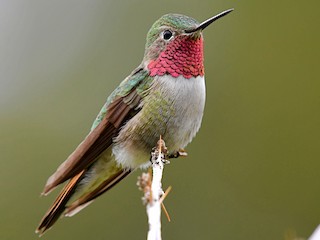
How to identify the Broad-tailed Hummingbird
Selasphorus platycercus
Spotted a bird? Identify it instantly with the Birdby app
Open the appTo correctly identify the Broad-tailed Hummingbird (Selasphorus platycercus), check each of these features. Birds can be tricky: habit, habitat, and call often confirm a sighting that a single photo cannot.
Size at a glance
- Length
- 10-10.5 cm (3.9-4.1 inches)
- Wingspan
- 13-14 cm (5.1-5.5 inches)
- Weight
- 3-4 grams (0.11-0.14 oz)
Physical features to check
- 1
Plumage
Overall feather coloration and pattern.
Adult male: Iridescent green upperparts, flanks, and crown. Rose-magenta gorget (throat patch) that can appear dull brown or black in poor light. White breast band and pale grayish belly. Tail is primarily dark, with outer tail feathers showing rufous at the base and black tips, giving a broad appearance. Adult female: Green upperparts and crown. White underparts with buff or rufous wash on the flanks. Outer tail feathers have rufous at the base, followed by a black band, and white tips. Throat is typically pale or whitish, often with small dusky spots or faint iridescent coppery-pink specks, particularly in older females. Juvenile: Resembles adult female plumage. Juvenile males may have a few iridescent gorget feathers appearing in their first fall/winter.
- 2
Beak shape
Shape and color of the bill: a key field mark.
Long, straight, and slender black bill.
- 3
Eye color
Iris color and any distinctive eye markings.
Dark brown.
- 4
Leg color
Leg and foot color.
Dull black or dark gray.
- 5
Distinguishing features
Standout features that separate this species.
The male's distinctive metallic, cricket-like wing trill during flight is a key identification feature, audible even when the bird is not visible. The broad shape of the tail, especially visible in flight or during display, is also characteristic. The coloration of the male's gorget (rose-magenta) is unique among common North American hummingbirds.
- 6
Juvenile appearance
How young birds differ from adults.
Juveniles largely resemble adult females, characterized by green upperparts, buffy flanks, and white underparts. Juvenile males may develop small, scattered iridescent gorget feathers on their throat before their first definitive adult plumage. Their tail feathers are also similar to the female's.
- 7
Seasonal changes
Plumage variation between breeding and non-breeding seasons.
No significant seasonal plumage changes in adults. Juveniles molt into adult-like plumage in their first fall/winter.
- 8
Sexual dimorphism
How males and females differ.
Pronounced. Males have a brilliant rose-magenta gorget and are more iridescent green overall. Females lack the strong gorget, having a white throat often with dusky spots or faint iridescent markings, and are generally duller.
Key field marks
- Male's Wing Trill. Listen for the unique, metallic, cricket-like trilling sound produced by the male's wingtips in flight. This is the most reliable field mark for identification, even when the bird is high up or in poor light.
- Male Gorget Color. Observe the male's throat patch. It is a brilliant rose-magenta, which distinguishes it from the orange-red of a Rufous or the rose-pink of an Anna's. Note it can appear dark in shade.
- Tail Shape and Color. When perched or in flight, observe the tail. Broad-taileds have relatively broad tail feathers. Females and juveniles show rufous at the base of the outer tail feathers, followed by a black band and white tips. The male's tail is dark with rufous bases and dark tips on outer feathers.
- Female Throat Markings. Female Broad-taileds typically have a plain white throat, sometimes with fine dusky spots or occasional faint coppery-pink flecks, distinguishing them from the more extensively spotted throats of some female Rufous or the pure white throats of some other species.
- Overall Size and Shape. Broad-taileds are medium-sized hummingbirds. Their relatively stocky appearance and broader tail can help distinguish them from the smaller, slimmer Calliope Hummingbird.
Explore the Broad-tailed Hummingbird
Identify birds anywhere
Free on iOS, Android, and Web. Photo & sound identification, full species database, and your personal life list.