
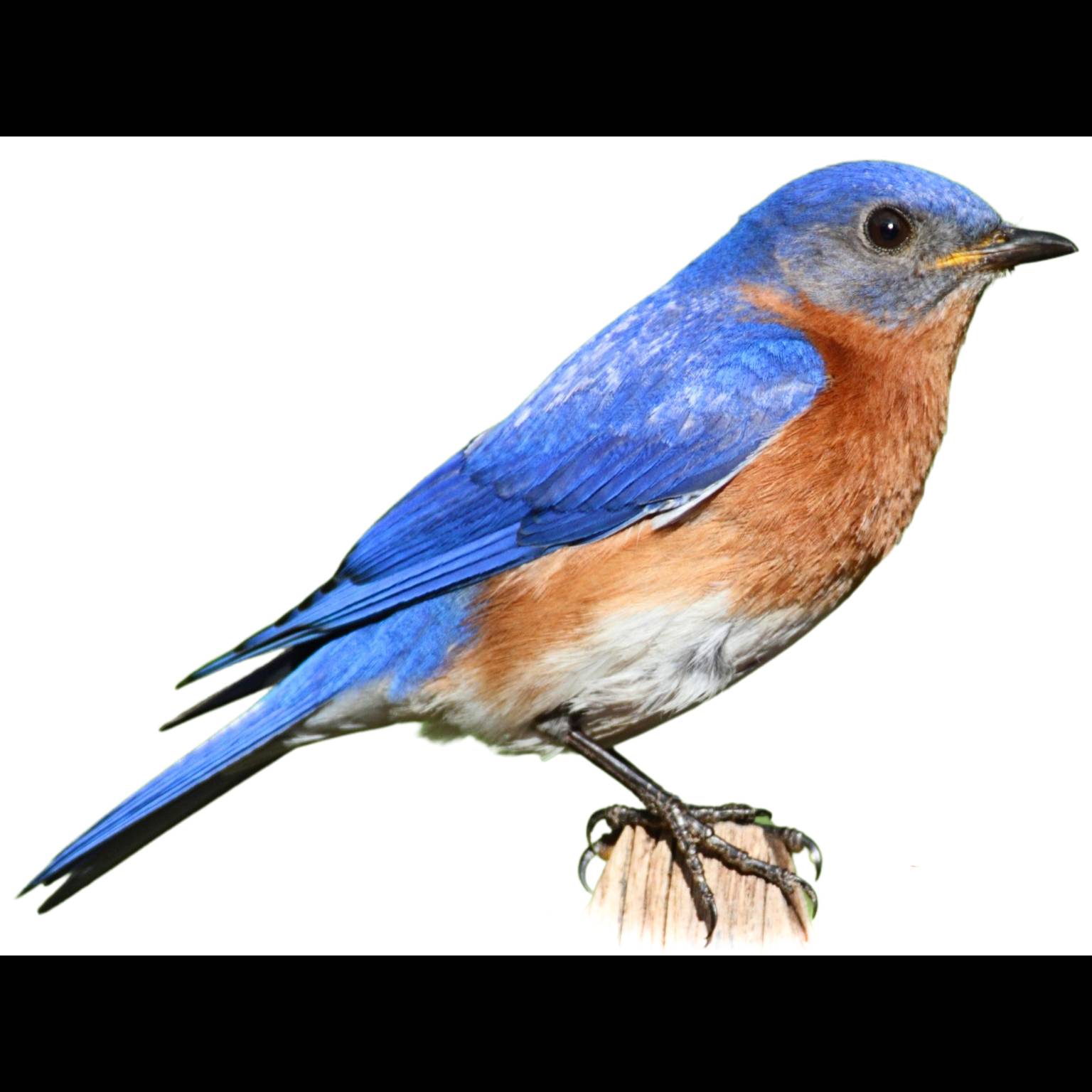
Where does the Eastern Bluebird live?
Sialia sialis
Spotted a bird? Identify it instantly with the Birdby app
Open the appThe Eastern Bluebird lives in specific habitats and regions. Knowing where, and when, to look improves your chances of a successful sighting.
Biomes
Temperate forests, grasslands, open woodlands, orchards, agricultural fields, suburban parks, and golf courses.
Geographic range
Eastern North America, from southern Canada (Ontario, Quebec, Maritime provinces) south through the eastern United States to the Gulf Coast and into Mexico and Central America (Honduras, Nicaragua).
Preferred environments
Open areas with scattered trees, particularly those with dead trees or snags for nesting cavities, and short grass for foraging. They favor edges of forests, clearings, and areas with human-provided nest boxes.
Elevation range
Typically found from sea level up to approximately 1,500 meters (5,000 feet), though occasionally higher in some parts of their range.
Where to look
Open Woodlands and Forest Edges
Look in areas where forests meet open fields, as they prefer these transitional zones.
Orchards and Vineyards
These agricultural settings often provide suitable nesting cavities and foraging grounds.
Parks and Golf Courses
Well-maintained green spaces with scattered trees and open lawns are often frequented by bluebirds.
Suburban and Rural Backyards
If nest boxes are present, bluebirds are often found nesting and foraging in these areas.
Bluebird Trails
Dedicated routes with multiple nest boxes are excellent places to observe them, especially during breeding season.
Field tips
- Look for Nest Boxes. Eastern Bluebirds are highly dependent on nest boxes. If you see a bluebird box, there's a good chance bluebirds are nearby or using it.
- Scan Open Areas. They often perch on low branches, fences, or wires in open fields, scanning for insects on the ground.
- Listen for Their Song. Their soft, warbling song can be a good indicator of their presence, especially in spring and early summer.
- Observe Fruit-Bearing Shrubs. In fall and winter, check shrubs and trees with berries, as bluebirds will gather to feed on them.
- Be Patient and Quiet. Bluebirds can be somewhat shy. Move slowly and quietly to avoid startling them.
Migration
Northern populations are migratory, moving south for the winter. Southern populations are largely resident. Migration occurs in loose flocks, typically during the day. They are short-distance migrants, generally not traveling far from their breeding grounds.
Explore the Eastern Bluebird
Identify birds anywhere
Free on iOS, Android, and Web. Photo & sound identification, full species database, and your personal life list.