
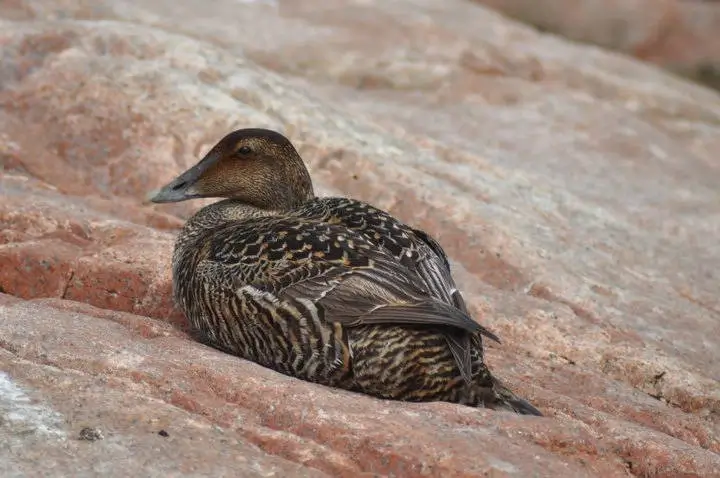
Where does the Common Eider live?
Somateria mollissima
Spotted a bird? Identify it instantly with the Birdby app
Open the appThe Common Eider lives in specific habitats and regions. Knowing where, and when, to look improves your chances of a successful sighting.
Biomes
Marine, Coastal
Geographic range
Circumpolar in the Northern Hemisphere. Breeds along Arctic and subarctic coasts of North America, Europe, and Asia. Winters further south along temperate coasts, including the Atlantic and Pacific coasts of North America, and the coasts of Europe and Asia.
Preferred environments
Rocky coasts, islands, skerries, and sheltered bays with abundant shellfish beds. Prefers shallow coastal waters for feeding and often nests on small, predator-free islands or coastal tundra.
Elevation range
Sea level to a few meters above sea level for nesting.
Where to look
Coastal Waters
Look for them in shallow marine waters, especially near rocky shores, islands, and sheltered bays. They prefer areas with abundant shellfish beds.
Breeding Islands
During the breeding season, they can be found nesting in dense colonies on small, predator-free islands and coastal tundra in Arctic and subarctic regions.
Wintering Grounds
In winter, they concentrate in large flocks along temperate coastlines, often in areas with strong currents or upwellings that keep waters ice-free.
Field tips
- Use a spotting scope or binoculars. Common Eiders are often found far from shore in large rafts, so optics are essential for good views and identification.
- Visit coastal areas in winter. This is often the best time to see large concentrations of Common Eiders, especially in more southerly parts of their range.
- Look for diving behavior. Their frequent, prolonged dives are a key feeding behavior and can help locate them.
- Listen for calls. The male's distinctive cooing call can be heard during the breeding season, even from a distance.
Migration
Partially migratory. Northern populations migrate south for the winter, while more southerly populations may be resident or undertake shorter coastal movements. Migration typically occurs along coastlines.
Explore the Common Eider
Identify birds anywhere
Free on iOS, Android, and Web. Photo & sound identification, full species database, and your personal life list.