
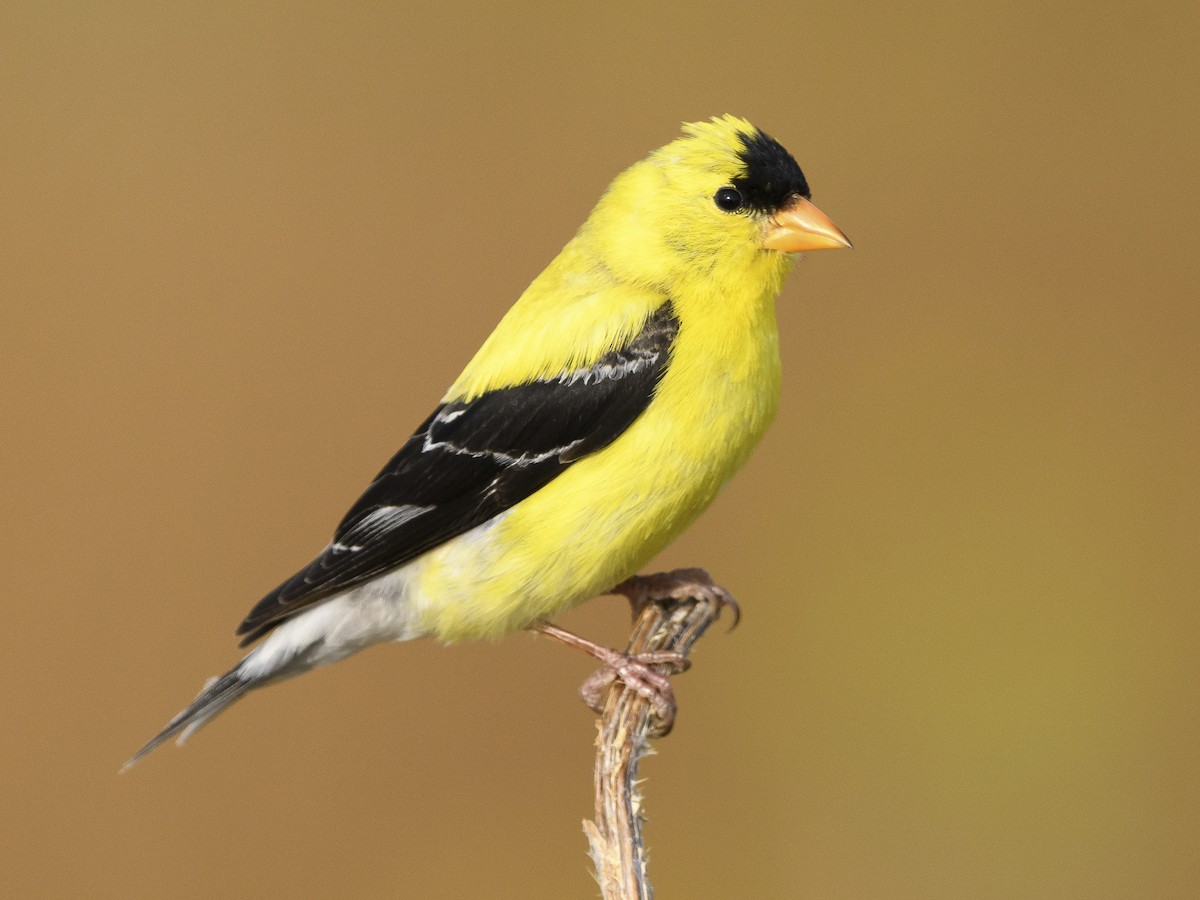
Where does the American Goldfinch live?
Spinus tristis
Spotted a bird? Identify it instantly with the Birdby app
Open the appThe American Goldfinch lives in specific habitats and regions. Knowing where, and when, to look improves your chances of a successful sighting.
Biomes
Open woodlands, fields, meadows, suburban gardens, riparian areas, and cultivated lands.
Geographic range
Breeds across southern Canada and the northern United States. Winters across the southern United States and into Mexico.
Preferred environments
Areas with abundant thistle, dandelion, and other seed-producing plants, often near water sources. They favor edge habitats, such as the borders of forests and open fields, and are common in parks and backyards with feeders.
Elevation range
Typically found from sea level up to approximately 2,000 meters (6,500 feet), though less common at higher elevations.
Where to look
Backyards and Gardens
Common visitors to bird feeders, especially those offering nyjer (thistle) or black oil sunflower seeds. Plant native thistles or sunflowers to attract them.
Open Fields and Meadows
Look for them in areas with tall grasses and wildflowers, particularly where thistle and dandelion are abundant.
Riparian Areas
Often found along stream banks and river edges where there is a mix of open areas and shrubby vegetation.
Forest Edges and Shrublands
They prefer the interface between open areas and denser vegetation, providing both foraging opportunities and cover.
Field tips
- Provide appropriate food. Offer nyjer (thistle) seeds in a specialized feeder or black oil sunflower seeds in a tube feeder to attract them to your yard.
- Look for their flight. Their undulating flight pattern is a key identifier, even at a distance or in duller plumages.
- Listen for their calls. The 'po-ta-to-chip' call is very distinctive and often given in flight, helping to locate them before you see them.
- Observe feeding behavior. Watch for them clinging acrobatically to seed heads, especially thistle, in late summer and fall.
- Seasonal timing. While present year-round in much of their range, males are most vibrant and conspicuous during the late spring and summer breeding season.
Migration
Partial migrant. Northern populations migrate south for the winter, while southern populations may be resident or undertake short-distance movements. Migration occurs in flocks, typically during the day.
Explore the American Goldfinch
Identify birds anywhere
Free on iOS, Android, and Web. Photo & sound identification, full species database, and your personal life list.