
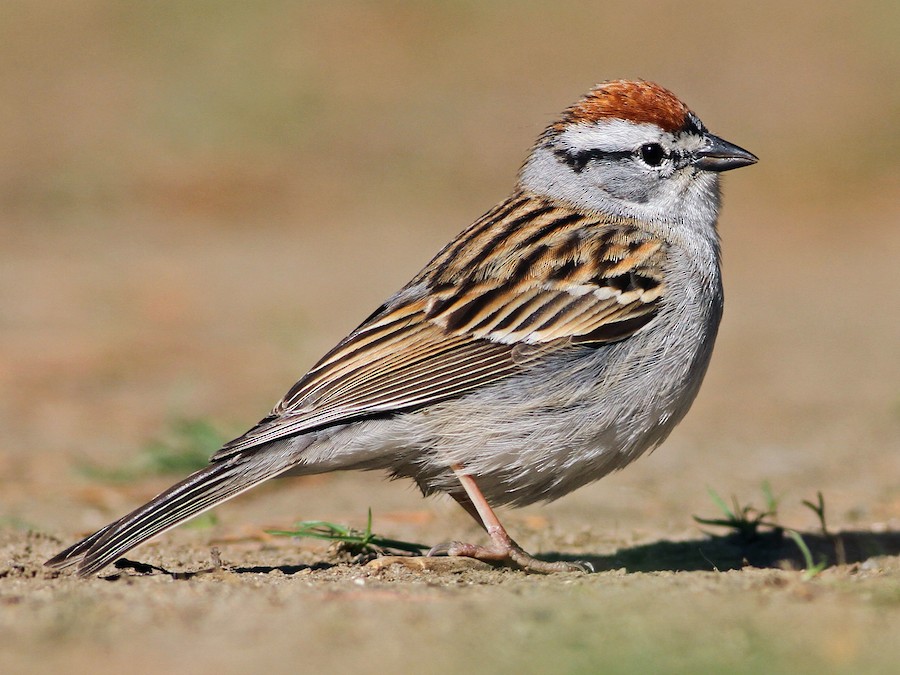
Where does the Chipping Sparrow live?
Spizella passerina
Spotted a bird? Identify it instantly with the Birdby app
Open the appThe Chipping Sparrow lives in specific habitats and regions. Knowing where, and when, to look improves your chances of a successful sighting.
Biomes
Temperate forests, grasslands, shrublands, urban/suburban areas.
Geographic range
Widespread across North America. Breeds from Alaska and Canada south through the United States and into Mexico. Winters primarily in the southern United States and Mexico.
Preferred environments
Open woodlands, forest edges, parks, suburban gardens, orchards, cemeteries, clearings, and areas with scattered trees and grassy undergrowth. They prefer areas with short grass for foraging and shrubs or small trees for nesting.
Elevation range
Sea level up to 3,000 meters (10,000 feet) in some parts of its range, particularly in western mountains.
Where to look
Suburban Gardens and Parks
Common in areas with lawns, scattered trees, and shrubs, often seen foraging on the ground or perched on low branches.
Open Woodlands and Forest Edges
Favors deciduous or mixed woodlands with an open understory, clearings, and woodland borders.
Orchards and Cemeteries
These managed landscapes often provide the ideal mix of short grass for foraging and small trees/shrubs for nesting.
Shrublands and Old Fields
Can be found in areas with dense shrubby growth and grassy patches.
Field tips
- Listen for the Song. Their distinctive trilling song is often the first indication of their presence. Once you hear it, scan nearby trees or shrubs for the singer.
- Check Low Vegetation and Ground. Chipping Sparrows frequently forage on the ground or in low shrubs. Look for small birds hopping and scratching in leaf litter or short grass.
- Look for Movement. They are often active and can be seen flitting between low branches or darting across open ground.
- Visit Suitable Habitats. Focus your search in parks, gardens, and open woodlands, especially during the breeding season.
Migration
Most populations are migratory, moving south for the winter. Northern and interior populations undertake long-distance migrations. Some southern populations in the United States and Mexico may be resident or undertake short-distance movements. They migrate in flocks, often at night.
Explore the Chipping Sparrow
Identify birds anywhere
Free on iOS, Android, and Web. Photo & sound identification, full species database, and your personal life list.