
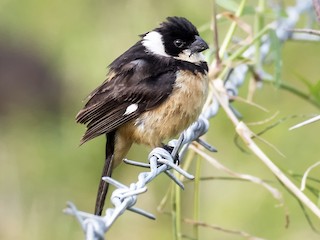
Where does the White-collared Seedeater live?
Sporophila torqueola
Spotted a bird? Identify it instantly with the Birdby app
Open the appThe White-collared Seedeater lives in specific habitats and regions. Knowing where, and when, to look improves your chances of a successful sighting.
Biomes
Tropical and subtropical grasslands, shrublands, and agricultural areas.
Geographic range
Southern Mexico south through Central America to western Panama, with an isolated population in parts of northern South America (Colombia and Venezuela).
Preferred environments
Open grassy fields, pastures, savannas, roadsides, agricultural lands (especially those with seeded crops), and shrubby clearings. They often prefer areas with tall seeding grasses interspersed with low shrubs for perching and cover.
Elevation range
Sea level up to 1,800 meters, occasionally higher in parts of its range.
Where to look
Agricultural Fields
Look in corn, rice, or other crop fields, especially along their edges or in weedy patches within them.
Pastures/Grazing Lands
Areas with cattle or horses often have grazed-down grass and weeds, which provide food sources for seedeaters.
Roadsides and Verges
Weedy roadsides with ample seeding grasses are common spots for them to forage and perch.
Open Shrubland Edge
Where grasslands meet low, scrubby vegetation, they can be found using the shrubs for cover and perching posts.
Field tips
- Listen for their song. Their distinctive, musical song is often the best indicator of their presence before you see them. Learn to recognize it.
- Scan grassy areas. Use binoculars to carefully scan tall grasses and weed patches for movement. They can be quite camouflaged, especially females.
- Morning and late afternoon. These birds are most active during the cooler parts of the day, making these the best times for observation.
- Look for movements in grass. Rather than looking for the bird itself, look for characteristic rustling movements in seeding grass heads.
- Observe patiently. They can be shy and cryptic. Settle in one spot and observe quietly; they may eventually emerge or become more visible.
Migration
Generally resident throughout its range, though some local or altitudinal movements may occur in response to food availability or weather conditions. There is no large-scale migratory pattern.
Explore the White-collared Seedeater
Identify birds anywhere
Free on iOS, Android, and Web. Photo & sound identification, full species database, and your personal life list.