
How to identify the Barred Owl
Strix varia
Spotted a bird? Identify it instantly with the Birdby app
Open the appTo correctly identify the Barred Owl (Strix varia), check each of these features. Birds can be tricky: habit, habitat, and call often confirm a sighting that a single photo cannot.
Size at a glance
- Length
- 40-63 cm (16-25 in)
- Wingspan
- 99-125 cm (39-49 in)
- Weight
- 500-1070 g (1.1-2.4 lbs)
Physical features to check
- 1
Plumage
Overall feather coloration and pattern.
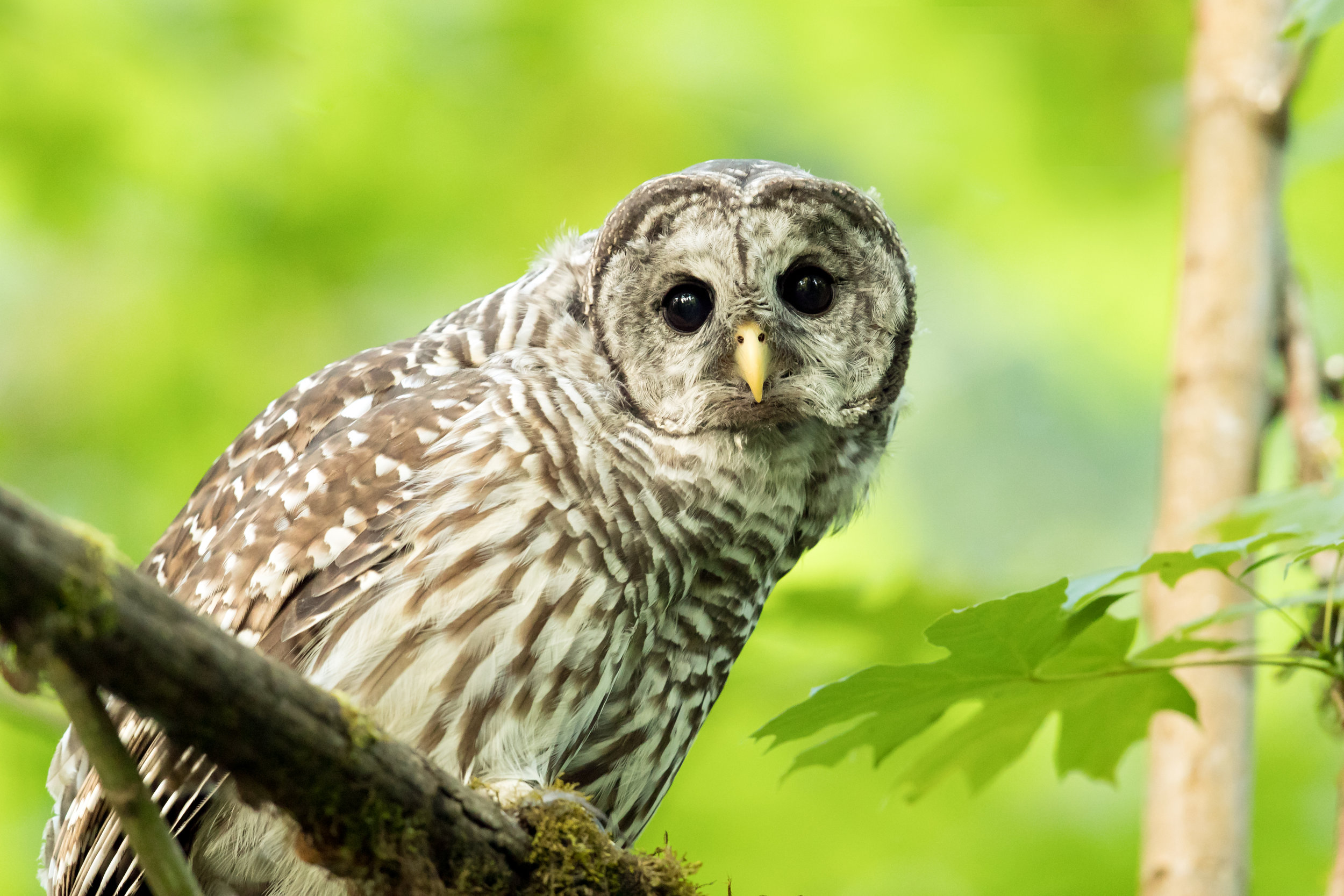
Adults have mottled brown and white plumage. The underparts are vertically streaked (barred) with brown on a white background, while the upperparts are horizontally barred. The breast is horizontally barred, giving the species its common name. The back and wings are mottled brown and white. There is no significant seasonal change in plumage.
- 2
Beak shape
Shape and color of the bill: a key field mark.
Short, strongly hooked, and dark yellowish to greenish-yellow.
- 3
Eye color
Iris color and any distinctive eye markings.
Dark brown to black, giving a gentle, soulful appearance, a key distinguishing feature from most other North American owls which have yellow eyes.
- 4
Leg color
Leg and foot color.
Feathered to the talons, which are dark.
- 5
Distinguishing features
Standout features that separate this species.
Large, round head without ear tufts; dark brown eyes; distinctive horizontal barring on the breast and vertical streaking on the belly; yellowish beak. The facial disc is prominent and pale with concentric brown rings.
- 6
Juvenile appearance
How young birds differ from adults.
Juveniles resemble adults but may have softer, fluffier plumage and less distinct barring. They acquire adult plumage within their first year.
- 7
Seasonal changes
Plumage variation between breeding and non-breeding seasons.
No significant seasonal changes in plumage.
- 8
Sexual dimorphism
How males and females differ.
Females are typically larger and heavier than males, but plumage is identical.
Key field marks
- Eyes. Look for large, dark brown to black eyes. This is the most reliable field mark to distinguish it from most other North American owls with yellow eyes.
- Head Shape. Observe the large, round head with no visible ear tufts.
- Plumage Pattern. Note the horizontal barring on the breast and the vertical streaking on the belly. The back and wings are mottled brown and white.
- Vocalization. Listen for the distinctive 'Who cooks for you? Who cooks for you all?' hooting call. This is often the easiest way to detect their presence.
- Habitat. They are typically found in dense, mature forests, especially near water. If you're in such an environment, keep an eye out.
Explore the Barred Owl
Identify birds anywhere
Free on iOS, Android, and Web. Photo & sound identification, full species database, and your personal life list.