
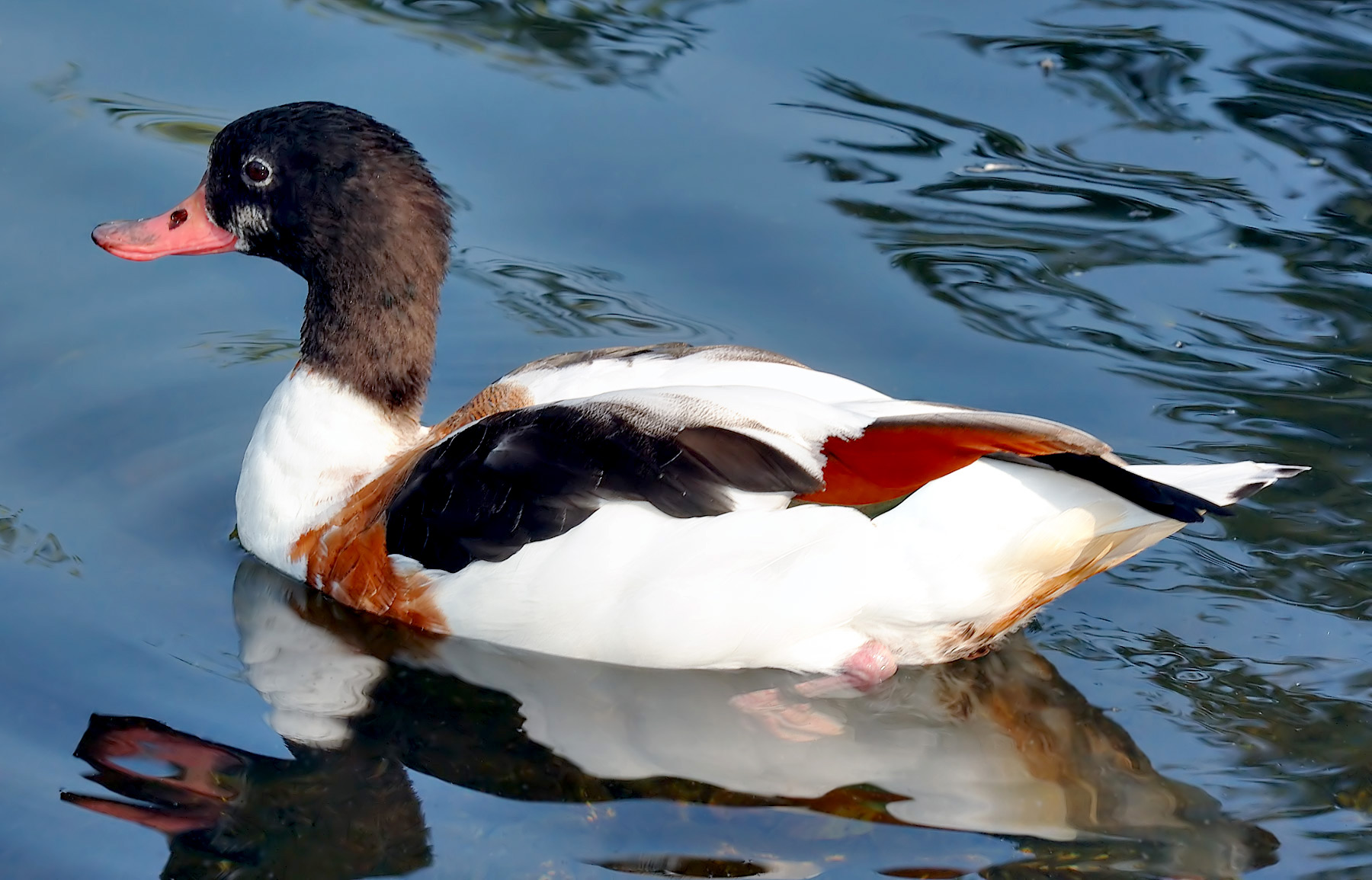
Where does the Common Shelduck live?
Tadorna tadorna
Spotted a bird? Identify it instantly with the Birdby app
Open the appThe Common Shelduck lives in specific habitats and regions. Knowing where, and when, to look improves your chances of a successful sighting.
Biomes
Coastal areas, estuaries, saltmarshes, mudflats, sandy shores, brackish lagoons, and occasionally inland freshwater lakes and rivers.
Geographic range
Widespread across temperate Eurasia. Breeding range extends from Western Europe (including the UK and Ireland) eastward through Central Asia to China and Japan. Winters mainly in Western Europe, the Mediterranean, Black Sea, Caspian Sea, and parts of East Asia.
Preferred environments
Prefers sheltered coastal waters with extensive mudflats for feeding, and nearby sandy banks or dunes for nesting. Also utilizes saltmarsh creeks and brackish pools.
Elevation range
Primarily found at sea level, occasionally up to a few hundred meters inland along large rivers or lakes.
Where to look
Estuaries and Mudflats
These are prime feeding grounds, especially at low tide, where they forage for invertebrates. Look for them along the edges of the water or spread out across exposed mud.
Saltmarshes and Coastal Lagoons
Used for feeding, roosting, and sometimes nesting, particularly in areas with creeks and pools.
Sandy Shores and Dunes
Important for nesting, as they often utilize burrows in these areas. You might see pairs or families near these habitats during the breeding season.
Inland Wetlands (less common)
Occasionally found on large freshwater lakes or slow-moving rivers, especially during migration or in areas where coastal habitats are limited.
Field tips
- Tide Watching. Common Shelducks are often most active and visible on mudflats during low tide when their food sources are exposed. Plan your visit to coincide with falling or low tide.
- Look for Families. During late spring and summer, look for adults with broods of ducklings, sometimes forming large 'crèches' with multiple families together.
- Scan Large Flocks. Outside the breeding season, they often gather in large, conspicuous flocks. Use binoculars or a scope to scan these groups for individuals.
- Listen for Calls. Learn their distinctive whistling (male) and harsh rattling (female) calls, which can help locate them, especially when they are hidden by vegetation or at a distance.
Migration
Partially migratory. Western European populations are largely resident or undertake short-distance movements. Eastern populations are more migratory, moving south and west for winter. Many birds from northern breeding grounds migrate to the Wadden Sea for their annual moult.
Explore the Common Shelduck
Identify birds anywhere
Free on iOS, Android, and Web. Photo & sound identification, full species database, and your personal life list.