
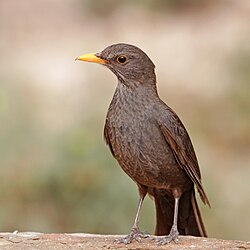
Where does the Common Blackbird live?
Turdus merula
Spotted a bird? Identify it instantly with the Birdby app
Open the appThe Common Blackbird lives in specific habitats and regions. Knowing where, and when, to look improves your chances of a successful sighting.
Biomes
Temperate forests, woodlands, scrublands, parks, gardens, urban areas, agricultural land.
Geographic range
Widespread across Europe, Asia (east to China), and North Africa. Introduced to Australia and New Zealand.
Preferred environments
Prefers areas with dense undergrowth for nesting and foraging, often near human habitation. Gardens, parks, hedgerows, and woodland edges are ideal.
Elevation range
Sea level up to 2,500 meters, occasionally higher.
Where to look
Gardens and Parks
Common Blackbirds are highly adapted to human environments and are frequently found in suburban and urban gardens, parks, and cemeteries.
Woodlands and Forests
They inhabit deciduous and mixed woodlands, particularly at the edges and in areas with dense undergrowth.
Hedgerows and Farmland
Agricultural areas with hedgerows, orchards, and scattered trees provide suitable habitat.
Field tips
- Listen for their song. Their distinctive, melodious song is often the first indication of their presence, especially at dawn and dusk during spring and summer.
- Look on the ground. They are primarily ground feeders. Watch for them hopping and pausing on lawns, leaf litter, or bare soil, searching for invertebrates.
- Check dense vegetation. They often nest and roost in dense bushes, hedges, and low trees. Look for movement within these areas.
- Observe feeding stations. In winter, they may visit bird feeders for fruit, seeds, or mealworms, especially if ground-level feeding trays are provided.
Migration
Northern and eastern populations are migratory, moving south and west for winter. Western and southern European populations are largely resident, though some individuals may undertake short-distance movements.
Explore the Common Blackbird
Identify birds anywhere
Free on iOS, Android, and Web. Photo & sound identification, full species database, and your personal life list.