
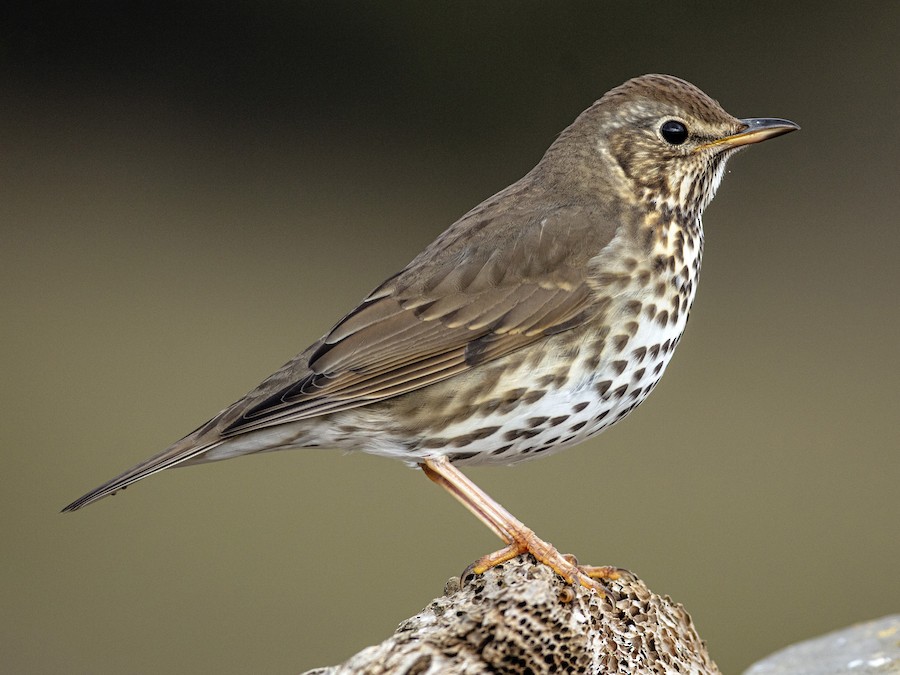
Where does the Song Thrush live?
Turdus philomelos
Spotted a bird? Identify it instantly with the Birdby app
Open the appThe Song Thrush lives in specific habitats and regions. Knowing where, and when, to look improves your chances of a successful sighting.
Biomes
Temperate forests, woodlands, scrub, gardens, parks, hedgerows, orchards.
Geographic range
Widespread across Europe, North Africa, and Asia, from Ireland and Portugal east to Siberia. Introduced to Australia and New Zealand.
Preferred environments
Prefers areas with dense undergrowth for nesting and foraging, often near damp ground where invertebrates are abundant. Gardens and parks with mature trees and shrubs are ideal.
Elevation range
Sea level up to 2,200 meters in some parts of its range, but typically found at lower to mid-elevations.
Where to look
Gardens and Parks
Common in suburban and urban green spaces with mature trees, shrubs, and open ground for foraging.
Woodlands and Forests
Found in deciduous and mixed woodlands, especially those with a good understory.
Hedgerows and Orchards
These linear habitats provide excellent nesting and foraging opportunities.
Field tips
- Listen for the song. The Song Thrush's distinctive, repetitive song is often the first indication of its presence, especially at dawn and dusk.
- Look for 'anvil' stones. Check for stones or hard surfaces with broken snail shells nearby, indicating a thrush feeding area.
- Scan the ground. They frequently forage on the ground, so observe open areas under trees and shrubs.
- Be patient. While often conspicuous when singing, they can be shy when foraging. Remain still and observe quietly.
Migration
Northern and eastern populations are migratory, moving to southern Europe, North Africa, and the Middle East for winter. Western and southern populations are largely resident or undertake short-distance movements. Migrates at night.
Explore the Song Thrush
Identify birds anywhere
Free on iOS, Android, and Web. Photo & sound identification, full species database, and your personal life list.