
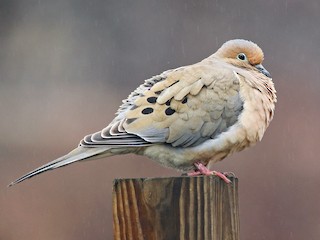
Where does the Mourning Dove live?
Zenaida macroura
Spotted a bird? Identify it instantly with the Birdby app
Open the appThe Mourning Dove lives in specific habitats and regions. Knowing where, and when, to look improves your chances of a successful sighting.
Biomes
Forest edges, open woodlands, grasslands, agricultural fields, suburban areas, urban parks, deserts, and savannas.
Geographic range
Widespread across North America, extending from southern Canada through the United States and Mexico, into Central America and the Caribbean. Also found in parts of the Greater Antilles.
Preferred environments
Prefers open country with scattered trees and shrubs for nesting and roosting, and open ground for foraging. Highly adaptable to human-modified landscapes.
Elevation range
Sea level up to approximately 3,000 meters (10,000 feet) in mountainous regions.
Where to look
Backyards and Gardens
Common visitors to bird feeders, especially those offering seeds on the ground or in platform feeders. They also forage on lawns and under trees.
Parks and Open Spaces
Found in urban and suburban parks, golf courses, and other open areas with scattered trees and shrubs.
Agricultural Fields
Frequently seen foraging in cultivated fields, especially after harvest, for spilled grains and weed seeds.
Forest Edges and Woodlands
Often found along the edges of forests, in open woodlands, and areas with a mix of trees and open ground.
Field tips
- Listen for their call. Their distinctive mournful cooing is often heard before they are seen, especially in the morning and late afternoon.
- Watch for ground feeders. Mourning Doves primarily feed on the ground, so scan open areas, lawns, and under bird feeders.
- Look for movement. Their head-bobbing walk and sudden takeoffs can draw attention. Listen for the wing whistle when they fly.
- Check power lines and fences. They often perch on wires, fences, and bare branches, especially in open areas.
- Provide water. Like all doves, they need to drink frequently and are attracted to bird baths.
Migration
Northern populations are migratory, moving south for the winter. Southern populations are resident year-round. Migration occurs in flocks, typically during the day. They are one of the most hunted migratory game birds in North America.
Explore the Mourning Dove
Identify birds anywhere
Free on iOS, Android, and Web. Photo & sound identification, full species database, and your personal life list.