
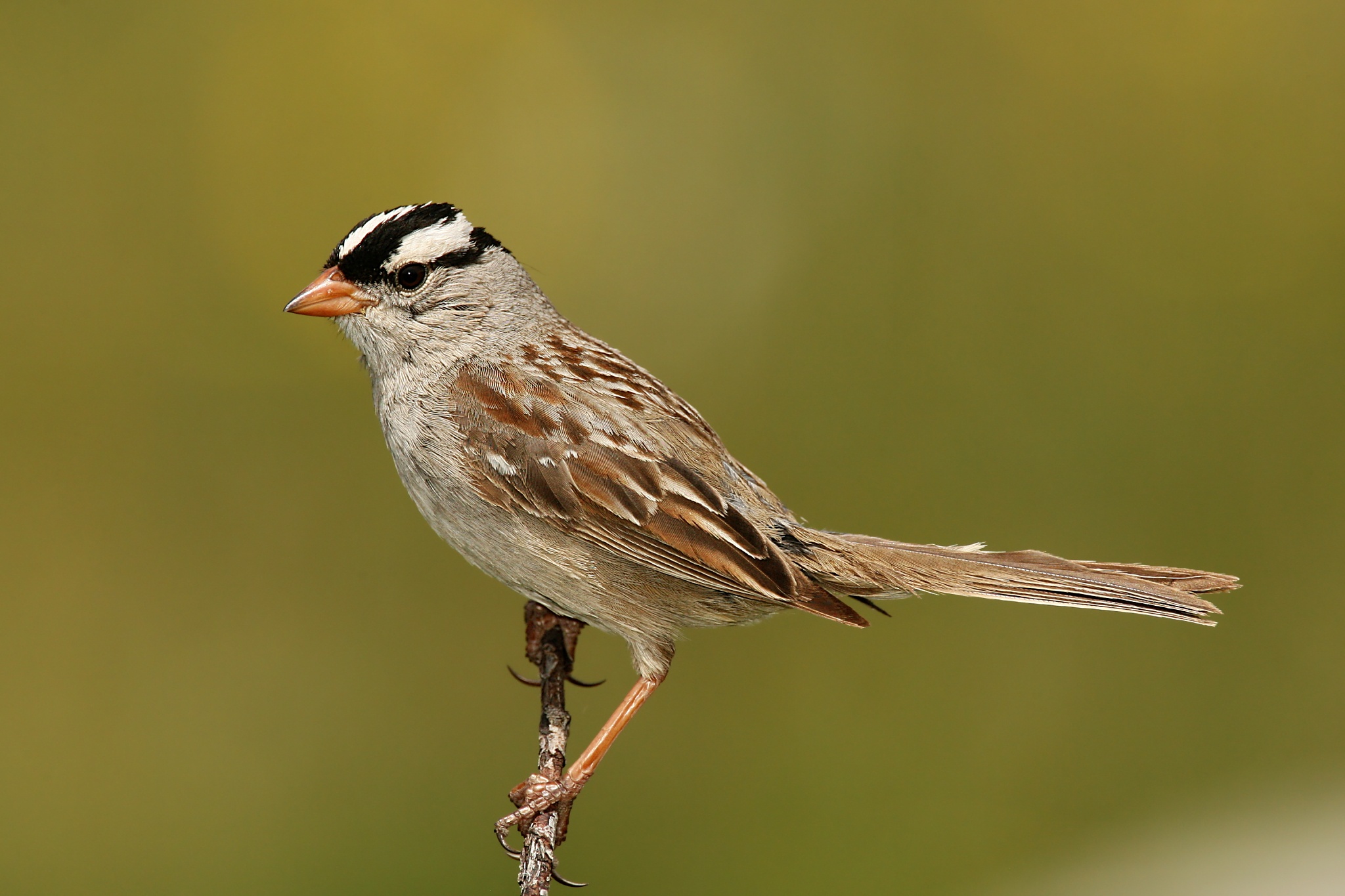
Where does the White-crowned Sparrow live?
Zonotrichia leucophrys
Spotted a bird? Identify it instantly with the Birdby app
Open the appThe White-crowned Sparrow lives in specific habitats and regions. Knowing where, and when, to look improves your chances of a successful sighting.
Biomes
Tundra, taiga, boreal forest, temperate grassland, shrubland, open woodland, suburban parks, gardens, agricultural fields.
Geographic range
Breeds across Alaska, northern Canada, and mountainous regions of the western United United States. Winters throughout much of the United States, coastal British Columbia, and northern Mexico.
Preferred environments
Breeding habitat includes open woodlands, scrubby areas, stunted forests, and willow thickets near the treeline. Wintering habitat includes open brushy fields, roadsides, suburban gardens, parks, and agricultural edges.
Elevation range
Sea level to over 3,000 meters (10,000 feet) in mountainous breeding areas.
Where to look
Rural/Wild
During breeding season, check open forest edges, subalpine meadows, tundra, and willow thickets in northern and western North America. In winter, look in brushy fields, fencerows, and woodland edges.
Suburban
Common visitors to suburban backyards in winter across much of the U.S. and southern Canada, especially areas with feeders, shrubs, and brushy cover.
Parks and Gardens
During migration and winter, they frequent parks, gardens, and urban green spaces that offer suitable shrubby habitats and seeds.
Field tips
- Listen for their song. Their distinctive, clear, whistling song is a strong clue to their presence, especially during the breeding season and migration.
- Look on the ground. White-crowned Sparrows are primarily ground feeders. Watch for them scratching under bushes or in open patches of ground.
- Check bird feeders. In winter, they are frequent visitors to bird feeders, especially those offering milo, white proso millet, or black oil sunflower seeds.
- Observe foraging behavior. Notice their characteristic two-footed scratching. If you see movement in leaf litter, wait to see if it's a White-crowned Sparrow.
- Learn juvenile plumage. In late summer and fall, many individuals will be juveniles with brown and buff head stripes. Don't mistake them for a different species.
Migration
Long-distance migrant. Most populations breed in the far north and migrate south for the winter. Some western populations are short-distance migrants or resident in mountainous areas. They migrate primarily at night.
Explore the White-crowned Sparrow
Identify birds anywhere
Free on iOS, Android, and Web. Photo & sound identification, full species database, and your personal life list.