
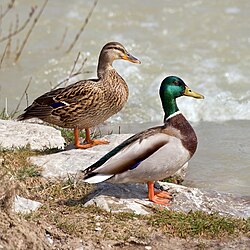
Di mana Mallard tinggal?
Anas platyrhynchos
Melihat burung? Identifikasi seketika dengan aplikasi Birdby
Buka aplikasiMallard hidup di habitat dan wilayah tertentu. Mengetahui di mana dan kapan mencari meningkatkan peluang pengamatan yang berhasil.
Bioma
Wetlands, including freshwater and brackish marshes, ponds, lakes, rivers, estuaries, and coastal areas. Also found in urban parks and agricultural lands with water sources.
Persebaran geografis
Holarctic distribution, found across North America, Europe, Asia, and parts of North Africa. Introduced to Australia, New Zealand, and other regions.
Lingkungan yang disukai
Shallow, calm waters with emergent vegetation for cover and foraging. Tolerant of human disturbance, often found in urban and suburban settings.
Rentang ketinggian
Primarily lowlands, but can be found at higher elevations near suitable water bodies.
Di mana mencari
Urban Parks and Ponds
Mallards are highly accustomed to humans and are frequently found in city parks, golf courses, and suburban ponds.
Lakes and Rivers
Look for them in slow-moving sections of rivers, along lake shores, and in coves with emergent vegetation.
Marshes and Wetlands
Natural wetland habitats, including freshwater and brackish marshes, are prime locations for Mallards.
Estuaries and Coastal Areas
During winter, they can be found in sheltered coastal waters and estuaries.
Tips lapangan
- Look for the 'classic duck'. The Mallard is often the most common duck species in many areas, so it's a good starting point for duck identification.
- Observe bill color and speculum. These are key features to distinguish Mallards from similar-looking species, especially females.
- Listen for calls. The female's loud 'quack' is unmistakable and often the first indication of a Mallard's presence.
- Check for eclipse plumage. Remember that males will look like females during their eclipse plumage period in summer, so rely on bill color and speculum.
- Scan mixed flocks. Mallards often associate with other dabbling ducks, providing opportunities to compare field marks.
Migrasi
Northern populations are migratory, moving south for the winter. Southern populations are resident. Migration occurs in large flocks, typically at night.
Jelajahi Mallard
Identifikasi burung di mana saja
Gratis di iOS, Android, dan Web. Identifikasi foto & suara, database spesies lengkap, dan daftar pribadi Anda.