
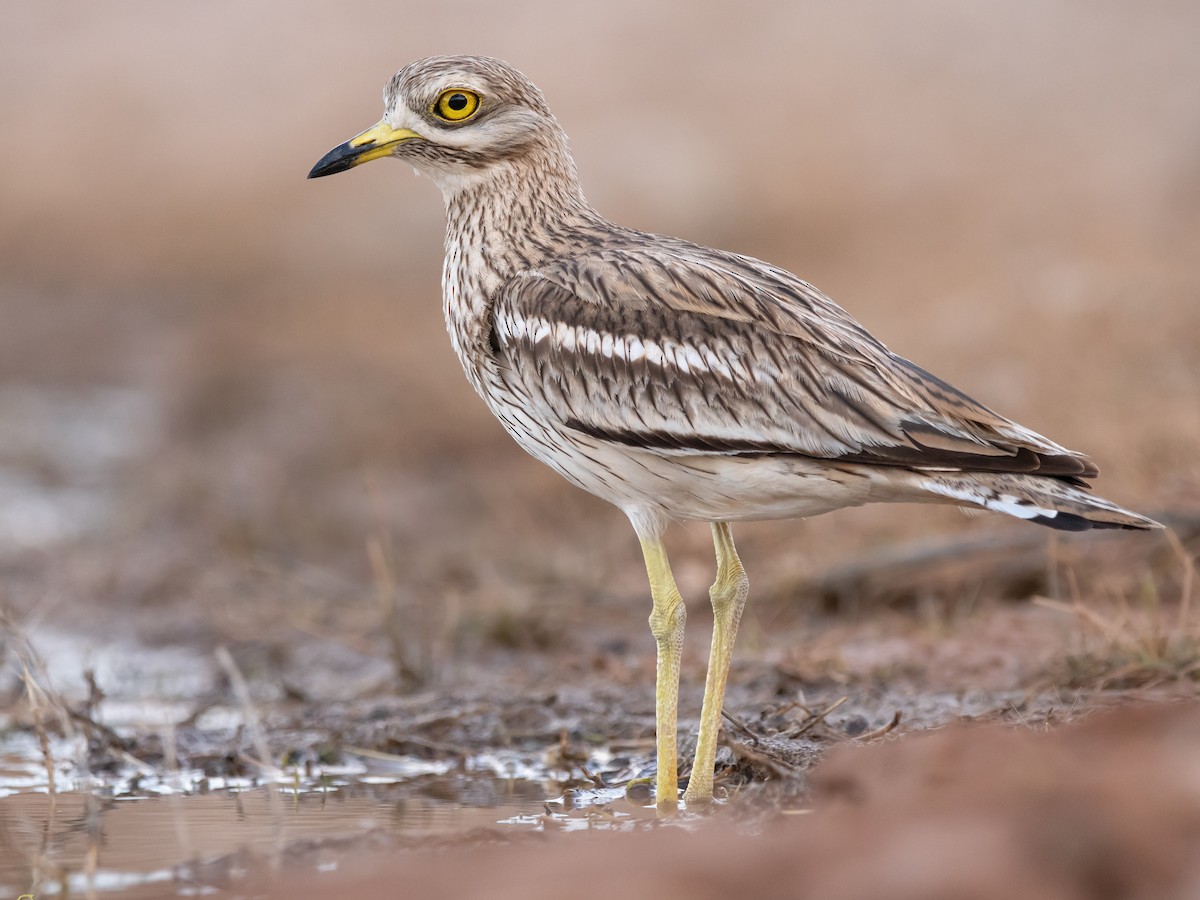
Dove vive Eurasian Stone-curlew?
Burhinus oedicnemus
Visto un uccello? Identificalo all'istante con l'app Birdby
Apri l'appEurasian Stone-curlew vive in habitat e regioni specifiche. Sapere dove e quando guardare migliora le possibilità di un avvistamento riuscito.
Biomi
Temperate grasslands, semi-deserts, steppes, open woodlands, agricultural lands.
Areale geografico
Widespread across Europe, North Africa, and Southwest Asia. In Europe, it breeds from the Iberian Peninsula eastwards to Russia, and south to the Mediterranean. Northern populations are migratory, while southern populations are often resident.
Ambienti preferiti
Dry, open, sparsely vegetated areas with stony or sandy soils, fallow fields, heathland, chalk downland, steppe, and sometimes open pine forests. Avoids dense vegetation and wetlands.
Fascia altitudinale
Typically found from sea level up to approximately 1,500 meters, though generally prefers lower elevations.
Dove guardare
Fallow Fields
Often found in agricultural areas with fallow land, stubble fields, or recently ploughed fields, especially those with stony patches.
Heathland and Chalk Downland
In parts of its range, it inhabits open heathland, chalk downland, and other dry, sparsely vegetated grasslands.
Steppe and Semi-desert
Common in natural steppe environments and semi-desert regions across its Asian and North African range.
Open Woodlands
Occasionally found in very open pine or oak woodlands with sparse undergrowth and bare ground.
Consigli sul campo
- Go at Dusk or Dawn. This species is primarily nocturnal and crepuscular. Your best chance of seeing or hearing them is during the twilight hours or even at night with a spotlight (used responsibly and without disturbing the birds).
- Listen for Calls. Their distinctive, haunting 'cur-lee' call is often the easiest way to detect their presence, especially when they are camouflaged during the day.
- Scan Open Ground. Use binoculars to scan large expanses of open, dry, stony, or sandy ground. They blend in incredibly well, so patience is key.
- Look for Movement. While they often stand still, look for subtle movements like head bobs or short dashes when they are foraging.
- Check Agricultural Areas. Fallow fields, stubble fields, and areas with minimal crop cover are prime habitats, especially in agricultural landscapes.
Migrazione
Northern and eastern European populations are migratory, moving to North Africa and the Middle East for the winter. Southern European and North African populations are largely resident or undertake short-distance movements. Migration occurs mainly at night.
Esplora Eurasian Stone-curlew
Identifica uccelli ovunque
Gratis su iOS, Android e Web. Identificazione per foto e suono, database completo e la tua lista personale.