
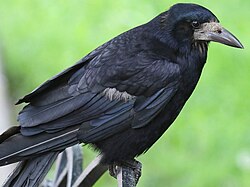
Dove vive Rook?
Corvus frugilegus
Visto un uccello? Identificalo all'istante con l'app Birdby
Apri l'appRook vive in habitat e regioni specifiche. Sapere dove e quando guardare migliora le possibilità di un avvistamento riuscito.
Biomi
Temperate grasslands, agricultural lands, open woodlands, parks, and urban areas.
Areale geografico
Widespread across temperate Eurasia, from the British Isles and Western Europe eastward through Central Asia to eastern Siberia and northern China. Absent from the Iberian Peninsula, southern France, Italy (except for a few scattered populations), and Greece.
Ambienti preferiti
Prefers open country with scattered trees, particularly agricultural land, pastures, and parkland, where it can forage for food and find suitable trees for nesting in colonies.
Fascia altitudinale
Typically found in lowlands and foothills, generally below 1,000 meters, but can occur higher in some parts of its range.
Dove guardare
Agricultural Fields
Look for large flocks foraging in freshly ploughed fields, pastures, and stubble fields, especially in winter.
Parkland and Large Gardens
Areas with scattered mature trees provide ideal nesting and roosting sites.
Roadsides and Verges
Often seen foraging along roadsides for invertebrates disturbed by traffic.
Rookeries
During the breeding season (late winter to spring), locate large colonies of nests high in trees. These are often very noisy and conspicuous.
Consigli sul campo
- Scan Flocks. When observing a flock of black corvids, focus on individual birds to check for the bare bill base. This is easiest with a telescope or binoculars.
- Listen for Calls. Familiarize yourself with the distinct 'kaaah' call of the Rook, which can help differentiate it from other corvids even before visual confirmation.
- Observe Behavior. Rooks are highly social. If you see a large group of black birds foraging together or flying in formation, they are very likely Rooks.
- Timing. Rookeries are most active and noisy during the early spring when breeding is underway. Winter months see large feeding and roosting flocks.
Migrazione
Partially migratory. Northern and eastern populations are migratory, moving south and west for the winter. Western and southern populations are largely resident, though some local movements occur.
Esplora Rook
Identifica uccelli ovunque
Gratis su iOS, Android e Web. Identificazione per foto e suono, database completo e la tua lista personale.