
Come identificare Atlantic Puffin
Fratercula arctica
Visto un uccello? Identificalo all'istante con l'app Birdby
Apri l'appPer identificare correttamente Atlantic Puffin (Fratercula arctica), controlla ciascuna di queste caratteristiche. Gli uccelli possono essere complicati da riconoscere, perché comportamento, habitat e canto spesso confermano ciò che una sola foto non può.
Dimensioni a colpo d'occhio
- Lunghezza
- 28-34 cm
- Apertura alare
- 50-60 cm
- Peso
- 320-480 g
Caratteristiche fisiche da controllare
- 1
Piumaggio
Colorazione e disegno generale del piumaggio.
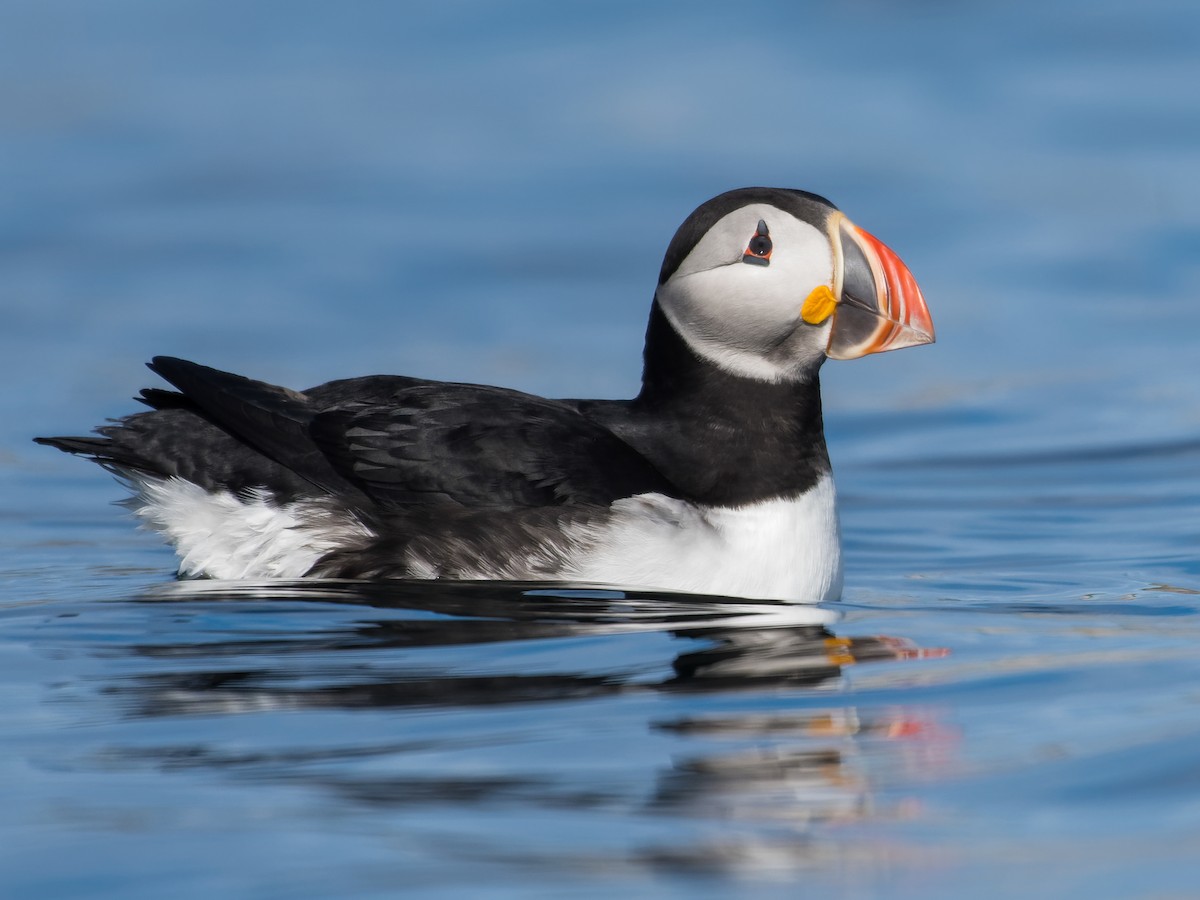
Adult breeding plumage features a black back and crown, white underparts, and a distinctive greyish-white face patch. Non-breeding plumage is duller, with a darker grey face and a less vibrant bill. Juveniles resemble non-breeding adults but are generally smaller with a narrower, duller bill.
- 2
Forma del becco
Forma e colore del becco, un segno di campo chiave.
Triangular and laterally compressed. During breeding season, it is brightly colored with blue-grey, yellow, and red bands. Outside of breeding, the colorful outer plates are shed, leaving a smaller, duller, greyish-orange bill.
- 3
Colore degli occhi
Colore dell'iride e segni distintivi sugli occhi.
Dark brown, with a distinctive red ring and a small, fleshy, triangular blue-grey plate above and below the eye during breeding.
- 4
Colore delle zampe
Colore di zampe e piedi.
Bright orange-red during breeding season, fading to duller orange or yellowish outside of breeding.
- 5
Caratteristiche distintive
Tratti distintivi che separano questa specie.
The large, brightly colored, triangular bill in breeding adults is unmistakable. The upright posture on land and powerful, direct flight with rapid wingbeats are also characteristic.
- 6
Aspetto giovanile
Come i giovani si differenziano dagli adulti.
Juveniles have a smaller, narrower, and duller bill that is mostly dark grey or blackish, lacking the vibrant colors and grooves of adults. Their face is darker grey, and they generally appear less robust than adults.
- 7
Cambiamenti stagionali
Variazione del piumaggio tra stagione riproduttiva e non.
The most striking seasonal change is the bill. The colorful outer plates are shed after the breeding season, revealing a smaller, duller, greyish-orange bill. The face also darkens from greyish-white to a darker grey, and the eye ornaments are lost.
- 8
Dimorfismo sessuale
Differenze tra maschi e femmine.
Males and females are outwardly similar in plumage and size, though males may be slightly larger on average. Bill coloration and size are identical between sexes during breeding.
Segni di campo chiave
- Bill Coloration (Breeding Adult). Look for the unmistakable large, triangular bill with vibrant blue-grey, yellow, and red bands. This is the most definitive field mark during the breeding season.
- Face Pattern (Breeding Adult). Observe the pale greyish-white face patch contrasting with the black crown and nape, and the distinctive red eye-ring with small blue-grey fleshy plates above and below the eye.
- Plumage. Note the glossy black upperparts (back, wings, tail) and clean white underparts. This bicolored pattern is consistent across seasons, though the face darkens in winter.
- Legs and Feet. Bright orange-red legs and webbed feet are visible when the bird is on land or taking off/landing.
- Flight Style. In flight, observe the rapid, whirring wingbeats and direct, low-to-the-water flight path. They appear 'stocky' in the air.
- Behavior on Land. On land, they stand upright and walk with a distinctive waddle, often appearing somewhat clumsy but endearing.
- Vocalizations. Listen for the low, guttural 'growl' or 'purr' calls, especially when near or within breeding colonies.
Esplora Atlantic Puffin
Identifica uccelli ovunque
Gratis su iOS, Android e Web. Identificazione per foto e suono, database completo e la tua lista personale.