
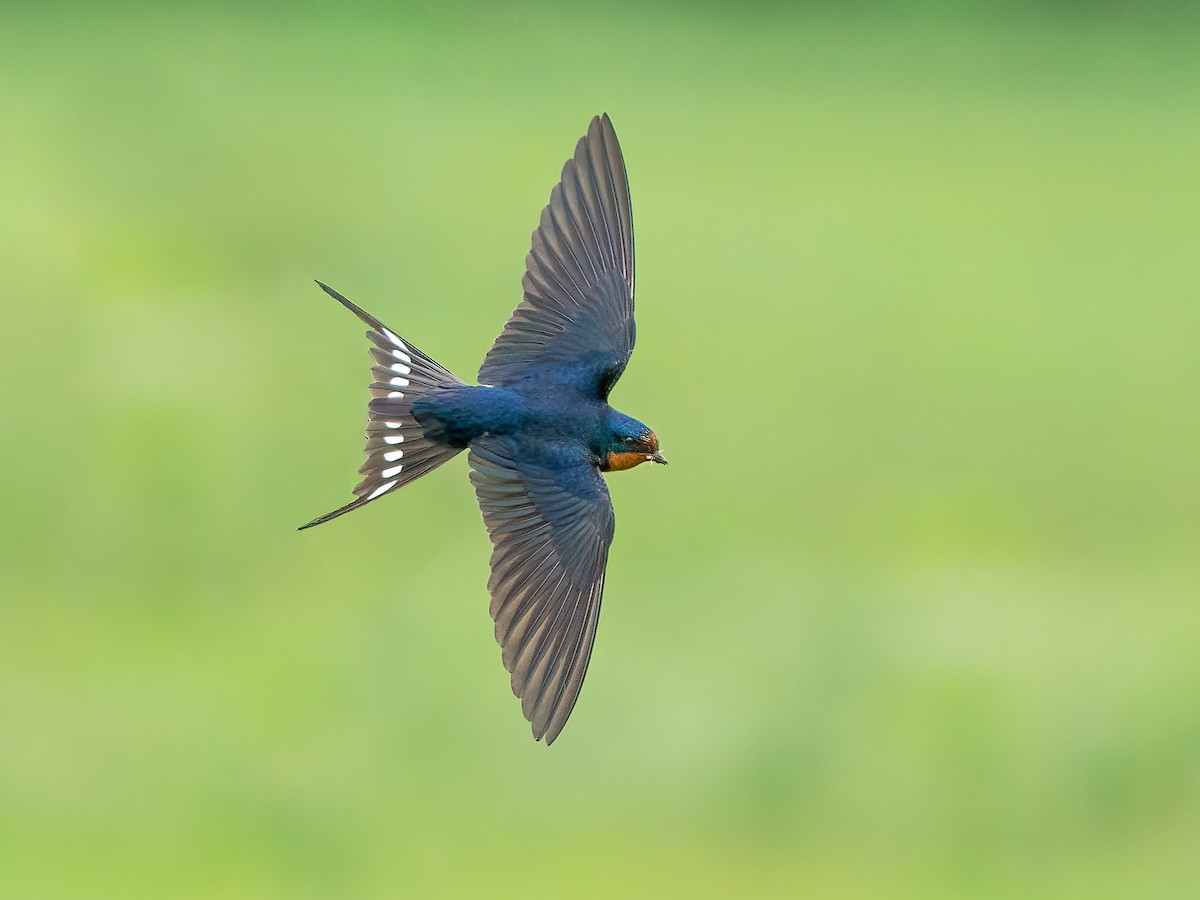
Dove vive Barn Swallow?
Hirundo rustica
Visto un uccello? Identificalo all'istante con l'app Birdby
Apri l'appBarn Swallow vive in habitat e regioni specifiche. Sapere dove e quando guardare migliora le possibilità di un avvistamento riuscito.
Biomi
Open country, farmland, meadows, pastures, wetlands, and coastal areas. Requires open spaces for foraging and structures for nesting.
Areale geografico
Breeds across the Northern Hemisphere, including North America, Europe, Asia, and parts of North Africa. Winters in the Southern Hemisphere, including South America, Africa, and parts of Asia and Australia.
Ambienti preferiti
Prefers open agricultural landscapes with access to water and man-made structures (barns, sheds, bridges, houses) for nesting. Avoids dense forests and arid deserts.
Fascia altitudinale
From sea level up to approximately 3,000 meters, though typically found at lower elevations.
Dove guardare
Agricultural Areas
Barns, sheds, stables, and other farm buildings provide ideal nesting sites and open fields for foraging.
Wetlands and Water Bodies
Lakes, rivers, ponds, and marshes are excellent foraging grounds due to abundant insect populations.
Open Countryside
Meadows, pastures, and open fields are preferred for aerial insect hunting.
Coastal Areas
Can be found along coastlines, especially during migration, where insects are plentiful.
Consigli sul campo
- Look for nests. Check under the eaves of buildings, inside open barns, under bridges, and in culverts for their distinctive mud cup nests.
- Observe flight patterns. Watch for their characteristic swift, acrobatic flight as they chase insects, often flying low over fields or water.
- Listen for calls. Their cheerful, twittering song and sharp 'wit-wit' calls are often heard around nesting sites or foraging areas.
- Visit during breeding season. They are most easily observed during the breeding season (spring and summer in the Northern Hemisphere) when they are actively nesting and raising young.
- Check communal roosts. During migration, look for large flocks gathering at communal roosts, often in reed beds or dense vegetation, at dusk.
Migrazione
Long-distance migratory species. European populations winter in Africa, North American populations in Central and South America, and Asian populations in South Asia and Australia. Migrates in large flocks, often following coastlines or river valleys.
Esplora Barn Swallow
Identifica uccelli ovunque
Gratis su iOS, Android e Web. Identificazione per foto e suono, database completo e la tua lista personale.